The skull in brief
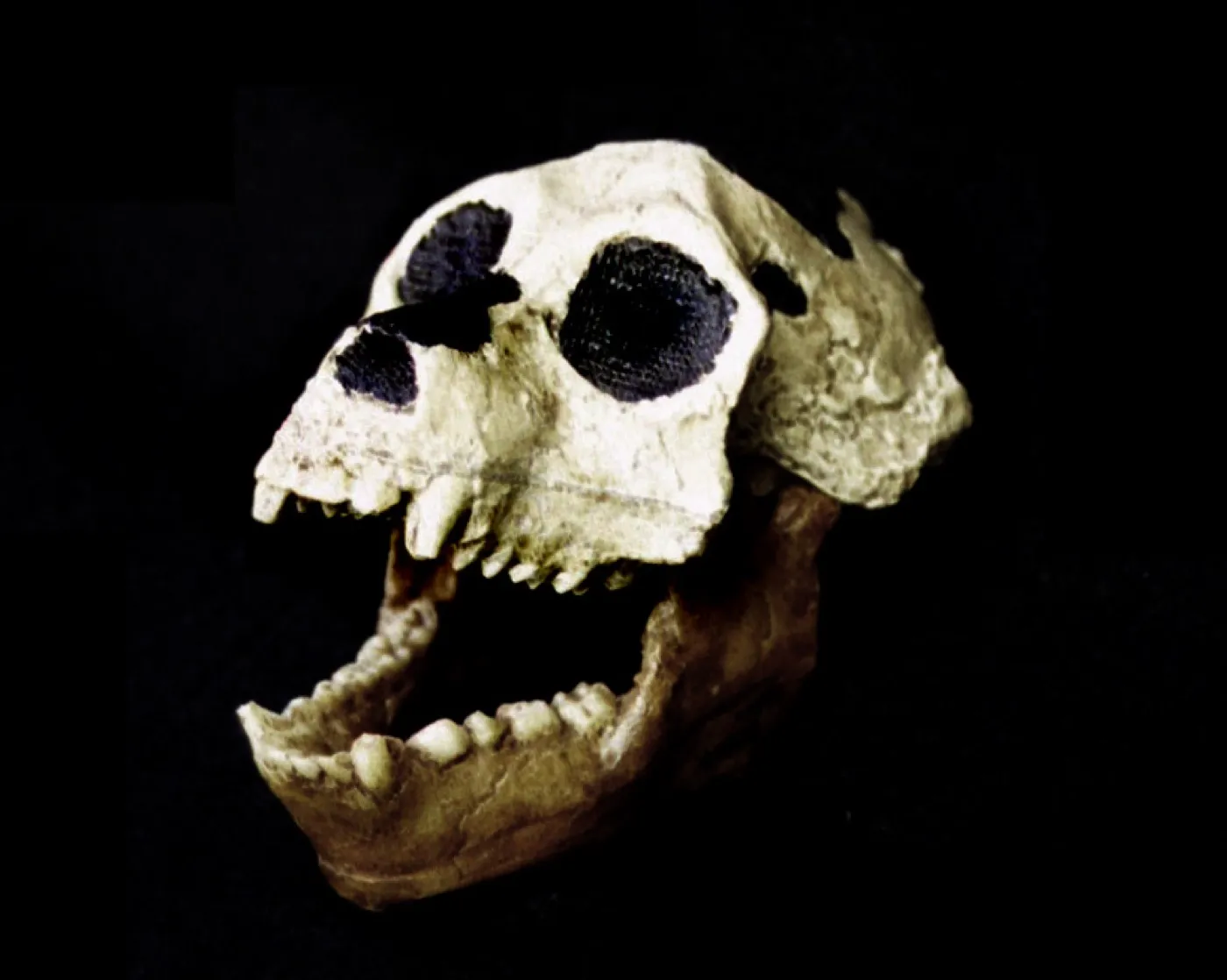
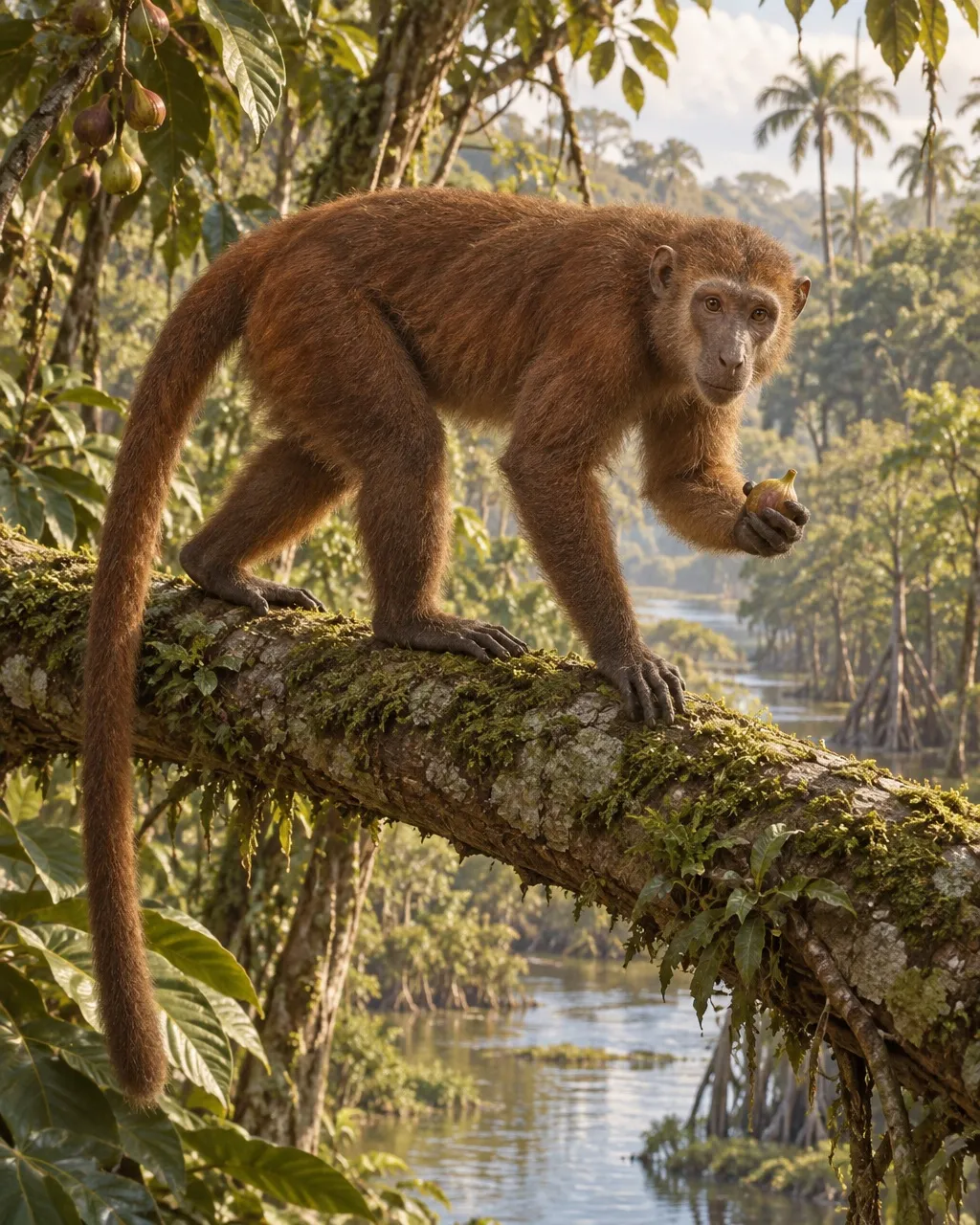
Aegyptopithecus zeuxis was an animal about the size of a howler monkey, weighing roughly 6 to 7 kilograms. It lived in the forests of what is now the Fayum desert in Egypt, about 30 million years ago (some estimates are a little older). It walked on all fours in the trees and probably ate fruit. It had a long snout, forward-facing eyes, and large canine teeth, which were bigger in males than in females. It had a small brain.
The find
The American paleontologist Elwyn Simons led expeditions to the Fayum from the 1960s, and he found the first skull of the animal in 1966. The Fayum fossils give a rare view of primates from the time when monkeys and apes of the Old World were separating from their other relatives.
Why it matters
Aegyptopithecus is often described as a “stem catarrhine”, meaning that it lies near the root of the branch that includes Old World monkeys, apes and humans. It is much more distant from us than the other animals in this section, but it shows features that all later apes and monkeys inherited.
A note on the photograph
Aegyptopithecus was not a member of the human family. The photograph is of a cast from the old Hall of Skulls on ArchaeologyInfo.com.
Sources
- Simons, E. L. (1965). New fossil apes from Egypt and the initial differentiation of Hominoidea. Nature 205: 135 to 139.
- Seiffert, E. R. (2006). Revised age estimates for the later Paleogene mammal faunas of Egypt and Oman. Proceedings of the National Academy of Sciences 103: 5000 to 5005.