The skeleton in brief
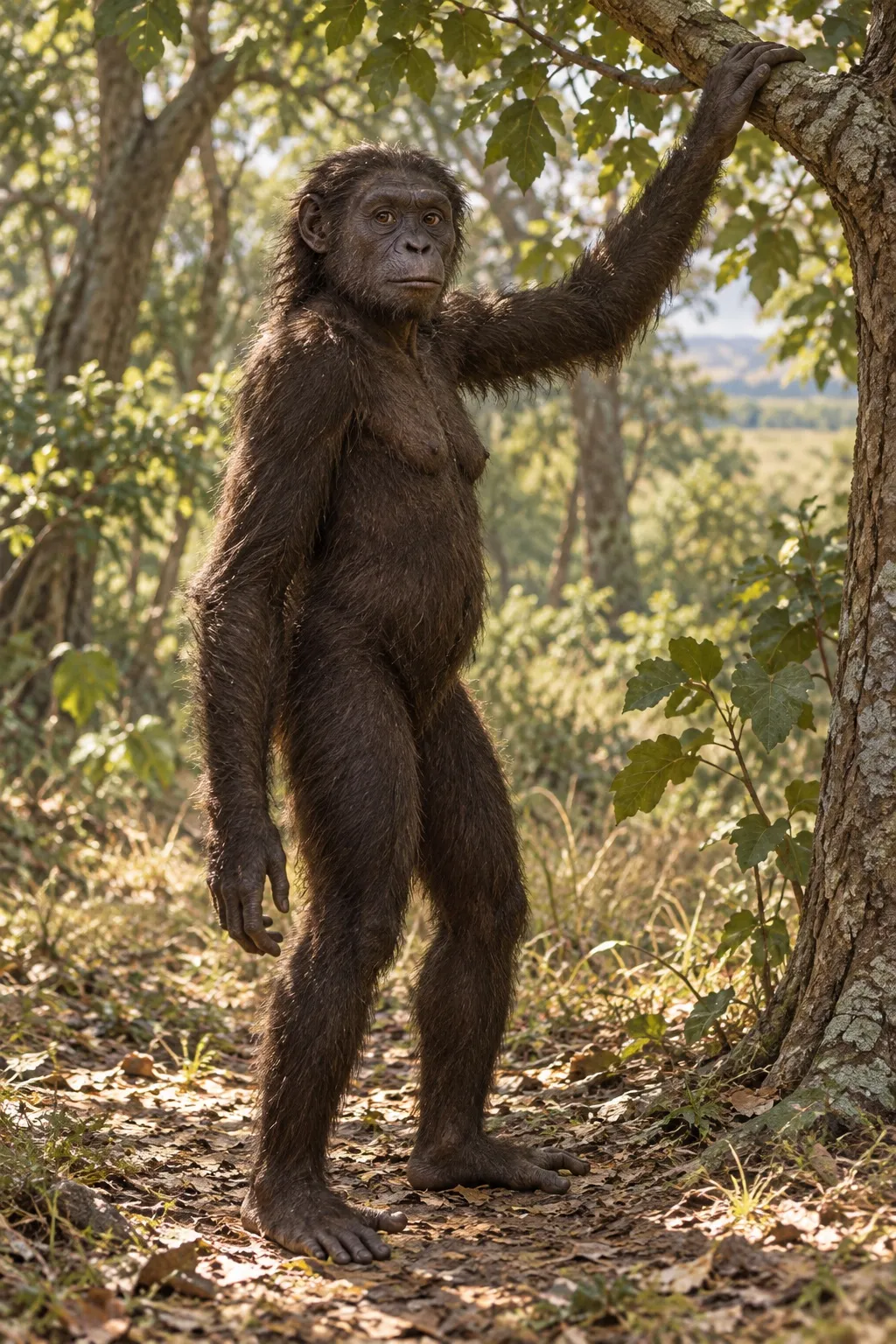
Ardi is the nickname of ARA-VP-6/500, the most complete skeleton of an early human relative from before the time of Lucy. It belongs to a female of Ardipithecus ramidus, which lived in Ethiopia about 4.4 million years ago. Much of the skull, teeth, pelvis, hands and feet survive. She stood about 1.2 metres (4 ft) tall and weighed roughly 50 kilograms (110 lb), with a brain about the size of a chimpanzee’s.
The find
The first fossils of the species, a set of teeth and bone pieces, were found in 1992 and 1993 at Aramis, in the Middle Awash region of Ethiopia’s Afar rift, by a team led by Tim White, Berhane Asfaw and Gen Suwa. In late 1994 a graduate student, Yohannes Haile-Selassie, found a hand bone, and the team went on to recover the pieces of a single skeleton.
The bones were crushed and fragile, so they could not be lifted in the ordinary way. They were hardened and removed in blocks of the surrounding earth, and then cleaned, scanned and pieced together over many years. The skeleton was described in a set of papers in the journal Science in October 2009, and the journal named it the scientific “Breakthrough of the Year”.
What she shows
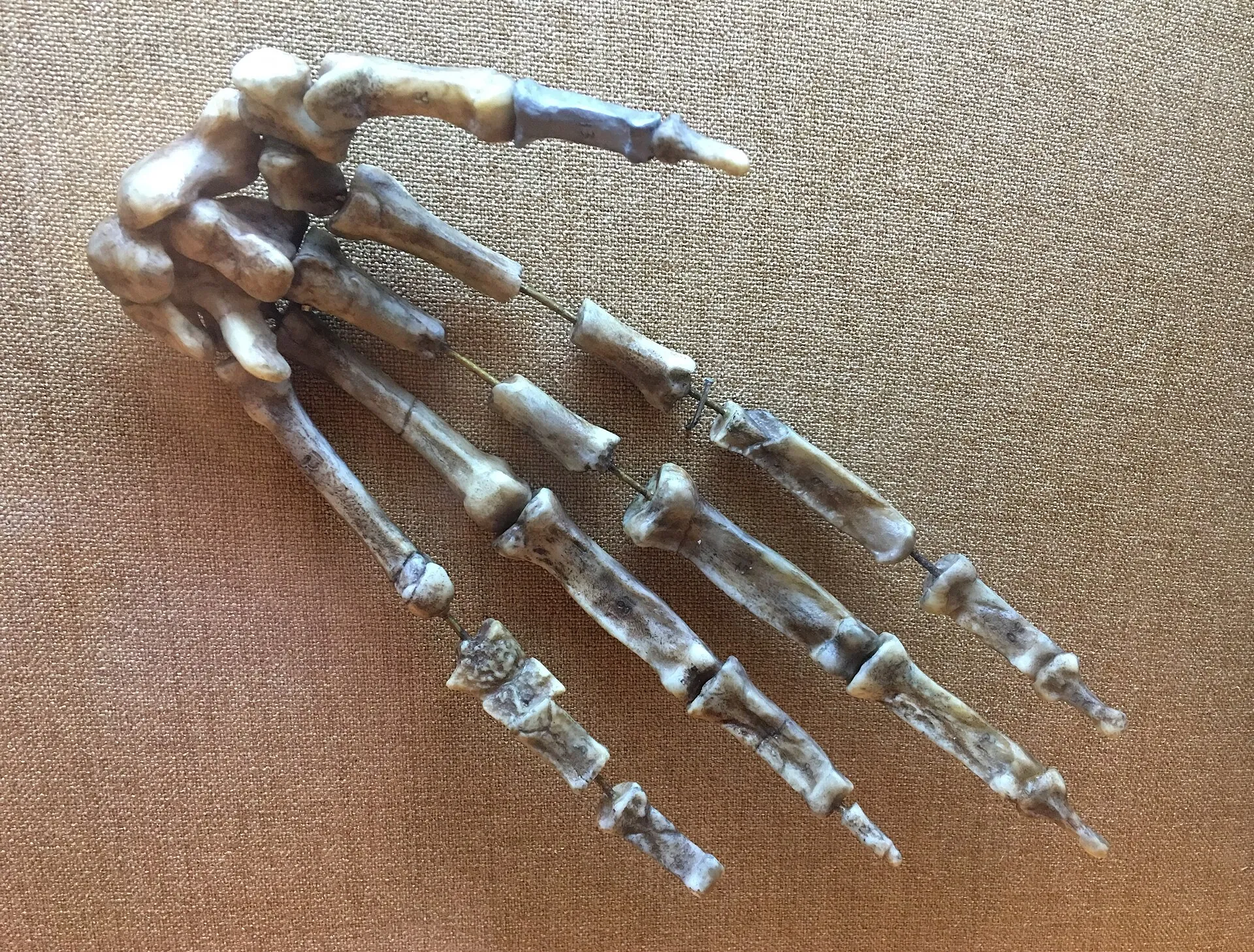
- Feet and hands. She had a big toe that stuck out sideways and could grasp, like an ape’s, so she could climb well in trees. Her hand was flexible and lacked the knuckle-walking features of African apes.
- Pelvis. The lower pelvis was ape-like and the upper part shorter and broader, which suggests she could walk upright when on the ground, though probably not as well as Lucy.
- Teeth. The canine teeth were small, and about the same in males and females. This is unlike chimpanzees, in which males have large, sharp canines.
- Setting. Fossil plants and animals found with her point to woodland near water, not open grassland.
Together these features suggest that the common ancestor of humans and chimpanzees did not look like a chimpanzee. Chimpanzees changed after the two lines split, as the human line did.
The argument
Not all scientists agree on what Ardi was. The team who studied the pelvis, led by C. Owen Lovejoy, argue that she was an early member of the human line. Others point out that the skeleton was badly crushed and that its reconstruction is uncertain, and some suggest Ardipithecus may be a side branch of the family tree. The researchers who worked on the fossil reject this.
Where it is
Ardi is held in the National Museum of Ethiopia in Addis Ababa, and casts have been shown in museums elsewhere. The photograph on this page is of a cast of the hand, shown in a museum in Beijing.
Sources
- White, T. D. and others (2009). Ardipithecus ramidus and the paleobiology of early hominids. Science 326: 75 to 86.
- Lovejoy, C. O. and others (2009). The pelvis and femur of Ardipithecus ramidus: the emergence of upright walking. Science 326: 71.
- Smithsonian National Museum of Natural History, Human Origins Program: Ardipithecus ramidus.