The skull in brief
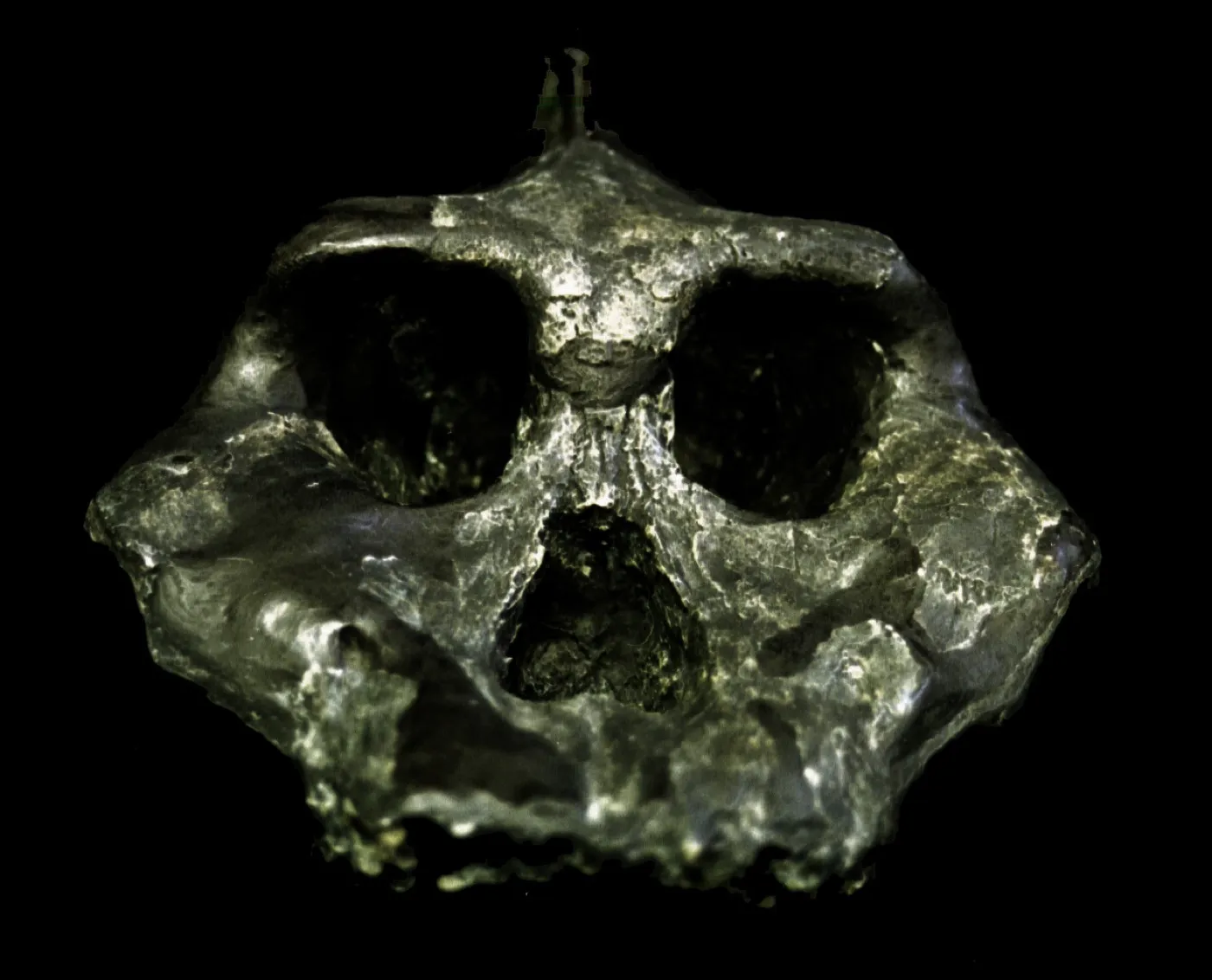
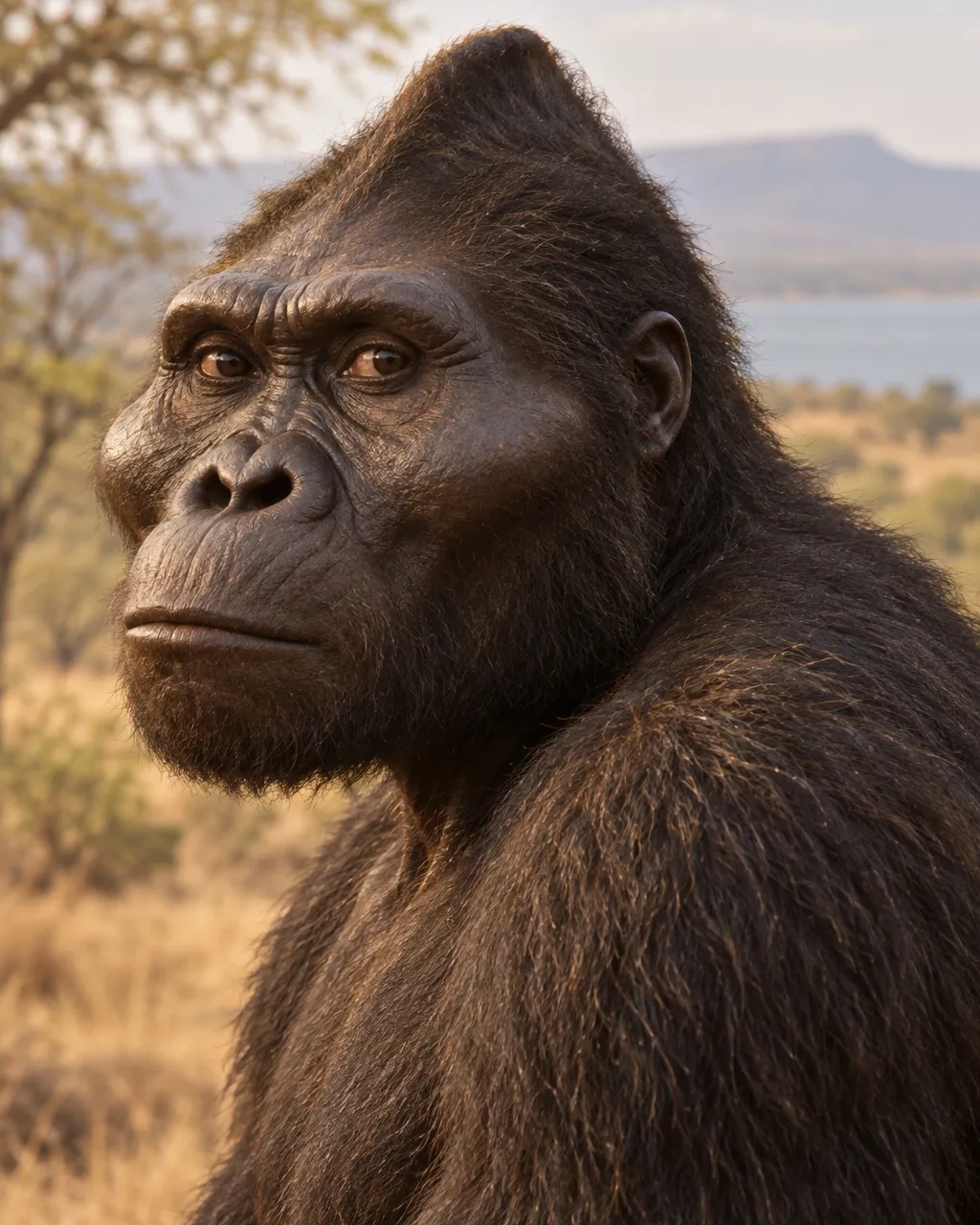
KNM-WT 17000 (Kenya National Museum, West Turkana) is the only known adult skull of Paranthropus aethiopicus, the earliest of the robust australopiths. It is called the Black Skull because manganese in the soil where it lay stained the bone a dark blue-black. It has the largest sagittal crest of any known early human relative, a wide dished face and a small braincase of about 410 cubic centimetres, one of the smallest of any australopith.
The find
Alan Walker, working with Richard Leakey’s expedition, found the first piece of the skull in 1985 at Lomekwi, west of Lake Turkana, and the team soon found more. It is about 2.5 million years old. Walker, Leakey, Harris and Brown reported it in Nature in 1986 as an early Australopithecus boisei; it was later given its own species.
Why it matters
The Black Skull mixes primitive features, such as a small brain and a jutting lower face, with the extreme chewing features of the later robust species. For that reason it is central to arguments about whether the robust australopiths of East Africa all came from one ancestor. It was found in the same area as Lomekwi 3, where stone tools about 3.3 million years old were found in 2011 and described in 2015. See the Koobi Fora page for the wider Lake Turkana area.
Where it is
The original is held by the National Museums of Kenya in Nairobi.
Sources
- Walker, A., Leakey, R. E., Harris, J. M. and Brown, F. H. (1986). 2.5-Myr Australopithecus boisei from west of Lake Turkana, Kenya. Nature 322: 517 to 522.
- Smithsonian National Museum of Natural History, Human Origins Program. Paranthropus aethiopicus.