The skull in brief
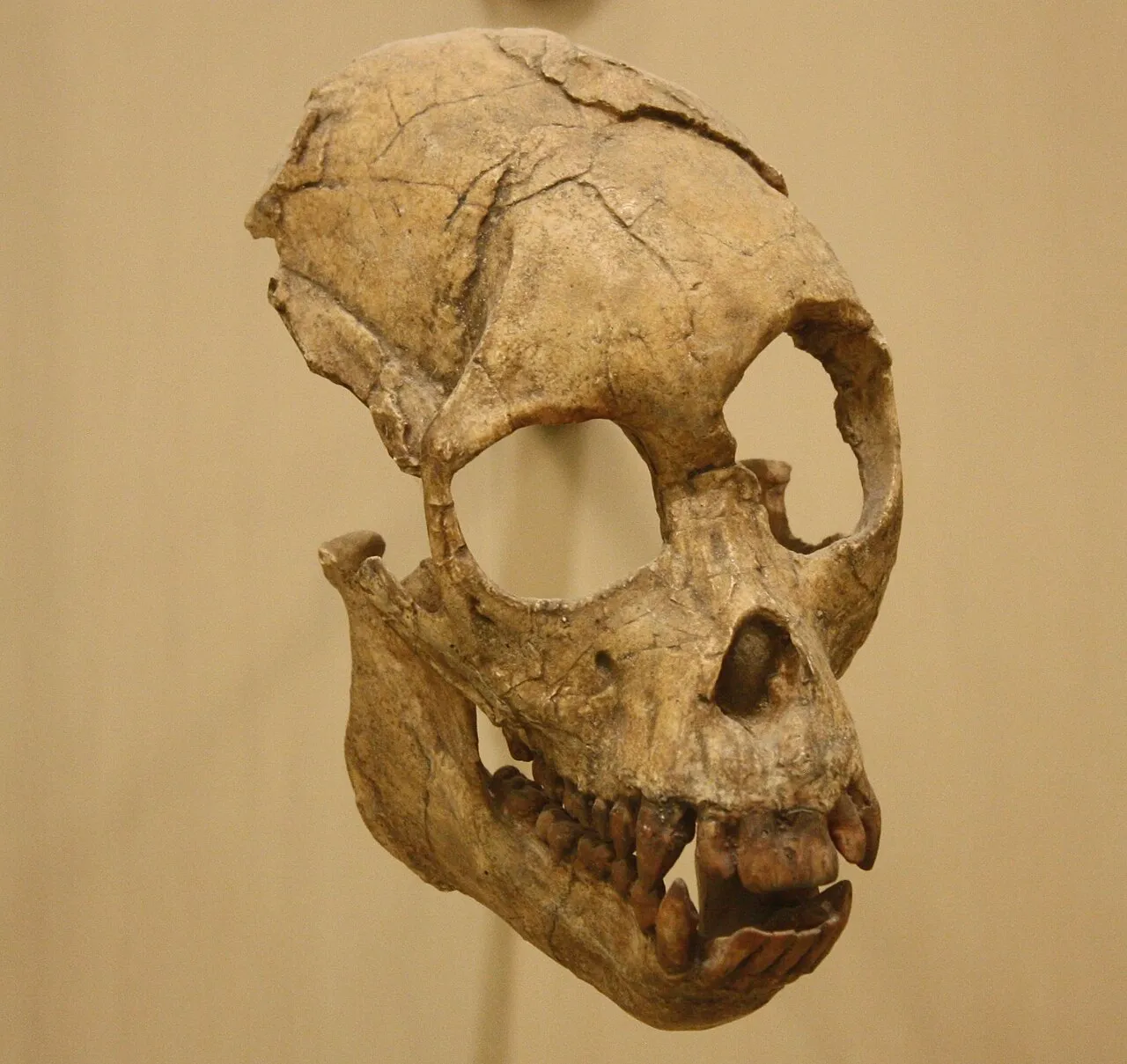
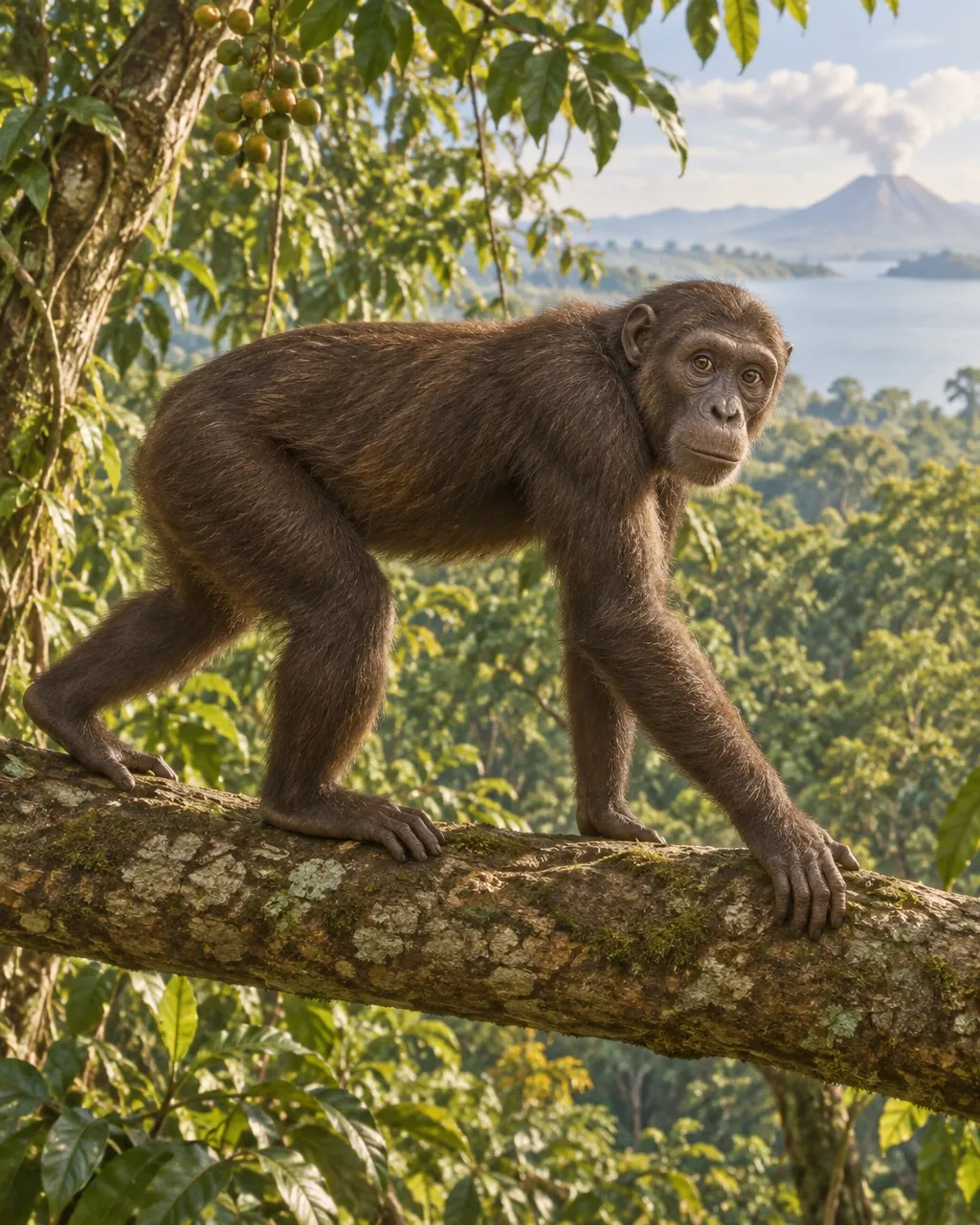
Proconsul is a genus of early apes that lived in the forests of East Africa between about 21 and 17 million years ago. They had features of both monkeys and apes: a body that moved on all fours along branches like a monkey, no tail like an ape, and ape-like teeth and grasping hands. The skull KNM-RU 7290 (Kenya National Museum, Rusinga) is one of the best of the genus. The photograph shows a Proconsul skull in a museum. Proconsul was not a member of the human family. It lived roughly 10 million years before the earliest known human relatives such as Sahelanthropus.
The find
Mary Leakey found the skull on Rusinga Island in Lake Victoria, Kenya, in 1948. It was a remarkably complete skull of an early ape, and it is still one of the best. The genus was named by Arthur Hopwood in 1933 from fossils from Koru in Kenya. Some researchers now place the Rusinga fossils in a related genus, Ekembo.
Why it matters
Proconsul shows how early apes lived: in tropical forest, walking on branches rather than swinging beneath them. It is often used as a model for the common ancestors of apes and humans, though how closely it is related to them is uncertain.
Where it is
KNM-RU 7290 is held by the National Museums of Kenya in Nairobi.
Sources
- Hopwood, A. T. (1933). Miocene Primates from Kenya. Journal of the Linnean Society, Zoology 38: 437 to 464.
- Walker, A. and Teaford, M. (1989). The hunt for Proconsul. Scientific American 260(1): 76 to 82.