The fossils in brief
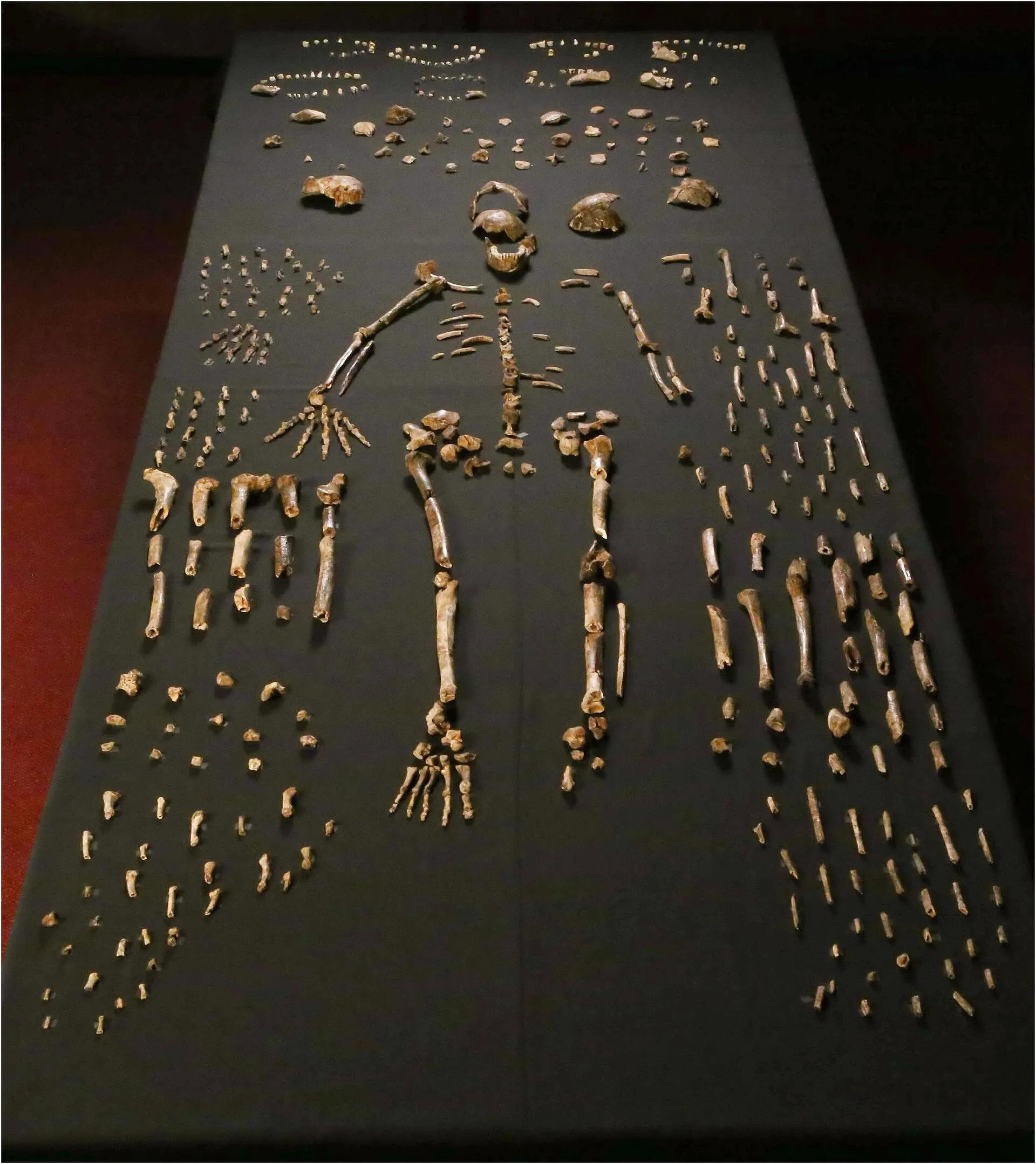
The Dinaledi Chamber of Rising Star Cave, in the Cradle of Humankind near Johannesburg, has produced one of the richest finds of early human relatives in Africa. More than 1,550 pieces of bone, representing about 737 different skeletal elements and at least 15 individuals, young and old, were recovered by 2015. The type specimen of the species Homo naledi is DH1, a partial skull with a nearly complete lower jaw.
The find
The 2015 paper says the chamber is about 30 metres underground and that the fossils were first recognised in October 2013. Accounts of the discovery say that recreational cavers, Rick Hunter and Steven Tucker, found the bones; the paper does not name them, and the passage details are not confirmed. They showed photographs to the paleoanthropologist Lee Berger, who put together a team to recover the bones. Six women scientists, chosen for their slim build and nicknamed the “underground astronauts”, did the first excavation. The species was named in 2015: naledi means “star” in the Sotho language, after the cave.
What it looked like
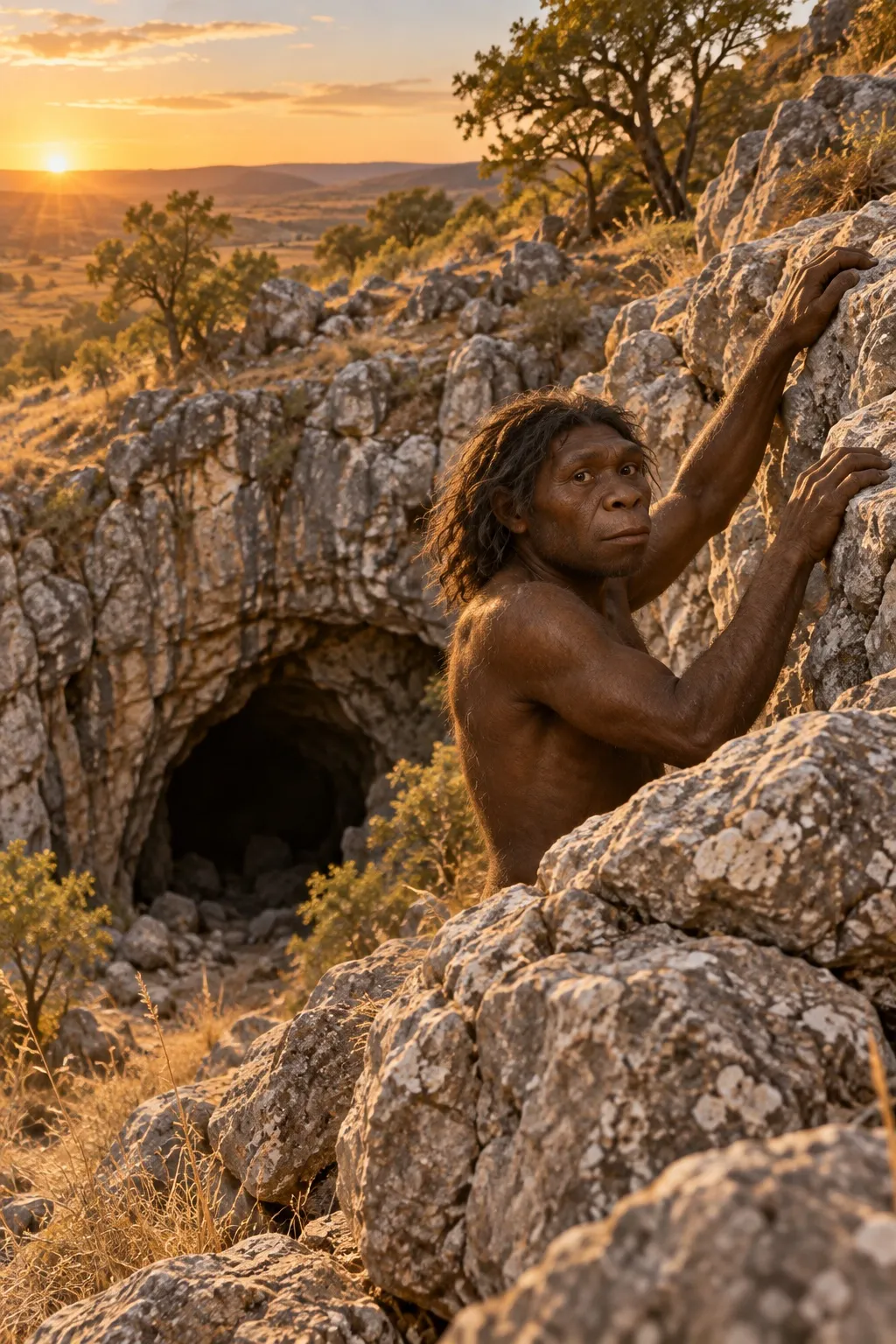
- Small body. About 1.45 metres (4 ft 9 in) tall, with body mass estimates of roughly 40 to 56 kilograms (88 to 123 lb).
- Small brain. About 465 to 610 cubic centimetres, in the range of Lucy’s and around a third the size of a modern person’s.
- A mixture. The hands, feet, legs and teeth look like those of later Homo, while the shoulders, curved fingers and parts of the pelvis look more like those of Australopithecus, and suggest good climbing.
How old
At first the bones could not be dated. In 2017 researchers dated them to between about 335,000 and 236,000 years old, which means that this small-brained species lived at the same time as early Homo sapiens in Africa. Many scientists had expected such an archaic-looking fossil to be far older.
The argument
The chamber is hard to reach even today, and almost no bones of other large animals are mixed with these. Berger’s team suggested that Homo naledi carried or placed its dead there on purpose. In 2023 they went further and claimed burials and engravings on cave walls in other chambers. Many other researchers say that the evidence is not strong enough, that natural explanations have not been ruled out, and that it is not clear the engravings were made by people at all. A revised version of the burial paper has since been reviewed, and the reviewers were divided. The question is open.
Where they are
The fossils are curated at the University of the Witwatersrand in Johannesburg, where researchers can apply to study them. Three-dimensional renderings are available from the MorphoSource repository. Rising Star Cave is not open to visitors, but nearby Sterkfontein and the Maropeng centre are.
Sources
- Berger, L. R. and others (2015). Homo naledi, a new species of the genus Homo from the Dinaledi Chamber, South Africa. eLife 4: e09560.
- Dirks, P. H. G. M. and others (2017). The age of Homo naledi and associated sediments in the Rising Star Cave, South Africa. eLife 6: e24231.
- Smithsonian National Museum of Natural History, Human Origins Program: Homo naledi.