The skull in brief
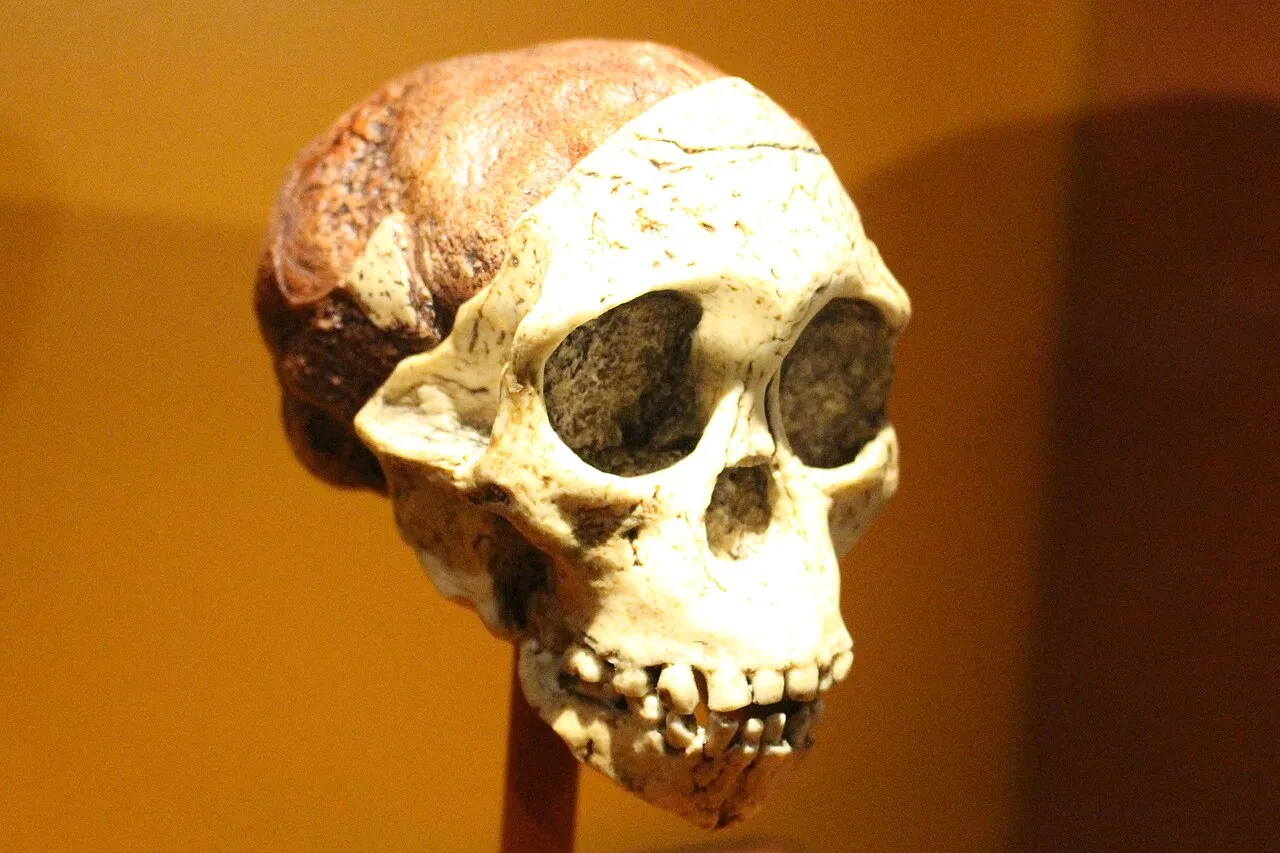
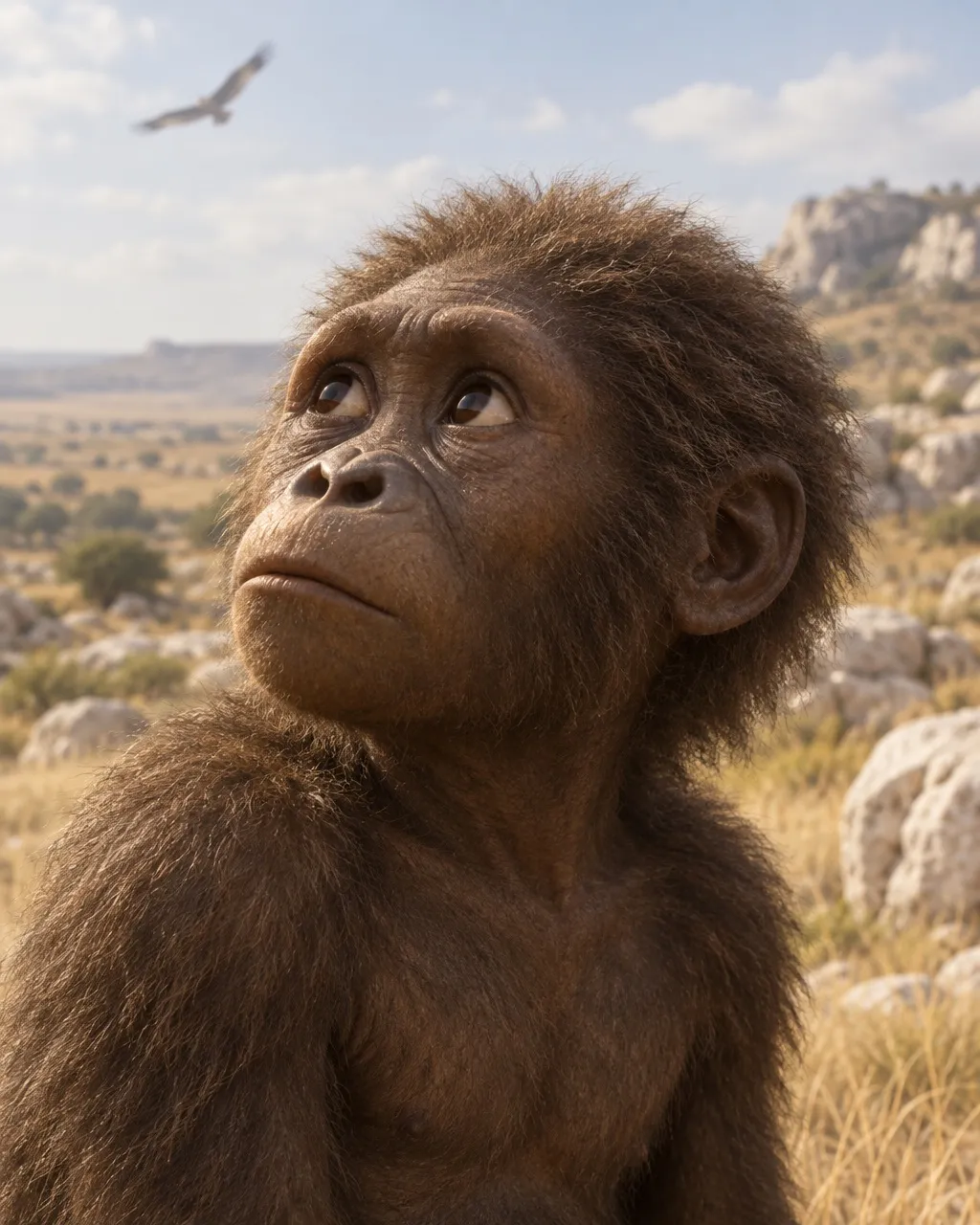
The Taung Child was the first australopith ever found, and one of the first fossils of any early human relative from Africa. It is the face, jaw and natural brain cast of a child about three years old (a close study of its tooth growth gives 3.3 years). Its brain, about 400 to 500 cubic centimetres when full grown, was roughly the size of a chimpanzee’s, but its teeth looked more human, and the hole where the spinal cord enters the skull sits far forward, as in an upright walker. It is the type specimen of Australopithecus africanus.
The find
In 1924 workers blasting limestone at the Buxton quarry near Taung, in what is now South Africa’s North West Province, found a fossil skull. A student of the anatomist Raymond Dart at the University of the Witwatersrand, Josephine Salmons, had already shown him a fossil baboon skull from the same quarry, and Dart asked for any other fossils to be sent to him. The Taung skull arrived in a crate of rock in late 1924. Dart chipped the stone off the face over several weeks and announced the fossil in the journal Nature on 7 February 1925, naming it Australopithecus africanus, “southern ape of Africa”.
The reaction
Most experts rejected it. They believed that humans began in Asia or Europe, and that the first step was a big brain. Arthur Keith and others said the skull was an ape’s. It took more than 20 years, and more finds from caves such as Sterkfontein, before the Taung Child was accepted as an early human relative, a turning point being the support of Wilfrid Le Gros Clark in 1947.
How the child died
In 1995 Lee Berger and Ron Clarke proposed that a large bird of prey had collected the animal bones found with the child: mostly small animals such as hyraxes, tortoises and young baboons, along with eggshell. In 2006 Berger described damage to the floors of the child’s eye sockets that is nearly identical to the talon marks crowned eagles leave on the monkeys they kill today, and a 2007 paper with Scott McGraw added more evidence. Many researchers now accept that an eagle killed the Taung Child, though not everyone is convinced.
Where it is
The original is held by the University of the Witwatersrand in Johannesburg, and casts are shown in museums.
Sources
- Smithsonian National Museum of Natural History, Human Origins Program. Taung Child.
- Dart, R. A. (1925). Australopithecus africanus: the man-ape of South Africa. Nature 115: 195 to 199.
- Berger, L. R. and Clarke, R. J. (1995). Eagle involvement in accumulation of the Taung child fauna. Journal of Human Evolution 29: 275 to 299.
- Berger, L. R. (2006). Predatory bird damage to the Taung type-skull of Australopithecus africanus Dart 1925. American Journal of Physical Anthropology 131: 166 to 168.
- Berger, L. R. and McGraw, W. S. (2007). Further evidence for eagle predation of, and feeding damage on, the Taung child. South African Journal of Science 103: 496 to 498.