The skull in brief
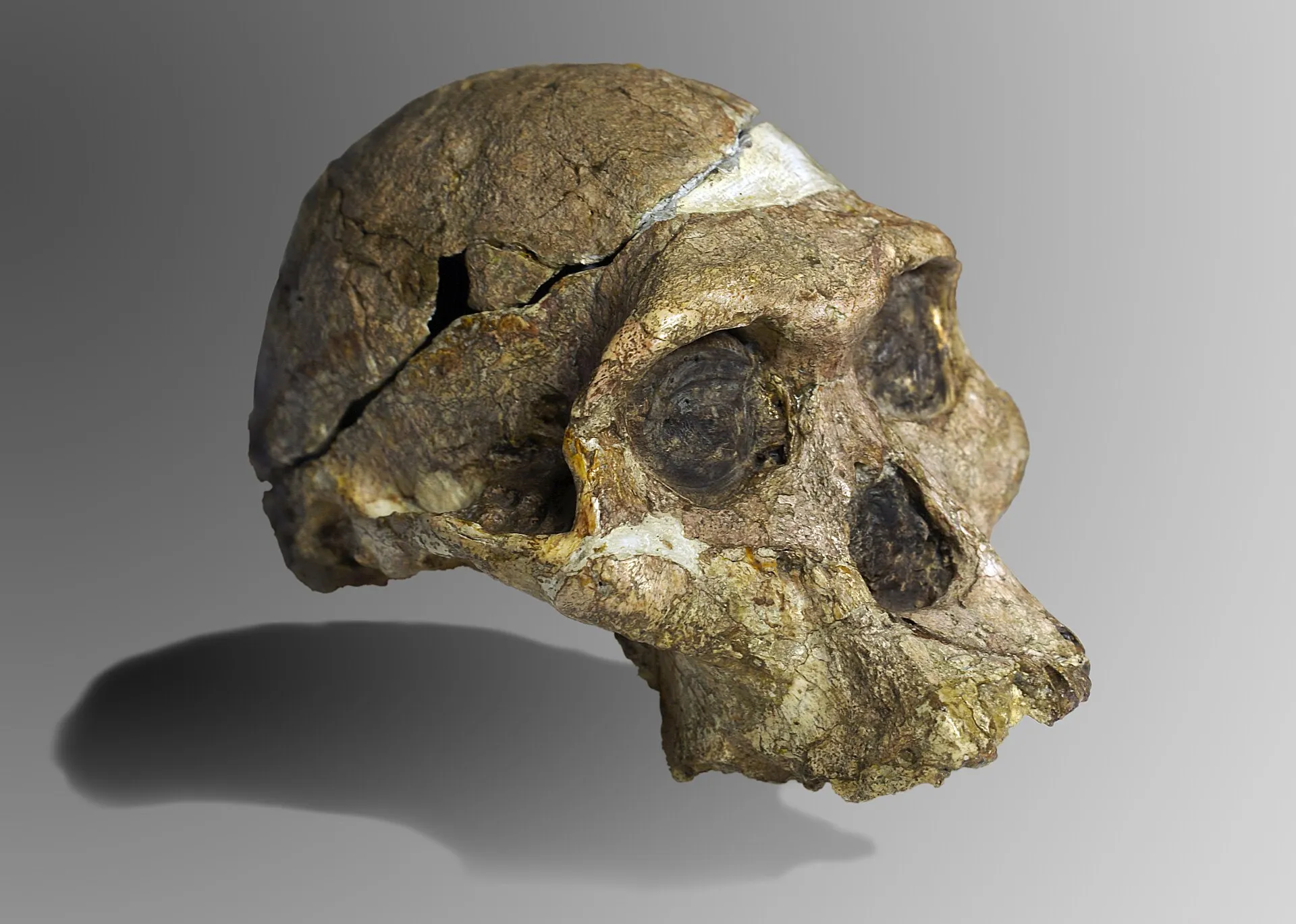
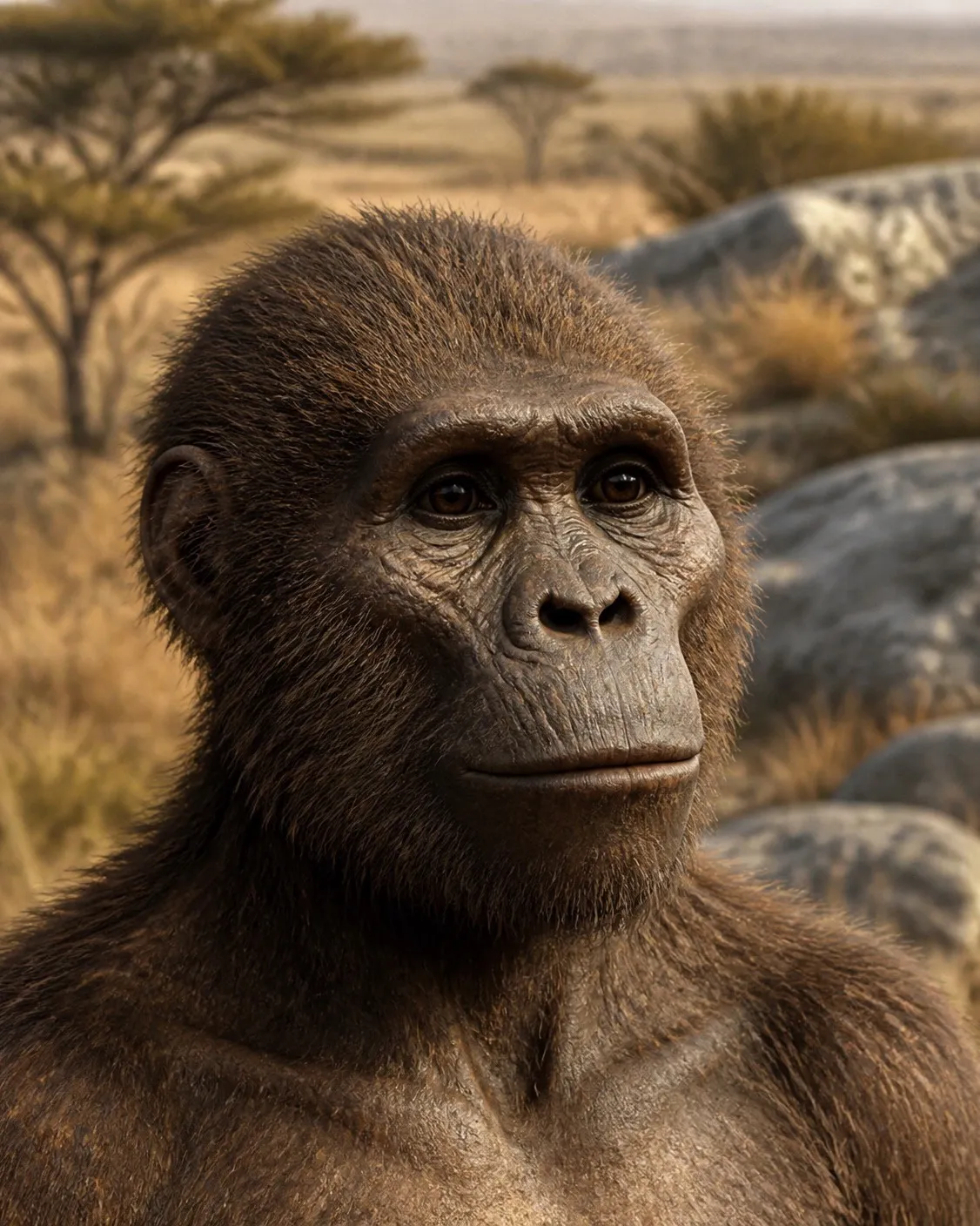
Mrs Ples is the nickname of Sts 5, a skull of Australopithecus africanus. It is the most complete skull of the species found in South Africa. The braincase was about 485 cubic centimetres, a little more than a chimpanzee’s, set above a face that juts forward, with small canine teeth. Along with the Taung Child, it helped to convince scientists that early human relatives lived in Africa.
The find
Robert Broom, a Scottish doctor and paleontologist, started searching limestone caves near Johannesburg for fossils after the Taung Child was described in 1925. On 18 April 1947 he and John Robinson found the skull in the Sterkfontein Caves. Broom used dynamite to break up the rock, and the skull was blown into pieces. The fragments were gathered and reassembled, though some parts of the face and the top of the skull are missing.
The name
Broom called the skull Plesianthropus transvaalensis, “near-man from the Transvaal”, a name later folded into Australopithecus africanus. His young co-workers shortened it to “Mrs Ples”, on the guess that it was a female. Later work has suggested it might have been a young male, but a later study of the tooth roots by Frederick Grine, using CT scans, concluded that it was a middle-aged female. The question has not been settled.
A skeleton to go with it?
A partial skeleton, Sts 14, was found in the same year and nearby, and some researchers think it may belong to the same individual. If so, Mrs Ples would be the South African counterpart of Lucy. The pelvis and spine of Sts 14 showed upright walking, an unwelcome surprise to those who believed a large brain must come first.
How old is she?
Early dating, from the animals found with her and from other methods, put the skull at about 2.1 to 2.6 million years. In 2022 a team using a newer technique on the surrounding rock gave an age of 3.4 to 3.7 million years, which would place her near Lucy’s time. Other researchers, using palaeomagnetism and uranium-lead dating, still argue for about 2 million years. Cave deposits are mixed and hard to date, so the age is disputed.
Where it is
The skull is kept at the Ditsong National Museum of Natural History in Pretoria. Visitors can tour the Sterkfontein Caves, in the Cradle of Humankind World Heritage Site, to see the area where it was found.
Sources
- Broom, R. and Robinson, J. T. (1947). Further remains of the Sterkfontein ape-man, Plesianthropus. Nature 160: 430 to 431.
- Smithsonian National Museum of Natural History, Human Origins Program: Australopithecus africanus.