The skull in brief
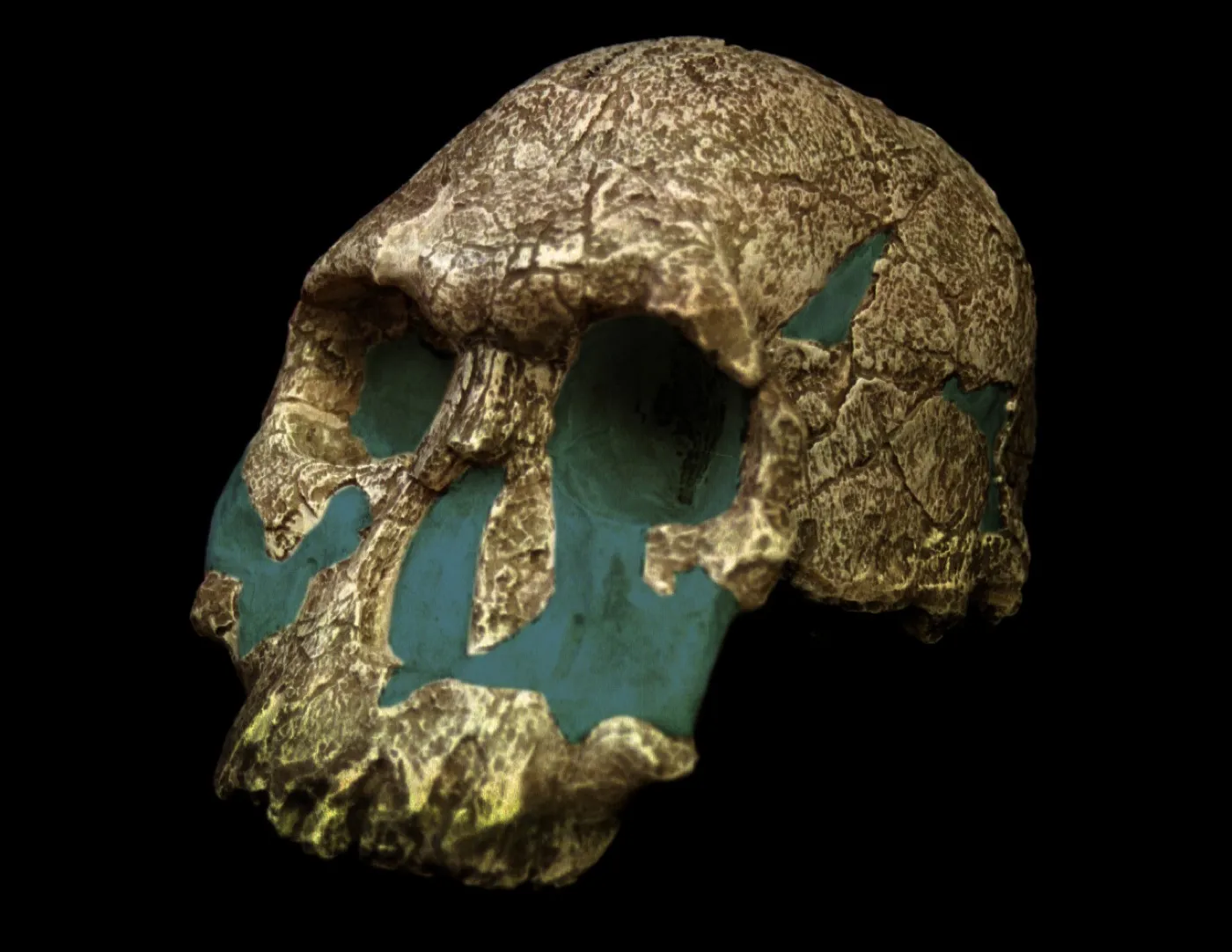
KNM-ER 1470 (the letters stand for Kenya National Museum, East Rudolf, the old name for Lake Turkana) is one of the best-known fossils of early Homo. It is a large skull with a rounded braincase and a broad, flat face, found as many scattered fragments at Koobi Fora in northern Kenya. The cast shown here has the missing parts filled in with blue-green material, so you can see which parts are bone and which were restored.
The find
A fieldworker on Richard Leakey’s team, Bernard Ngeneo, spotted pieces of a skull on the ground in 1972. The team collected more than 150 fragments, and Meave Leakey and colleagues put the skull together over the following weeks. Leakey described it in the journal Nature in 1973. It became one of the most famous fossils of the decade.
The dating argument
The first measurements, made on volcanic rock above the skull, gave an age of nearly 3 million years. That would have made it far older than any other member of Homo, and older than anything that was then thought to be its ancestor. It shook the picture that scientists had of human evolution. Further study of the rock layers and fossil animals, in the following years, brought the age down to about 2 million years, and most researchers today give about 1.9 million. The argument is a good example of how important dating is.
What species is it?
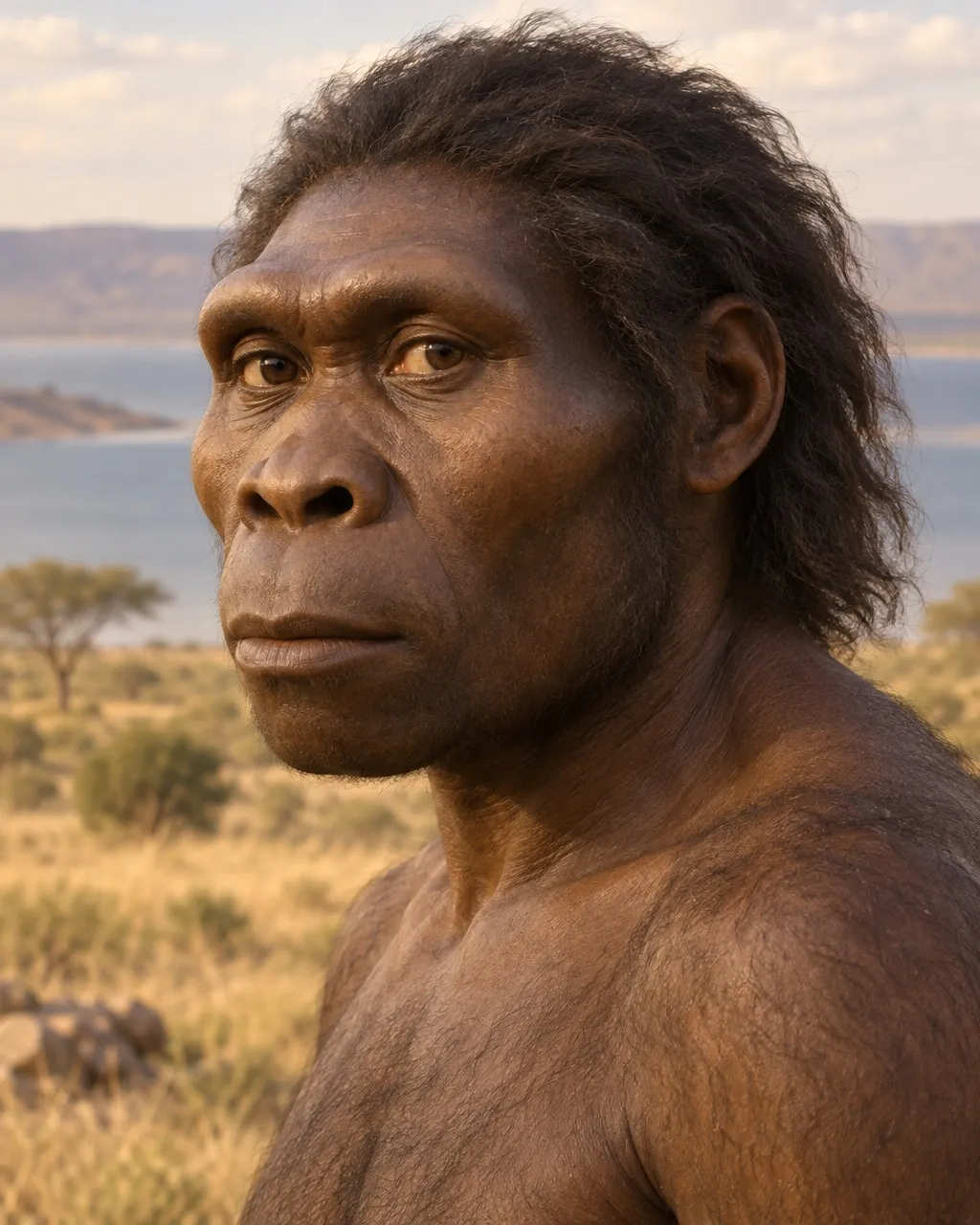
The brain is large for an early Homo: estimates run from about 700 to 800 cubic centimetres, with about 750 the most quoted. The face is broad and flat, and the teeth are large. At first it was put with Homo habilis. In 1986 some researchers argued that it differs too much from other habilis fossils, such as the smaller KNM-ER 1813, and gave it a separate name, Homo rudolfensis. Others think the two skulls may be a large and small version of one species, or have argued about whether 1470 is even in Homo. Many researchers now place 1470 in Homo rudolfensis, but the question is not settled, which is why this page uses both names.
Leg bones
Some thigh bones were found nearby, including KNM-ER 1472 and 1481, and they look quite modern. Nobody can be sure they belong to the same species as the skull.
Where it is
The original is held by the National Museum of Kenya in Nairobi, and casts are shown in museums around the world.
Sources
- Leakey, R. E. F. (1973). Evidence for an advanced Plio-Pleistocene hominid from East Rudolf, Kenya. Nature 242: 447 to 450.
- Wood, B. (1992). Origin and evolution of the genus Homo. Nature 355: 783 to 790.
- Smithsonian National Museum of Natural History, Human Origins Program. KNM-ER 1470.