The skull in brief
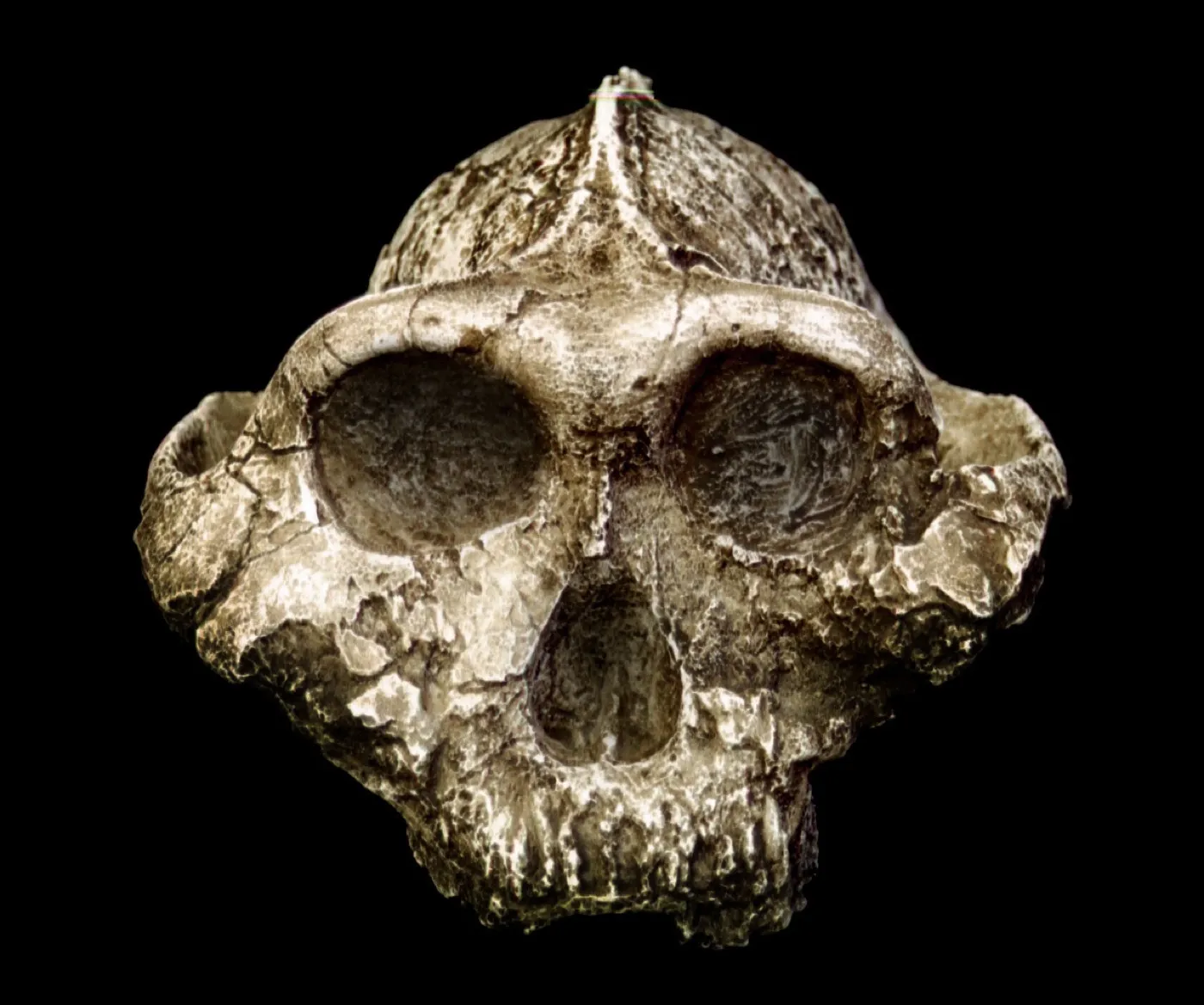
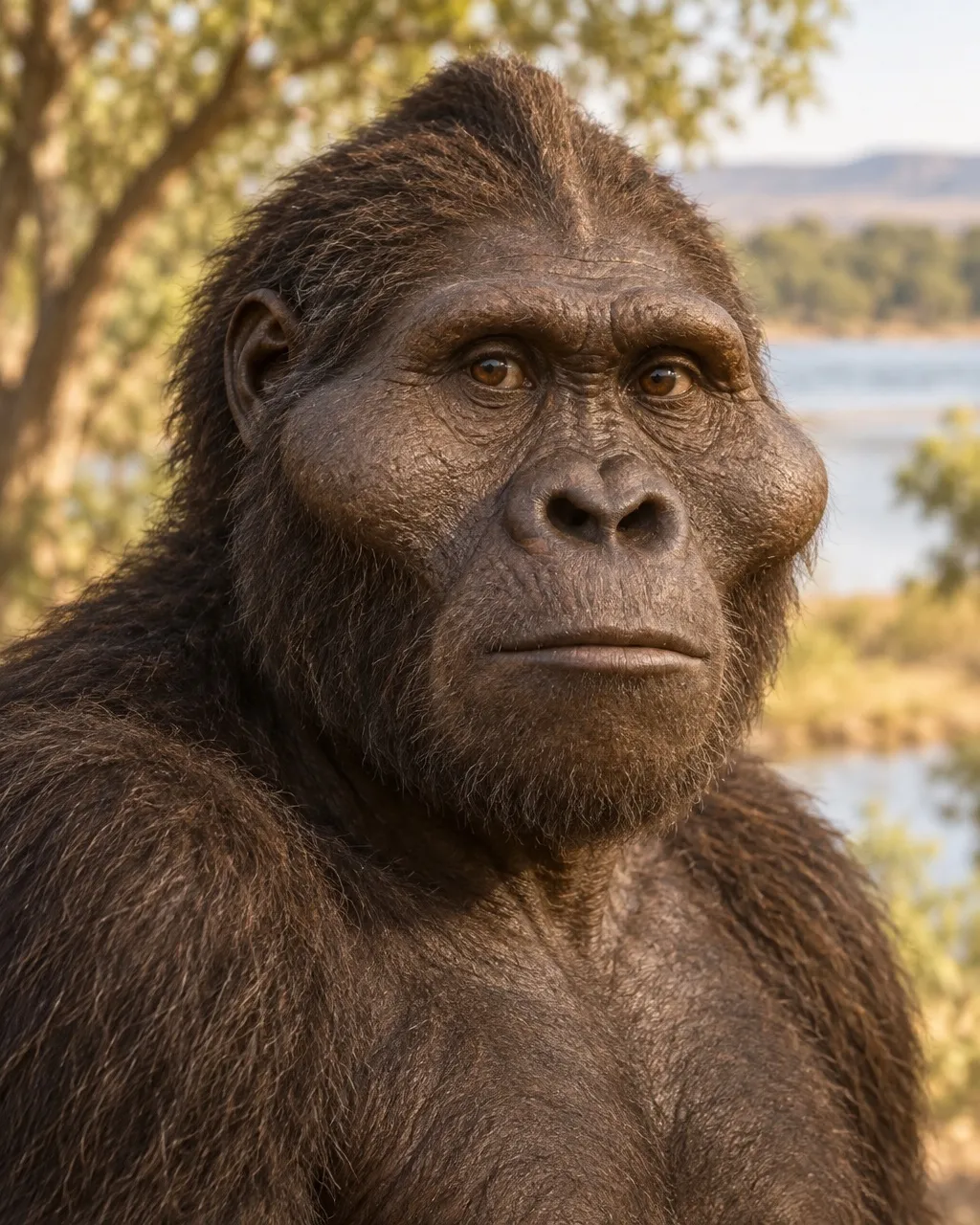
KNM-ER 406 is the classic “robust” skull from East Africa: a wide, dished face, enormous cheekbones that flare out to the sides, and a sagittal crest, a bony ridge along the top of the skull that anchored very large chewing muscles. It is an adult male Paranthropus boisei. The braincase was small, with a volume estimated at 510 cubic centimetres.
The find
It was found in 1969 at Koobi Fora in northern Kenya, by Richard Leakey’s expedition, and it is about 1.7 million years old. It is one of the most complete skulls of its species ever found.
Two kinds of human relative in one place
Before the Koobi Fora finds, some scientists argued that only one kind of human relative could live at a time, because two would compete for the same food. KNM-ER 406 helped to end that idea. It comes from the same area and the same time as KNM-ER 3733, the skull of an early Homo erectus with a much larger brain and a smaller face. The two clearly lived side by side, with different diets and different ways of life.
Where it is
The original is in the National Museum of Kenya in Nairobi.
Sources
- Leakey, R. E. F. and Walker, A. (1976). Australopithecus, Homo erectus and the single species hypothesis. Nature 261: 572 to 574.
- Smithsonian National Museum of Natural History, Human Origins Program. Paranthropus boisei.