The skull in brief
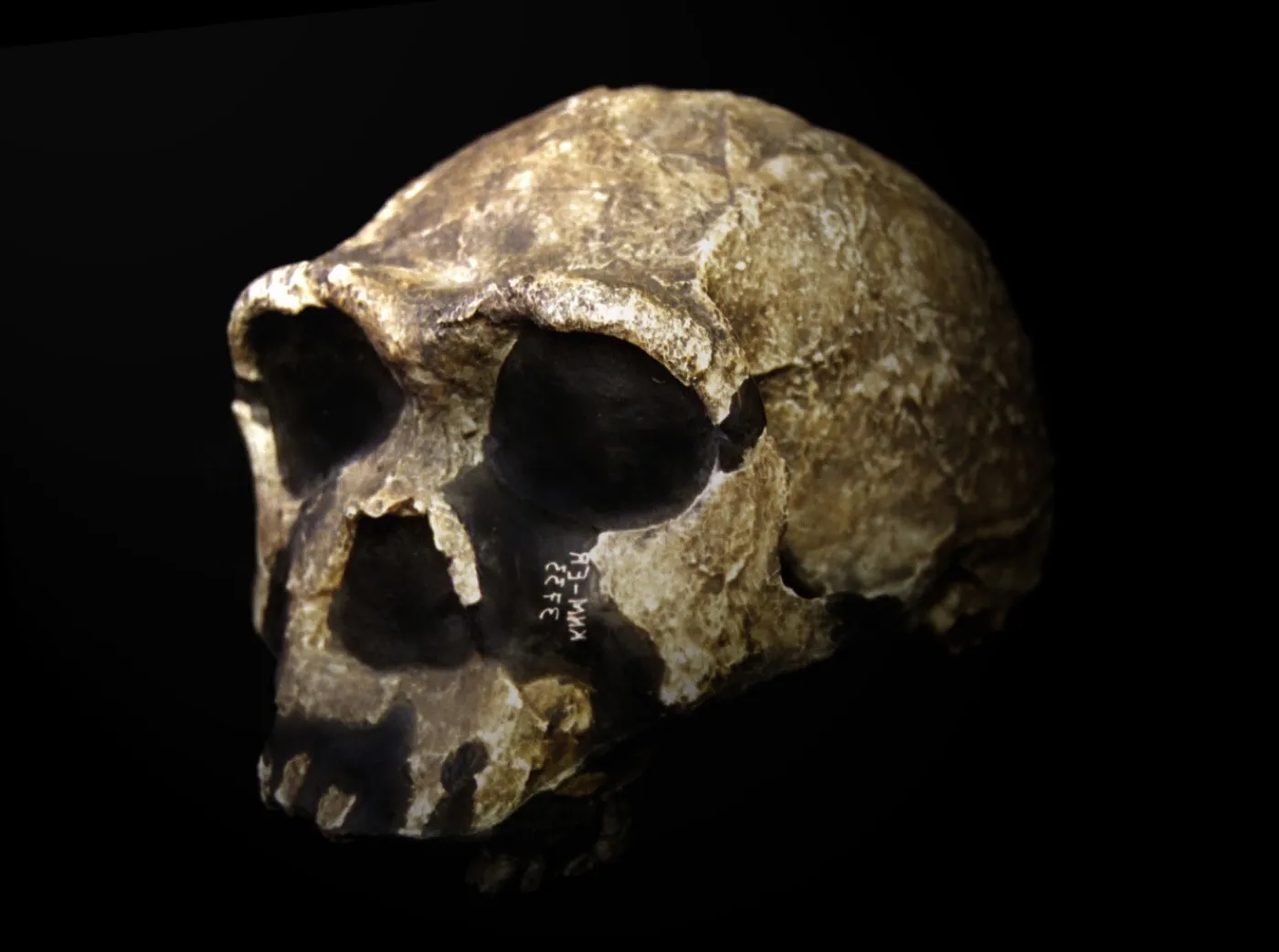
KNM-ER 3733 is an almost complete cranium of an adult Homo erectus, sometimes called Homo ergaster when the African fossils are treated as a separate species. It has the features that mark the species: a heavy brow ridge, a long, low braincase, a face that is flatter than in the australopiths, and a brain of about 850 cubic centimetres. The catalogue number, KNM-ER 3733, is written on the cheek of the cast in this photograph.
The find
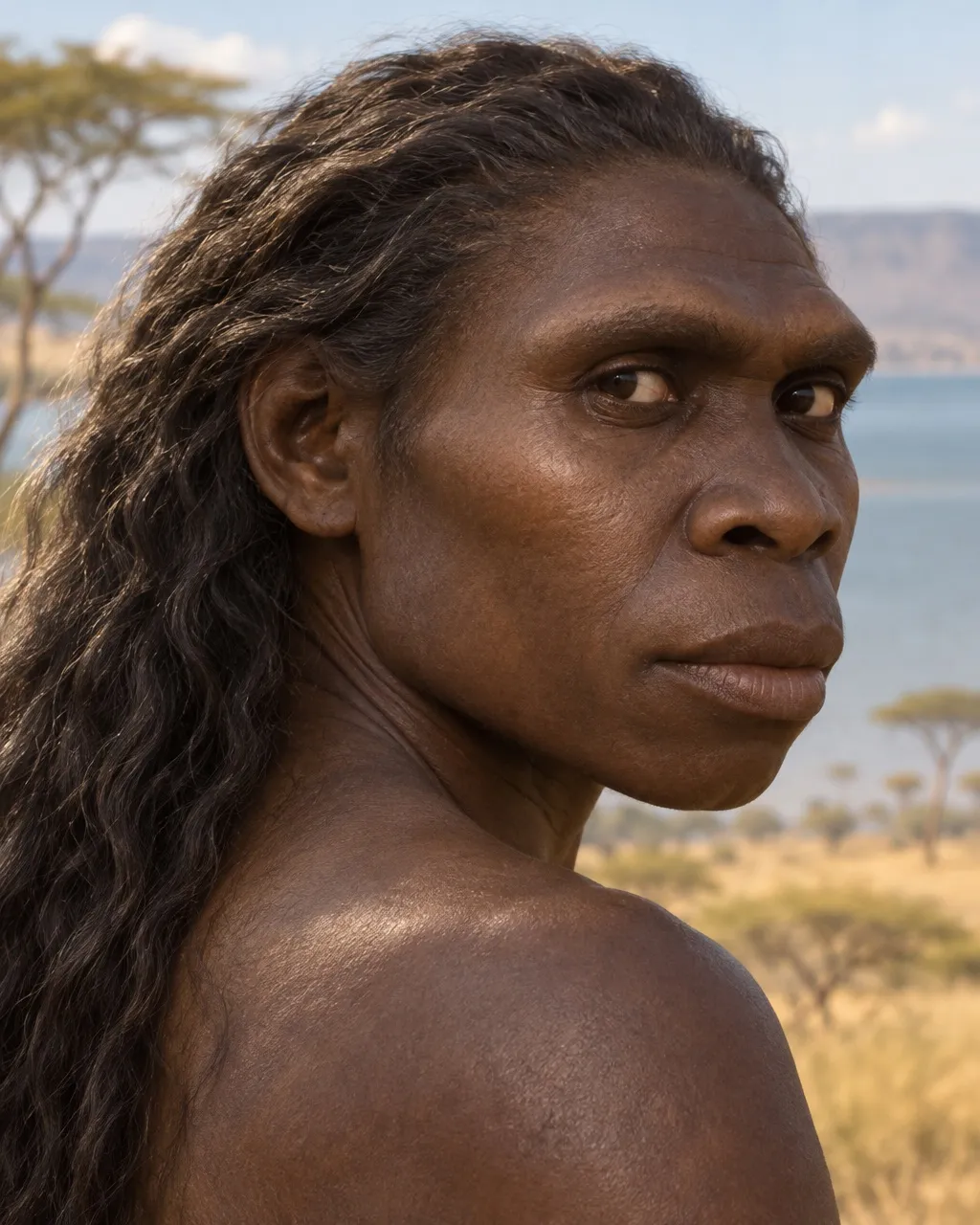
Bernard Ngeneo, the fieldworker who also found KNM-ER 1470, spotted it in 1975 on a survey led by Richard Leakey at Koobi Fora. Its age is given as about 1.6 to 1.8 million years, depending on the method used. The teeth are worn, the third molars had come through and the seams between the skull bones had closed, which shows that it was an adult. Comparison with male skulls such as Turkana Boy suggests it was a woman.
Why it matters
3733 was one of the first nearly complete skulls of African Homo erectus. Earlier African finds, such as OH 9 from Olduvai Gorge, were more broken, so 3733 gave the clearest picture yet of the species in Africa, to set beside the finds from Java and China. It also lived at the same time and in the same place as a very different relative, the robust Paranthropus boisei, represented by KNM-ER 406. Putting those two skulls side by side is one of the clearest ways to see that more than one kind of human relative shared the Turkana basin.
Where it is
The original is held by the National Museum of Kenya in Nairobi, and is on display there.
Sources
- Leakey, R. E. F. and Walker, A. (1976). Australopithecus, Homo erectus and the single species hypothesis. Nature 261: 572 to 574.
- Smithsonian National Museum of Natural History, Human Origins Program. Homo erectus.