The trail in brief
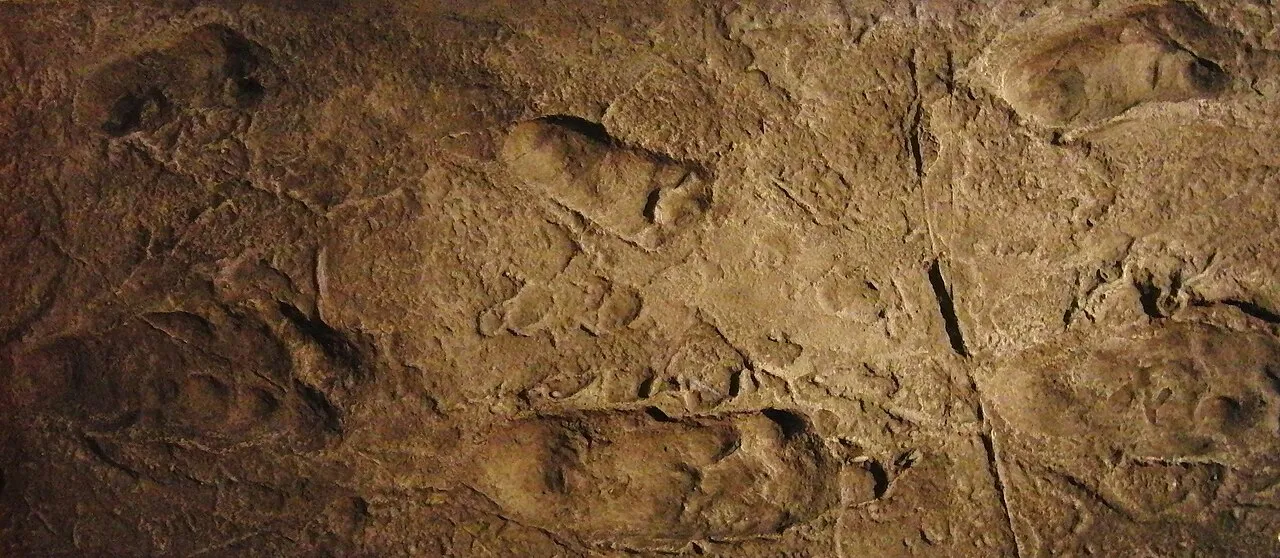
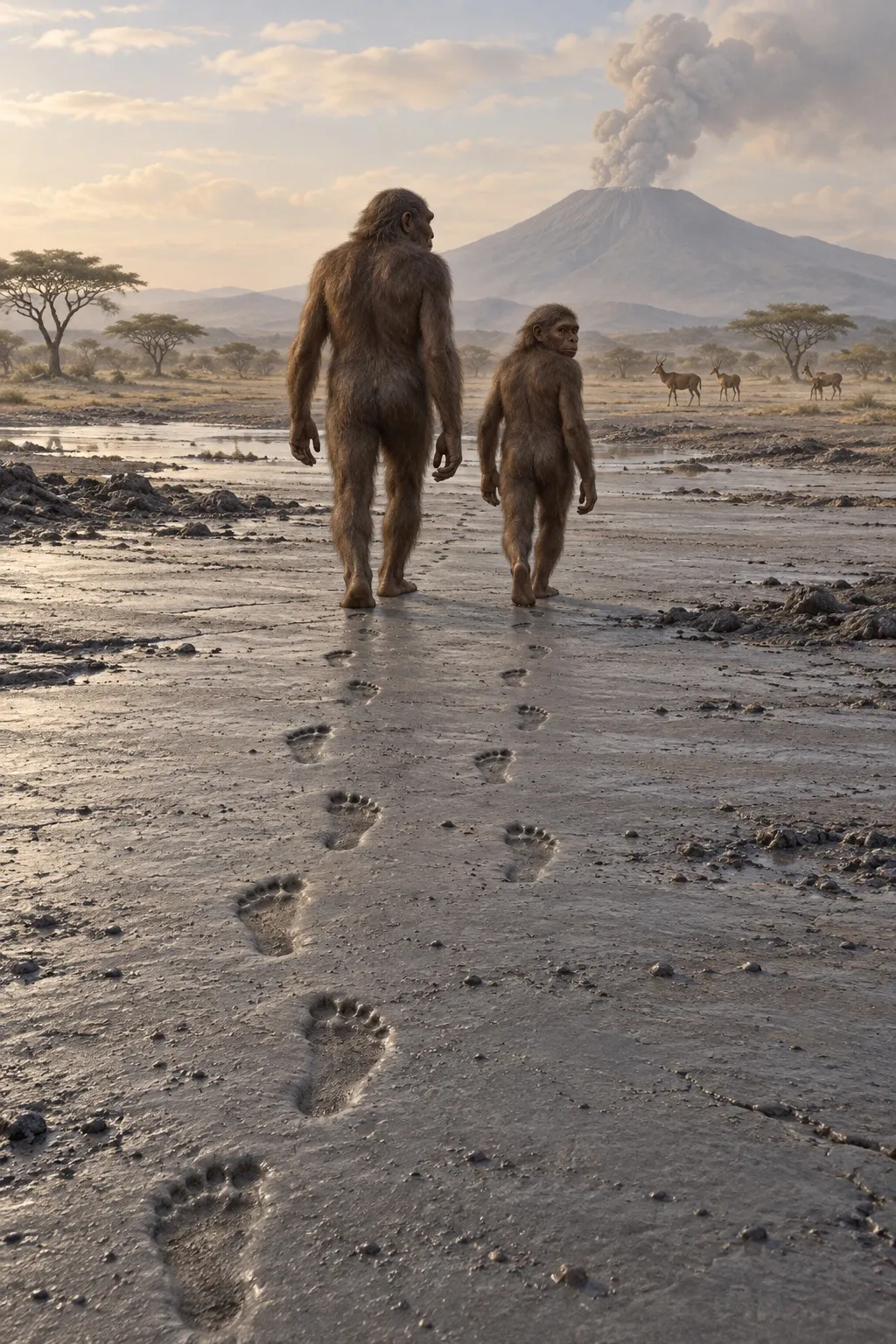
Between about 3.6 and 3.7 million years ago a group of upright-walking creatures crossed a plain of wet volcanic ash in what is now northern Tanzania. The ash dried and was buried, preserving a trail about 27 metres long with roughly 70 footprints, usually counted as three individuals: two walked side by side, and a third stepped in the prints of the larger one. The prints show a heel strike, an arch and a big toe in line with the other toes, much like a modern human’s. They are almost certainly the footprints of Australopithecus afarensis, the only early human relative known from Laetoli at the time.
The find
In 1976 members of Mary Leakey’s team found animal tracks in the hardened ash. In 1978 Paul Abell noticed the first print of the human-like trail at the spot now called Site G, and the team dug it out that year and the next. In 2015 a team led by Fidelis Masao, surveying for a planned site museum, found prints of two more individuals about 150 metres away, walking the same way on the same surface. One of them was about 1.65 m tall, far bigger than earlier estimates for the species, which suggests a wide range of body sizes, possibly reflecting differences between males and females.
Why it matters
The trail showed that upright walking was well established by 3.6 million years ago, long before the first stone tools or large brains. Researchers still argue about the details, such as how bent the hips and knees were, and how well these early walkers walked.
Protecting the trail
After excavation the trail was covered again to protect it. Acacia trees later took root in the covering and their roots began to damage the prints, so in the 1990s the trail was uncovered, treated and reburied with the trees removed. The original prints stay buried. Casts and replicas are shown in museums.
Sources
- Leakey, M. D. and Hay, R. L. (1979). Pliocene footprints in the Laetolil Beds at Laetoli, northern Tanzania. Nature 278: 317 to 323.
- Masao, F. T. and others (2016). New footprints from Laetoli (Tanzania) provide evidence for marked body size variation in early hominins. eLife 5: e19568.