Donald Johanson (born 1943) is an American paleoanthropologist who found Lucy, the 3.2-million-year-old partial skeleton of Australopithecus afarensis, at Hadar in Ethiopia in 1974, with Tom Gray. He co-named the species in 1978, founded the Institute of Human Origins in 1981 and has written some of the best-known popular books on human evolution.
A Sunday in November
On the morning of 24 November 1974, Donald Johanson and his graduate student Tom Gray drove out to map a gully at Hadar, in the Afar region of Ethiopia. On the way back to the Land Rover, Johanson glanced at a slope they had already searched and saw a piece of arm bone. Around it lay pieces of skull, ribs, vertebrae, a jaw and a pelvis, all from one small individual.
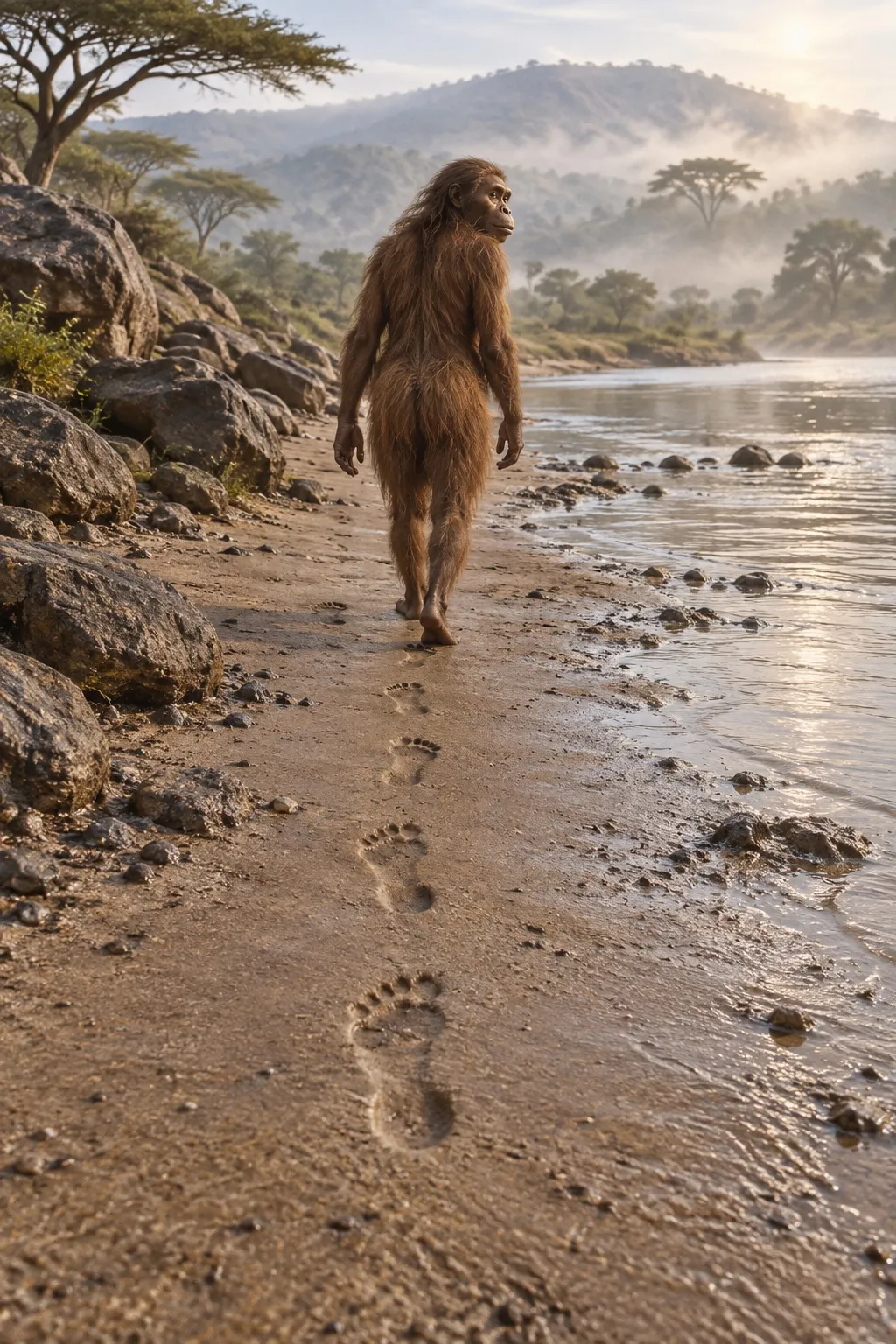
That night the camp played the Beatles song “Lucy in the Sky with Diamonds” again and again, and the skeleton became Lucy. About 40 percent of her survived, more than of any older human relative then known, and her pelvis and knee showed she walked upright about 3.2 million years ago.
The road to Hadar
Johanson was born in Chicago in 1943 to Swedish parents. He studied anthropology at the University of Illinois and the University of Chicago, where he finished his PhD in 1974. By then he was already working at Hadar with the French geologist Maurice Taieb and the paleontologist Yves Coppens. In 1973 he found a small knee joint there, the first sign at Hadar of upright walking.
In 1975 the team found the “First Family”, more than 200 fossil pieces from at least 13 individuals at one spot, AL 333.
Naming a species
Johanson and Tim White compared the Hadar fossils with jaws and teeth that Mary Leakey’s team had found at Laetoli in Tanzania, and decided they belonged to one species. In 1978, with Coppens, they named it Australopithecus afarensis, “the southern ape from Afar”. They argued it was the ancestor of later humans, which put them at odds with Richard Leakey, who saw a different family tree. The two men debated it in public for years.
In 1981 Johanson founded the Institute of Human Origins in Berkeley, California, and moved it to Arizona State University in 1997. His book Lucy: The Beginnings of Humankind (1981, with Maitland Edey) won a National Book Award. Fieldwork at Hadar, halted by war in 1977, restarted under him in 1990 and has continued since.
Worked with
- Tim White American paleoanthropologist who led the team that found Ardi
Where to see the finds
- National Museum of Ethiopia, Addis Ababa: Lucy (AL 288-1) and the First Family fossils (a cast of Lucy is on display)
Sources
- Johanson, D. C., White, T. D. and Coppens, Y. (1978). A new species of the genus Australopithecus (Primates: Hominidae) from the Pliocene of eastern Africa. Kirtlandia 28: 1 to 14.
- Johanson, D. C. and Edey, M. (1981). Lucy: The Beginnings of Humankind. Simon and Schuster.
- Institute of Human Origins, Arizona State University
- Wikipedia: Donald Johanson (checked for dates, 2026-10-30)
Last checked 30 October 2026. Spotted a mistake? Tell us.