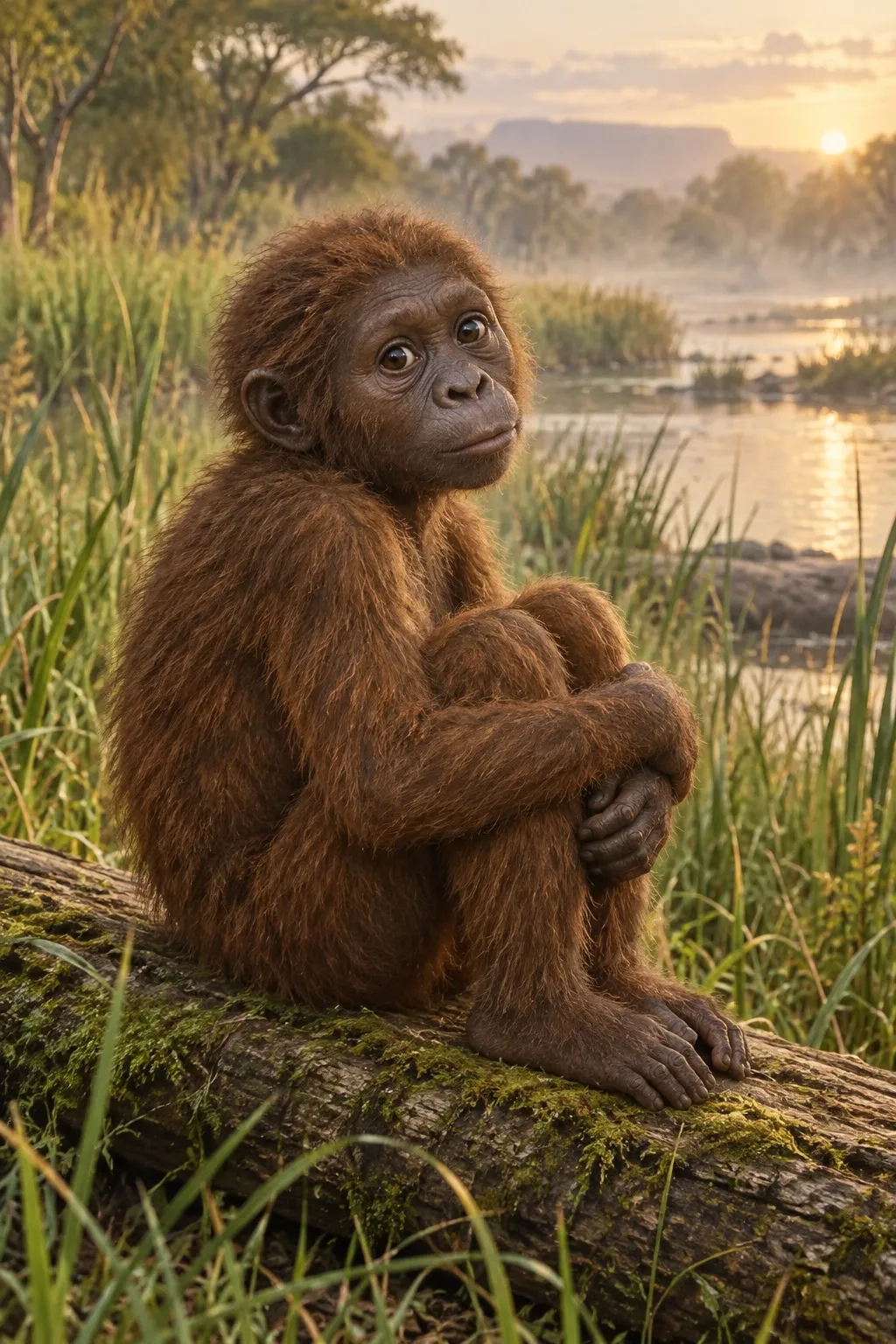
Zeresenay Alemseged, known as Zeray, is an Ethiopian paleoanthropologist at the University of Chicago. In 1999 he founded the Dikika Research Project in Ethiopia's Afar region, and in December 2000 his small team found Selam, the 3.3-million-year-old skeleton of an Australopithecus afarensis child. It is one of the most complete early hominin skeletons known.
The first field season
Zeresenay Alemseged chose Dikika, in the Afar region of Ethiopia, for his first expedition as a project leader. It lies across the Awash River from Hadar, where Lucy was found. On 10 December 2000 his team, then only Alemseged and three Ethiopian assistants, found a small skull in a block of sandstone.
Most accounts credit Alemseged with the discovery, and at least one says the team member Tilahun Gebreselassie spotted the skull first. We have not found a first-hand record that settles it, so we give both.
Five years with a needle
Getting the skeleton out took far longer than finding it. The team went back for more pieces over several field seasons, and Alemseged spent about five years freeing the bones from the rock with a dental tool and needle. In 2006 he and his colleagues published Selam in Nature. She was a child of about three, some 3.3 million years old, and belonged to the same species as Lucy, Australopithecus afarensis. Her name means “peace”.
Selam still has more to tell. She preserves bones that rarely survive, including the small hyoid from the throat and a shoulder blade. A 2012 study by David Green and Alemseged compared those shoulder blades with those of apes and argued that her species still climbed well.
Dikika and after
The Dikika team also reported two animal bones with what look like cut marks, about 3.4 million years old, in 2010. If they are cut marks, stone tools were in use far earlier than the oldest stone tools then known. Other researchers argue the marks could come from trampling or other natural causes, and the question is still debated.
Alemseged was born in Axum, in northern Ethiopia, and studied geology at Addis Ababa University before joining the National Museum of Ethiopia. He earned his PhD in Paris in 1998. He worked at the Institute of Human Origins in Arizona and the Max Planck Institute for Evolutionary Anthropology in Leipzig, became a curator at the California Academy of Sciences in 2008, and joined the University of Chicago in 2016. He also helped found the East African Association of Paleontologists and Paleoanthropologists in 2005, and he was elected to the American Academy of Arts and Sciences in 2021.
Where to see the finds
- National Museum of Ethiopia, Addis Ababa: Selam (a replica of the skull has been shown there)
Sources
- Alemseged, Z. and others (2006). A juvenile early hominin skeleton from Dikika, Ethiopia. Nature 443: 296 to 301.
- Green, D. J. and Alemseged, Z. (2012). Australopithecus afarensis scapular ontogeny, function, and the role of climbing in human evolution. Science 338: 514 to 517.
- McPherron, S. P. and others (2010). Evidence for stone-tool-assisted consumption of animal tissues before 3.39 million years ago at Dikika, Ethiopia. Nature 466: 857 to 860.
- California Academy of Sciences: Zeray Alemseged
- Embryo Project Encyclopedia, Arizona State University: The Discovery of the Dikika Baby Fossil
- University of Navarra, Science, Reason and Faith: Selam, the australopithecine child of Dikika (names Tilahun Gebreselassie)
- Wikipedia: Zeresenay Alemseged (checked for dates, 2026-11-03)
Last checked 3 November 2026. Spotted a mistake? Tell us.