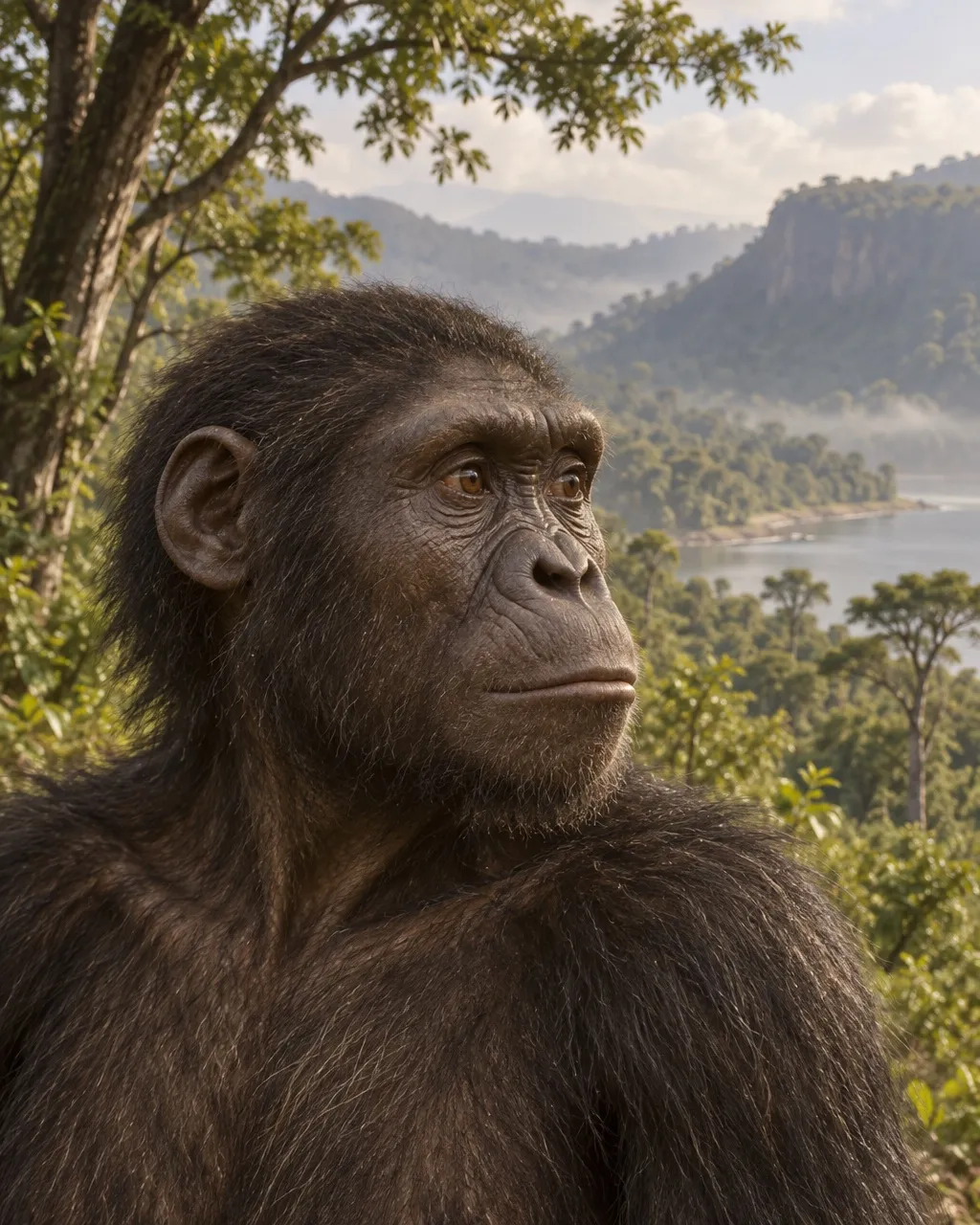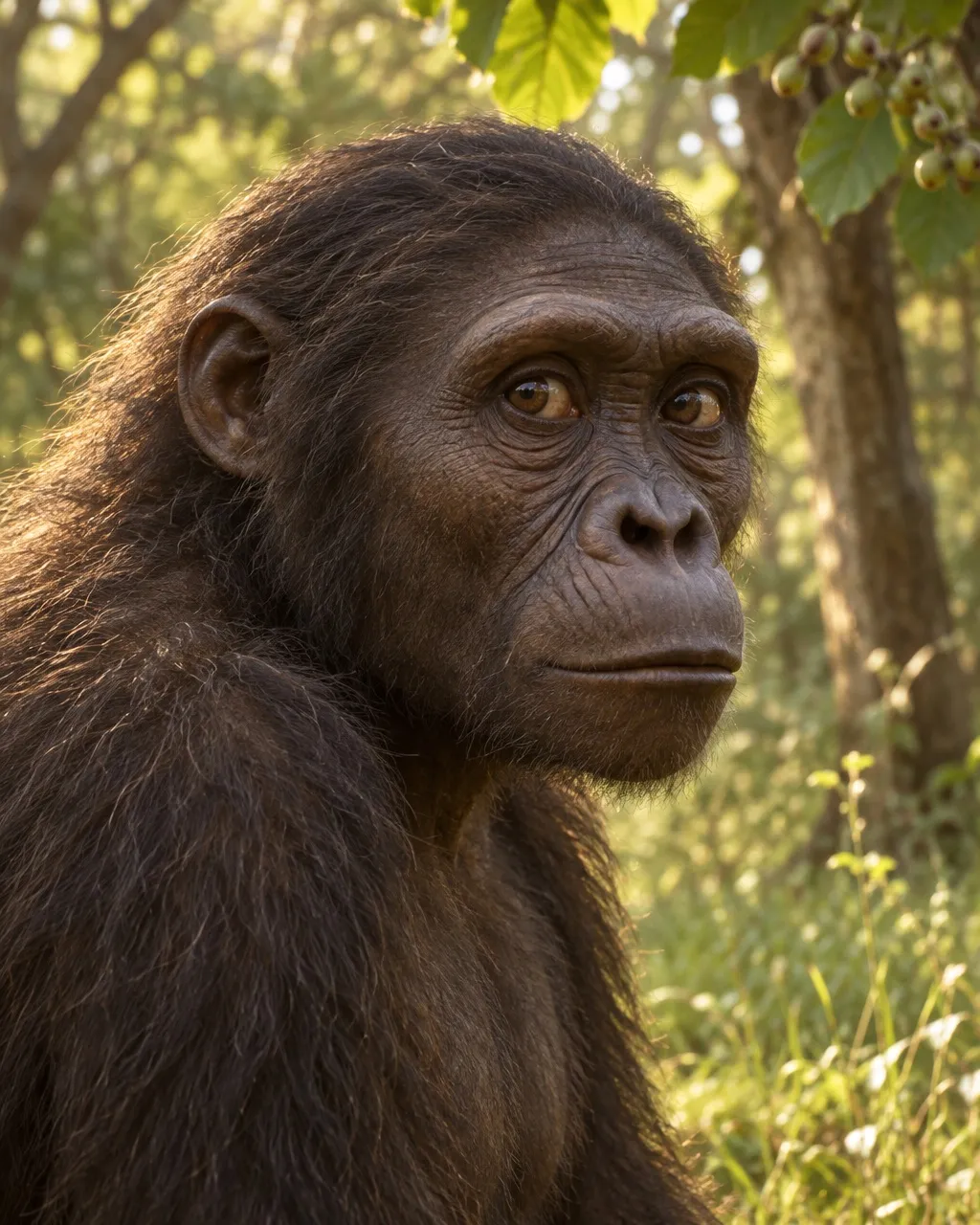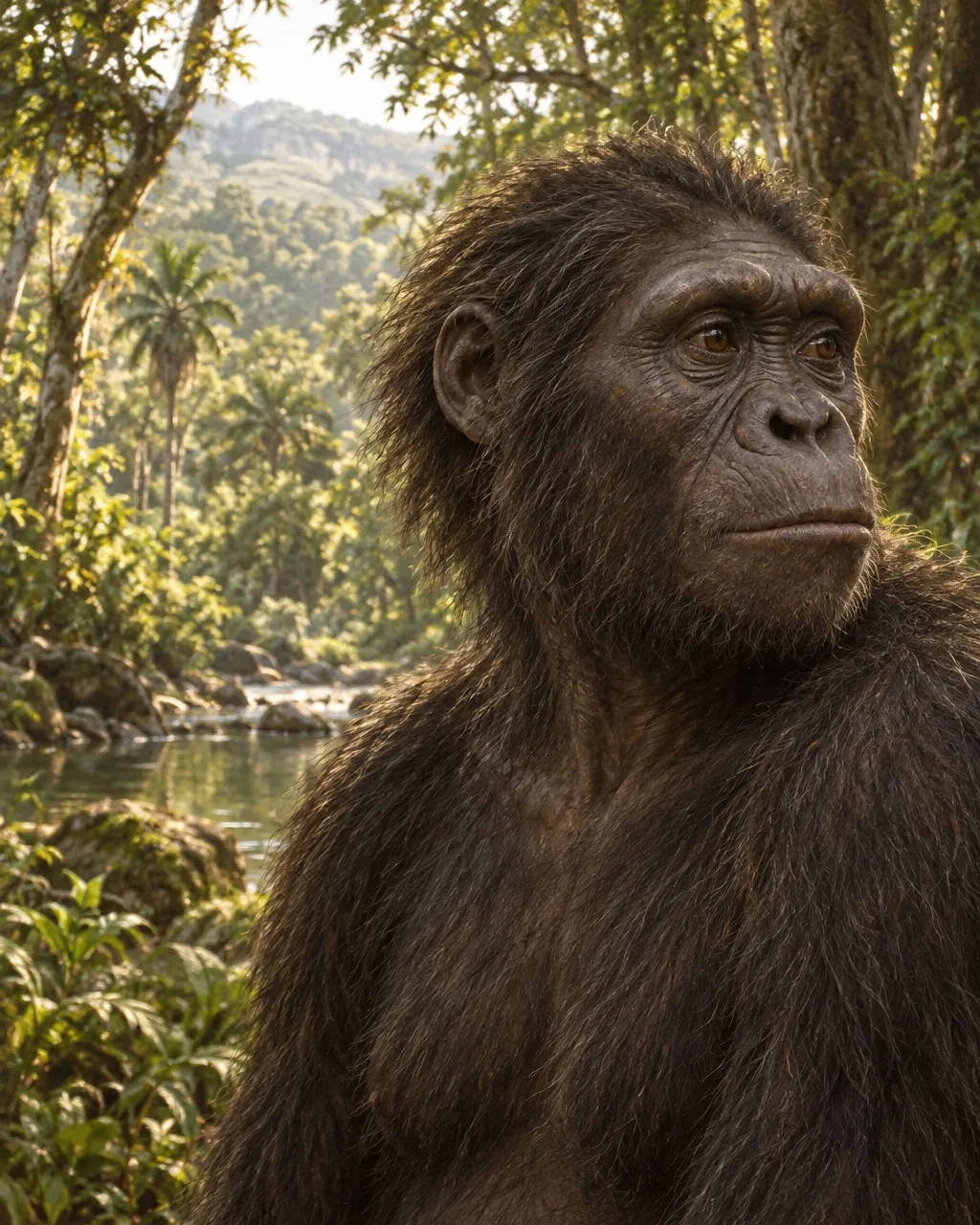
Ardipithecus kadabba is one of the oldest known members of the human family, found in the Middle Awash of Ethiopia and dated to about 5.8 to 5.2 million years ago. It is known from teeth, a jaw and a few bones. A toe bone hints that it walked upright, and its canines still sharpened against its teeth like an ape's.
The species in brief
Ardipithecus kadabba lived in Ethiopia between about 5.8 and 5.2 million years ago, not long after the human line split from the line leading to chimpanzees. It is known from only a handful of fossils: teeth, part of a lower jaw and a few bones from the arm, hand, collarbone and foot. Even so, it is one of the three oldest candidates for the human family, alongside Sahelanthropus tchadensis from Chad and Orrorin tugenensis from Kenya.
Discovery
In 1997 Yohannes Haile-Selassie, then a doctoral student at the University of California, Berkeley, was working along the western edge of the Middle Awash in Ethiopia’s Afar rift when he spotted a piece of lower jaw lying on the ground. Over the next few years he and the Middle Awash team found 11 specimens from at least five individuals at five places in the area, including Alayla and Asa Koma.
Haile-Selassie described them in Nature in 2001 and named them Ardipithecus ramidus kadabba, a subspecies of the 4.4-million-year-old Ardipithecus ramidus already known from Aramis, a little further east. In 2002 the team found six more teeth at Asa Koma. Their shape and wear showed that this was a separate, more primitive species, and in 2004 Haile-Selassie, Gen Suwa and Tim White raised it to a species of its own, Ardipithecus kadabba.
The type specimen, the fossil the name is tied to, is ALA-VP-2/10, a piece of a right lower jaw with teeth.
How old it is
The fossils lie in layers sandwiched between volcanic ash beds that can be dated by argon-argon dating. A companion paper in 2001, led by Giday WoldeGabriel, dated the main finds to between about 5.77 and 5.54 million years ago. One toe bone, from a place called Amba East about 15 kilometres away, is younger, about 5.2 million years old.
The teeth
Teeth are most of what we have, and they tell a mixed story. In apes, the upper canine is a tall, sharp tooth that rubs against the first lower premolar every time the jaws close, keeping it sharp. This is called a honing complex. Later hominins lost it, and their canines became small and blunt.
The canines of A. kadabba are smaller than a chimpanzee’s and shaped a little more like those of later hominins, but they still stick out past the other teeth, and the wear on the 2002 teeth shows that the canine was still being honed against the premolar. In other words, it was partway along the road. The back teeth are bigger than a chimpanzee’s, and the front teeth narrower, which suggests a diet with more tough, fibrous plant food than the fruit and soft leaves chimpanzees prefer.
Haile-Selassie, Suwa and White also noticed that the teeth of Sahelanthropus, Orrorin and A. kadabba are very alike. They suggested that the three may not be as different as their three separate names suggest, and that it is too early to say there were many kinds of hominin at the end of the Miocene.
Did it walk upright?
The strongest hint is AME-VP-1/71, a bone from the base of a toe. The joint at its end is angled upward, the way it is in hominins that push off from their toes as they step forward on two legs. That points to some kind of upright walking. The arm and hand bones are more ape-like and fit an animal that still climbed.
But the toe bone is the youngest of the fossils and comes from a different place, so some researchers are not sure it belongs to the same species. Until more bones are found, A. kadabba’s way of walking remains an open question.
Where it lived
The animals and plants found with the fossils show that A. kadabba lived in a fairly wet, wooded landscape with lakes, swamps and springs, not on open grassland. WoldeGabriel’s team pointed out that this, together with the wooded setting of Orrorin in Kenya, does not fit the old idea that our ancestors stood up to cross the savannah. Upright walking seems to have started among apes that still lived among trees.
Where it fits in the family tree
Haile-Selassie argued that A. kadabba belongs on the human side of the split, because some features of its teeth are shared only with later hominins. Its many ape-like features also show it was close to the last common ancestor of chimpanzees and humans. The usual view is that A. kadabba could be an ancestor of Ardipithecus ramidus, which lived in the same region more than a million years later, but the fossils are too few to be sure.
Where to see it
The fossils are kept at the National Museum of Ethiopia in Addis Ababa. The full scientific description is in the 2009 book Ardipithecus kadabba: Late Miocene Evidence from the Middle Awash, Ethiopia, edited by Haile-Selassie and WoldeGabriel.
Sources
- Smithsonian National Museum of Natural History, Human Origins Program. Ardipithecus kadabba.
- Australian Museum. Ardipithecus kadabba.
- Haile-Selassie, Y. (2001). Late Miocene hominids from the Middle Awash, Ethiopia. Nature 412: 178 to 181.
- WoldeGabriel, G., Haile-Selassie, Y., Renne, P. R., Hart, W. K., Ambrose, S. H., Asfaw, B., Heiken, G. and White, T. (2001). Geology and palaeontology of the Late Miocene Middle Awash valley, Afar rift, Ethiopia. Nature 412: 175 to 178.
- Haile-Selassie, Y., Suwa, G. and White, T. D. (2004). Late Miocene teeth from Middle Awash, Ethiopia, and early hominid dental evolution. Science 303: 1503 to 1505.
- Haile-Selassie, Y. and WoldeGabriel, G., editors (2009). Ardipithecus kadabba: Late Miocene Evidence from the Middle Awash, Ethiopia. University of California Press.
Cite this page
Bonelore. "Ardipithecus kadabba." https://bonelore.com/species/ardipithecus-kadabba/
Last checked 27 November 2026. Spotted a mistake? Tell us.