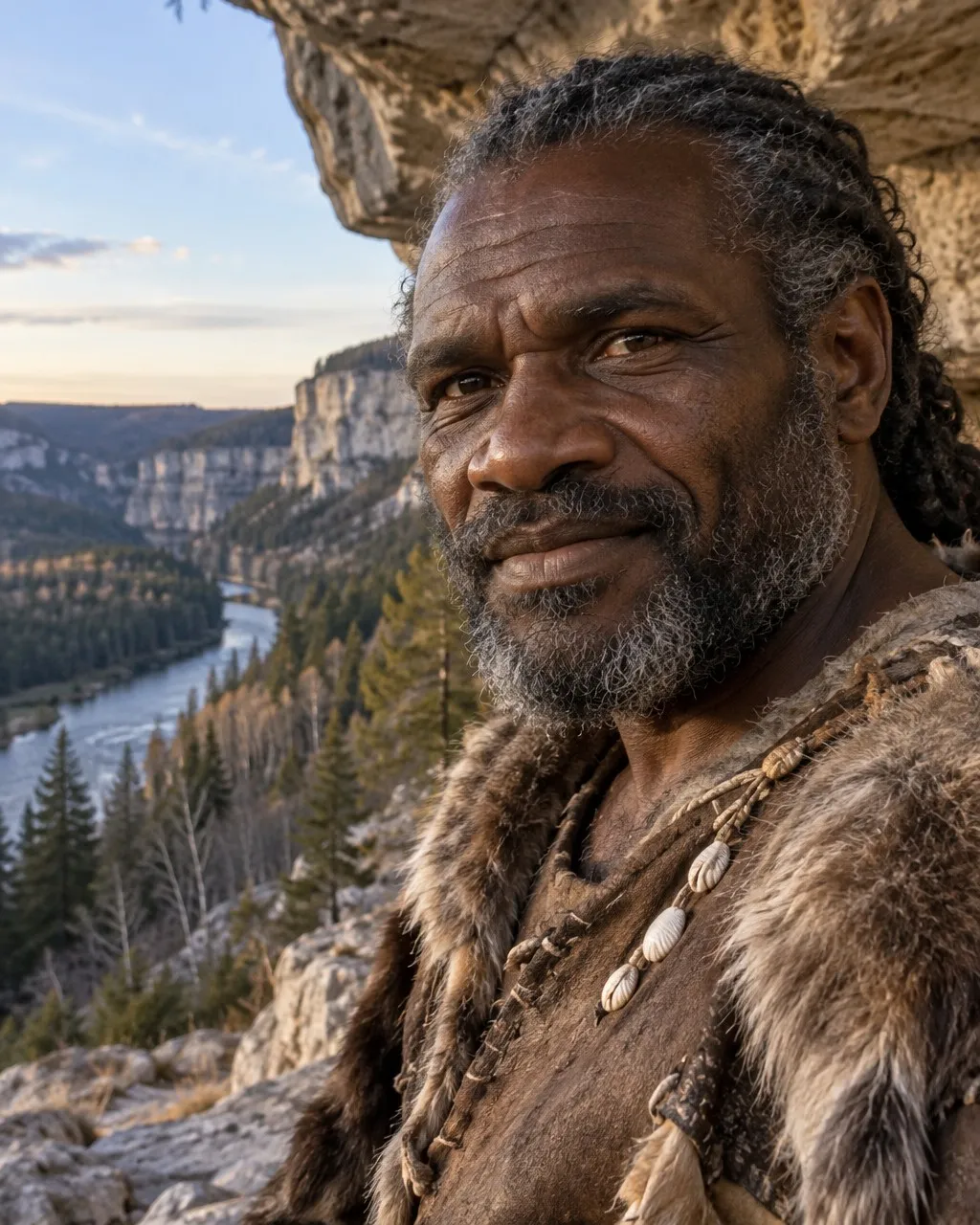
The skull under the face
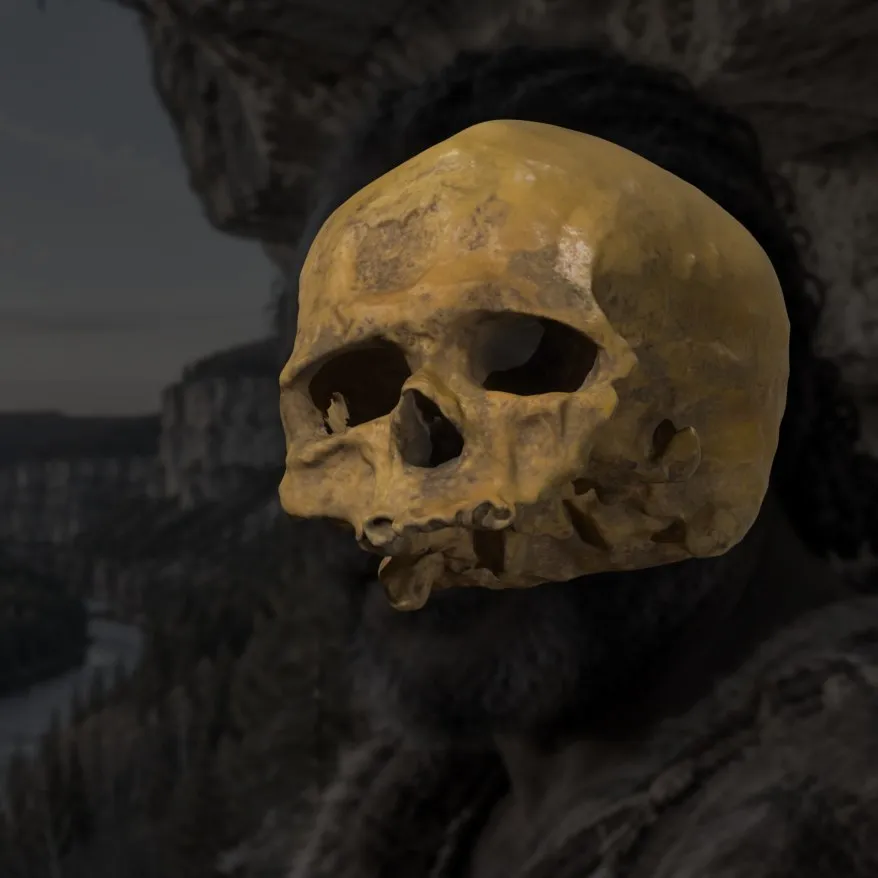
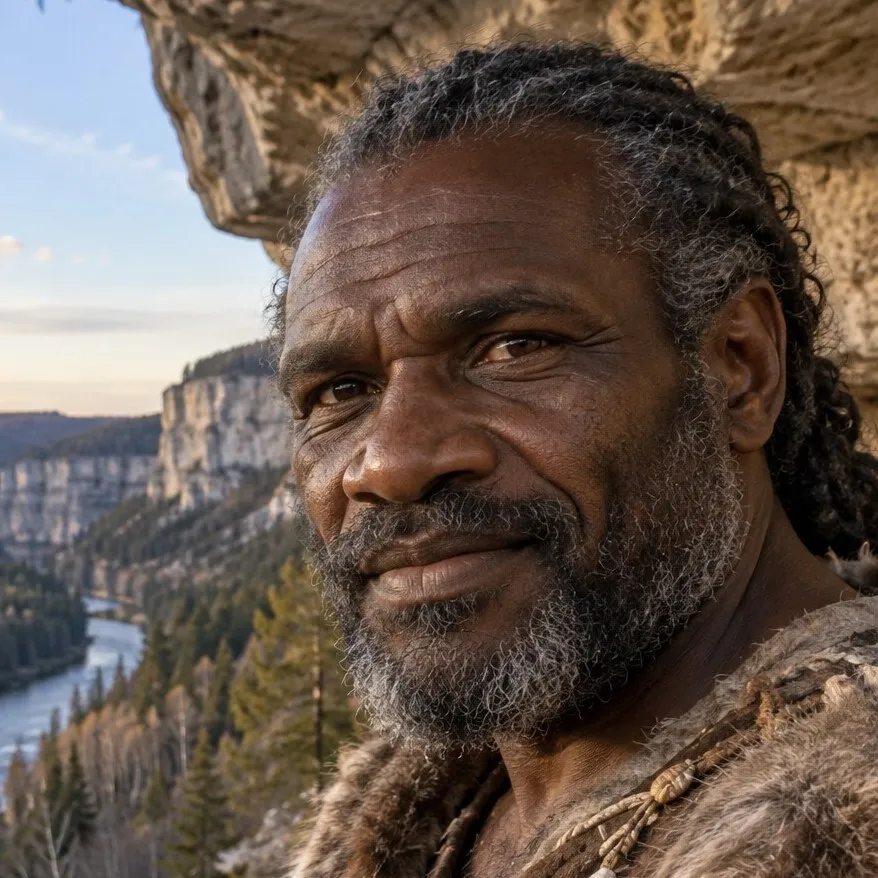
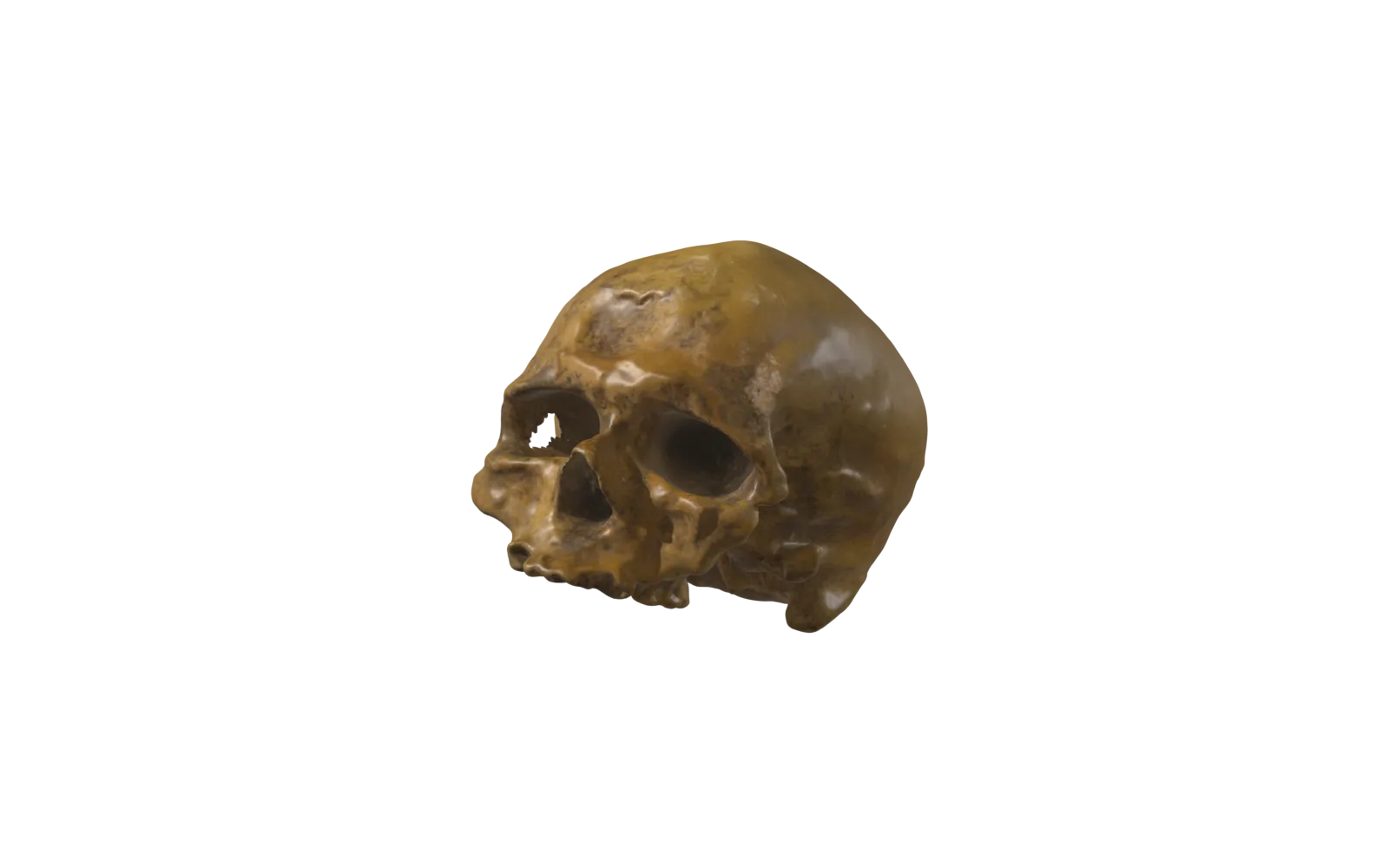
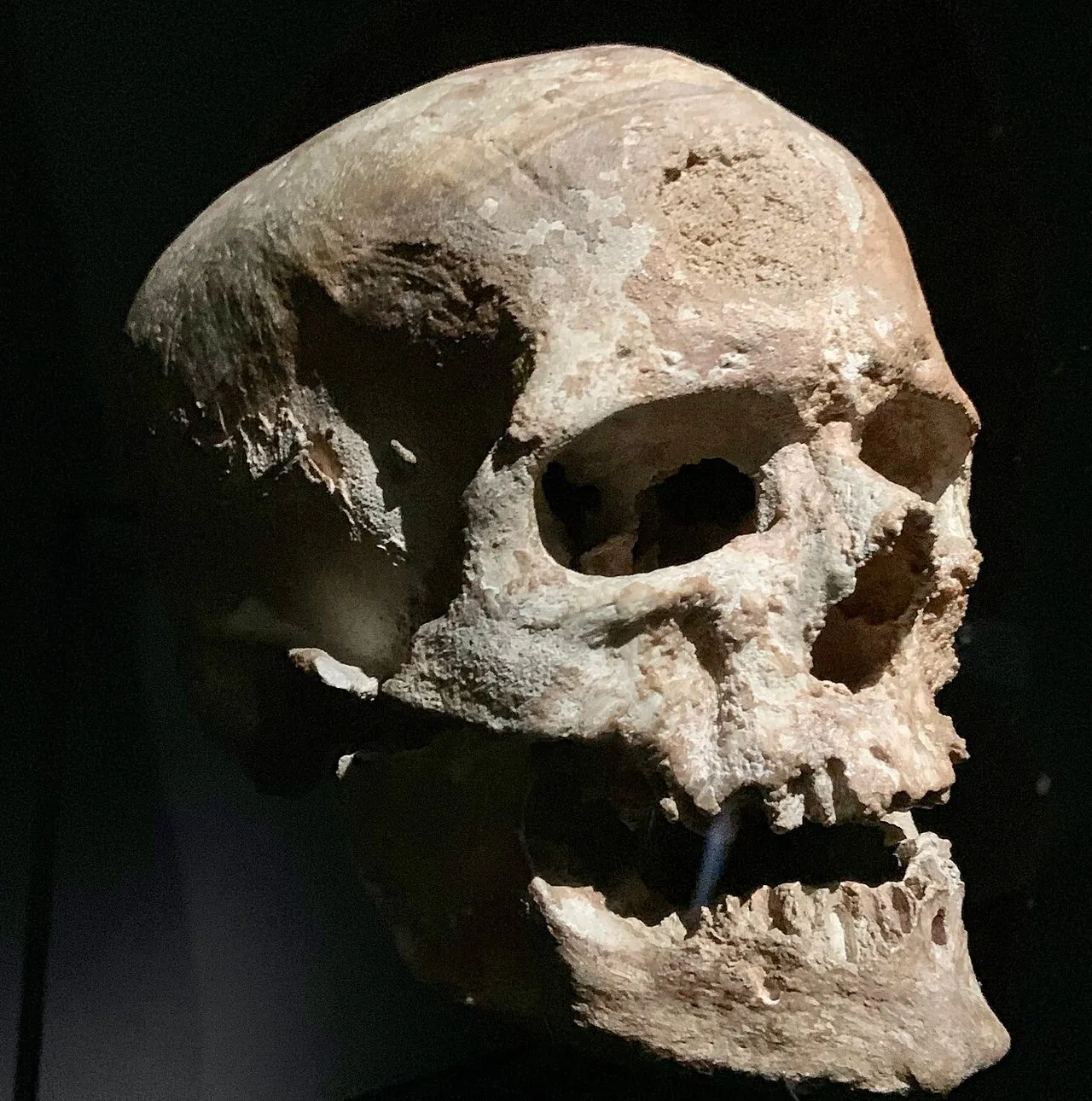
The skull in brief
Cro-Magnon 1 is the skull and part of the skeleton of a middle-aged man, one of five people found in 1868 in the Cro-Magnon rock shelter in France. It was among the first fossils to be recognised as an ancient member of our own species, Homo sapiens. The skull is fully modern: a high, rounded braincase, a steep forehead, a short, broad face and low, wide eye sockets, with a brain of about 1,600 cubic centimetres. It is complete except for the teeth.
The find
In March 1868 workmen cutting a road at Les Eyzies, in the Dordogne region of France, uncovered a rock shelter in the limestone cliff, with bones and flint tools in it. The geologist Louis Lartet was sent to excavate. He found the remains of four adults and an infant, along with sea shells and animal teeth that had been pierced to wear as pendants or necklaces, an object made of ivory and pieces of worked reindeer antler. The dead appear to have been buried together.
Why it mattered
The Neanderthals had been named only four years earlier. Here, by contrast, were people with skulls like our own, lying with stone tools and the bones of Ice Age animals. It was proof that our own kind had a very long past in Europe.
For a century afterwards “Cro-Magnon” was the common name for the first modern people of Europe. Researchers now mostly say “early modern humans” instead, because the Cro-Magnon people were not a separate species or a single group. They were Homo sapiens, like us.
The man
He was probably under 50 when he died. The bone of his face is pitted, and there is a hollow in his forehead. This was long put down to a fungal infection. In 2018 a French team led by Philippe Charlier proposed a different cause: neurofibromatosis type 1, an inherited condition that produces growths along the nerves, and they made a new reconstruction of his face with those lumps on it.
The others in the shelter had hard lives too. Several had neck bones that had fused together after injury, and the woman known as Cro-Magnon 2 lived for some time with a fractured skull. People with injuries like these would have needed help from those around them.
How old it is
The burials are usually given as about 30,000 years old. In 2002 Dominique Henry-Gambier reported a radiocarbon date from one of the pierced shells of about 27,700 radiocarbon years, which works out to a little over 30,000 calendar years. That is younger than the first modern people in Europe, who arrived more than 10,000 years earlier, so the Cro-Magnon people were not among the very first.
Where it is
The original is held at the Musée de l’Homme in Paris.
Sources
- Lartet, L. (1868). Une sépulture des troglodytes du Périgord (crânes des Eyzies). Bulletins de la Société d’Anthropologie de Paris 3: 335 to 349.
- Henry-Gambier, D. (2002). Les fossiles de Cro-Magnon (Les Eyzies-de-Tayac, Dordogne): nouvelles données sur leur position chronologique et leur attribution culturelle. Bulletins et Mémoires de la Société d’Anthropologie de Paris 14: 89 to 112.
- Charlier, P. and others (2018). Did Cro-Magnon 1 have neurofibromatosis type 1? The Lancet 391: 1259.
- Smithsonian National Museum of Natural History, Human Origins Program. Cro-Magnon 1.
Last checked 27 November 2026. Spotted a mistake? Tell us.