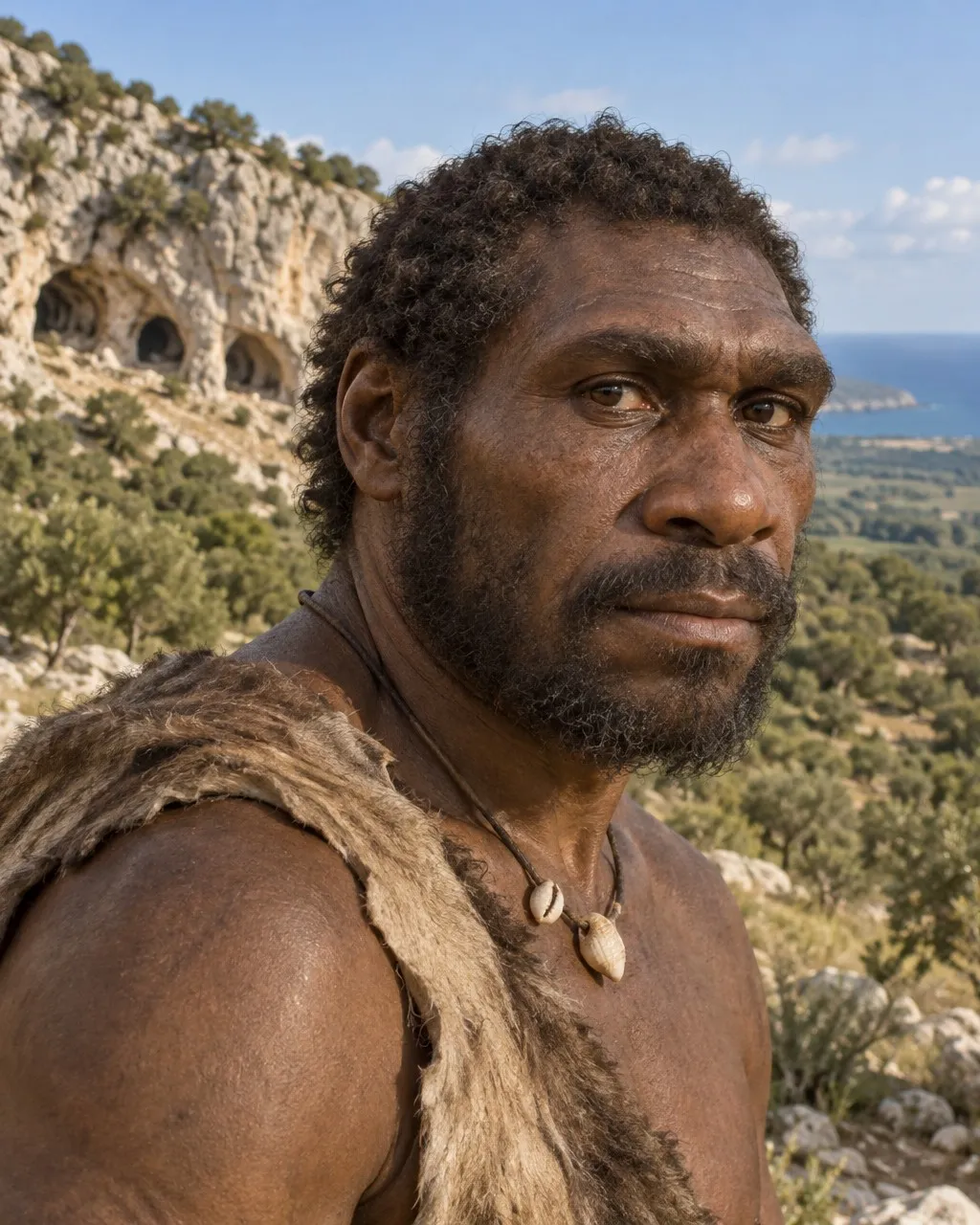
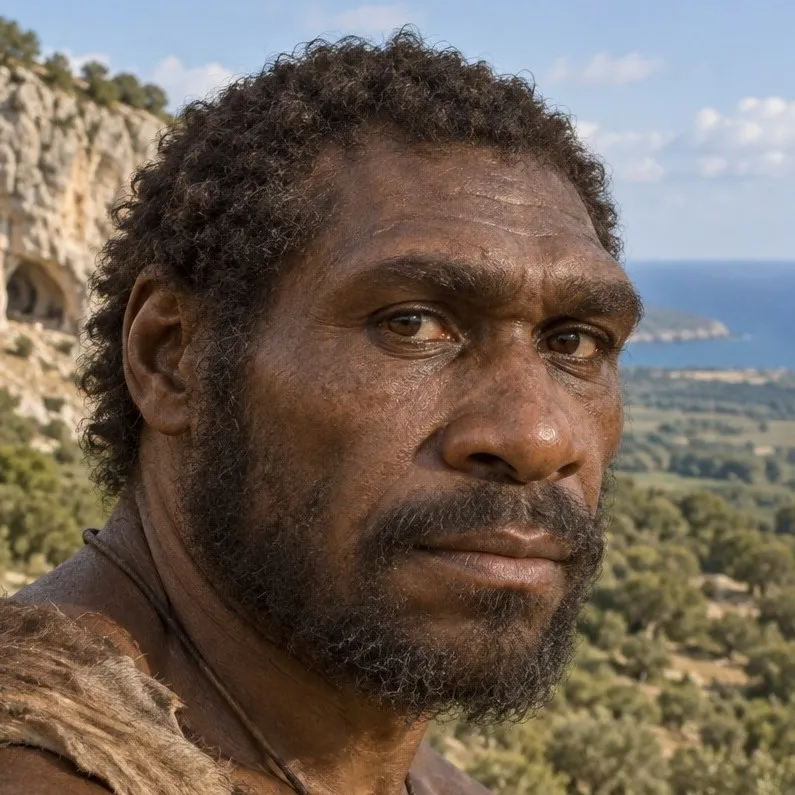
The skull under the face
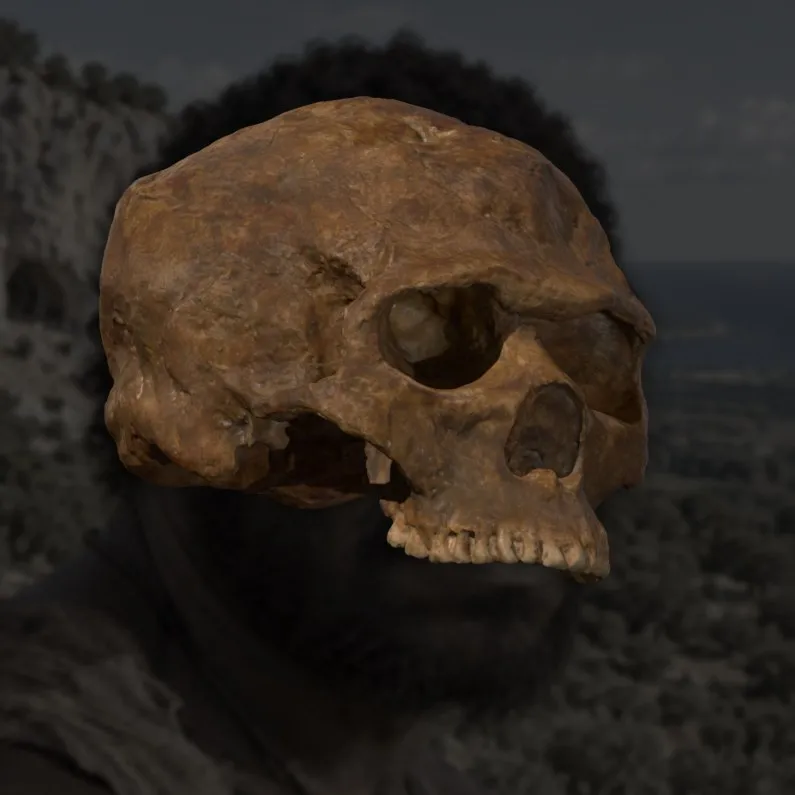
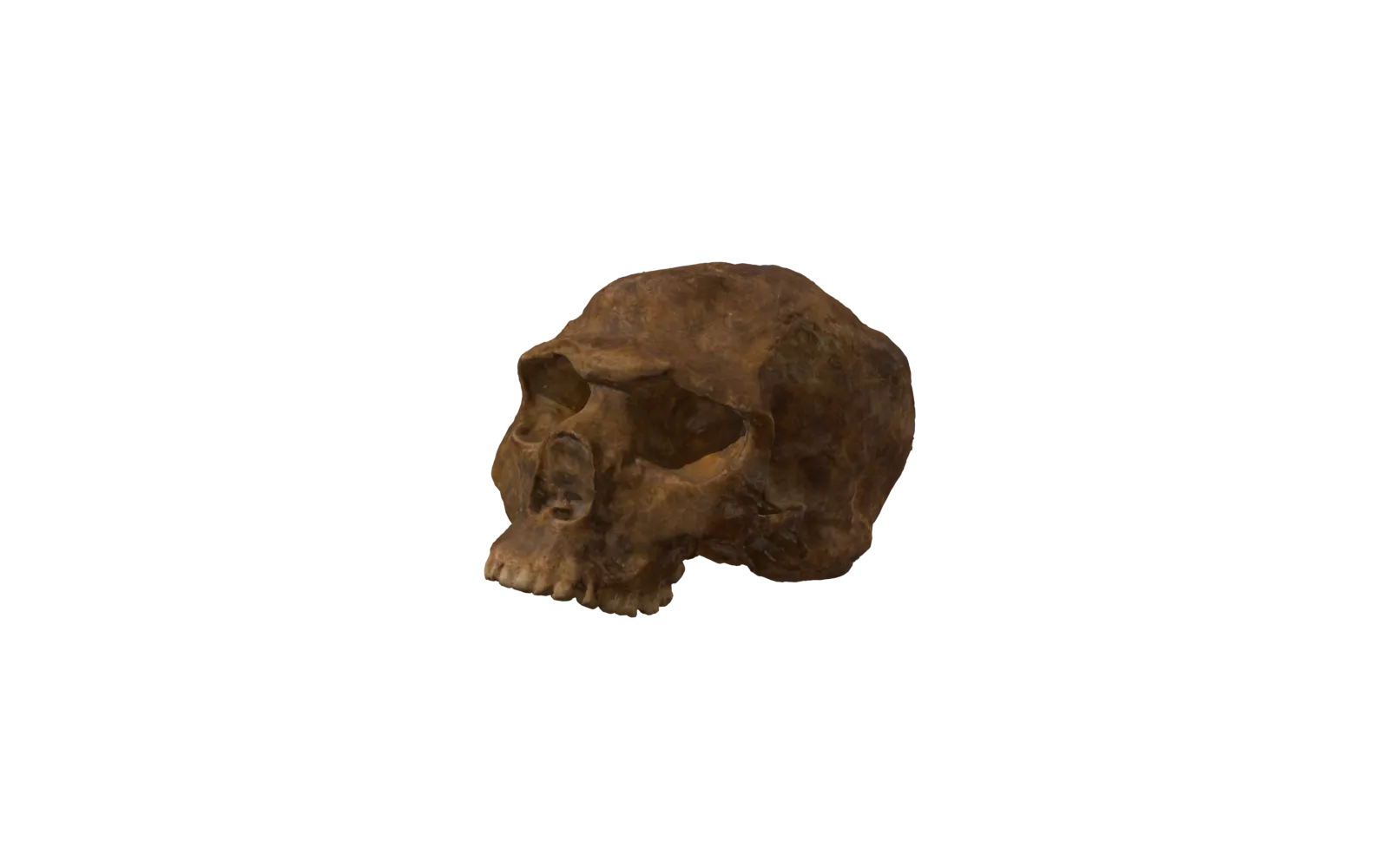
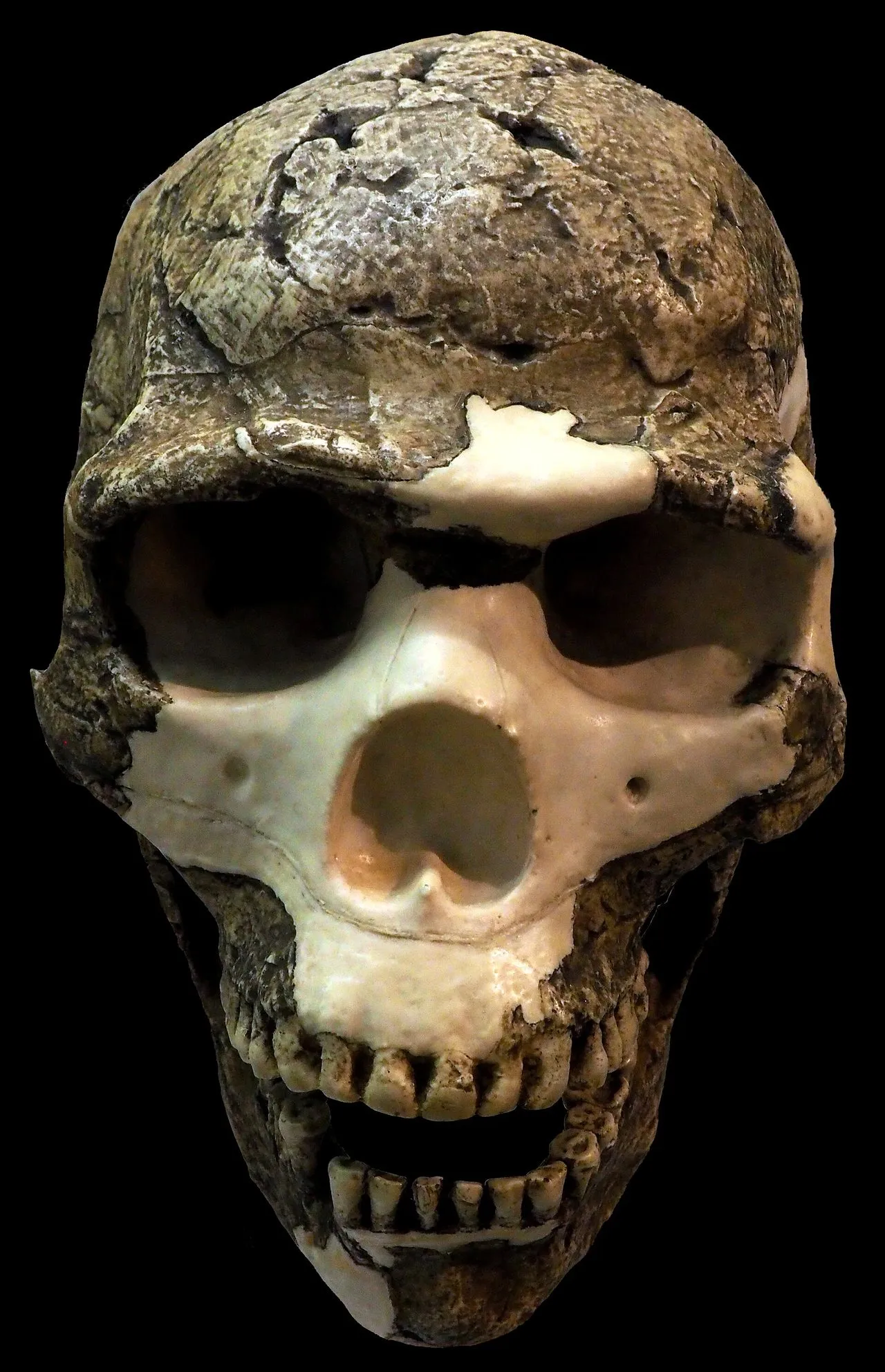
The skull in brief
Skhul V is the skull and skeleton of a man of about 30 to 40, the best preserved of ten early Homo sapiens, adults and children, found in Skhul Cave on Mount Carmel in Israel. His skull is a mix. The braincase is high and rounded with a steep forehead, like ours, and the brain was about 1,500 cubic centimetres. But he also has a clear ridge of bone over the eyes, more like earlier humans. The back of the skull is rounded, without the “bun” that sticks out on many Neanderthal skulls.
The find
Dorothy Garrod led the excavation of the Mount Carmel caves between 1929 and 1934, and she put a young American, Theodore McCown, in charge of one of them, Skhul. In May 1932 McCown and his assistant Hallam Movius uncovered Skhul V, a nearly complete skeleton. The bones were set in rock-hard cave earth, so they were cut out in blocks and shipped to London, where it took years to free them. McCown and the anatomist Arthur Keith published their description in 1939.
A burial
He had been laid in a shallow grave with his knees drawn up, and the lower jaw of a wild boar lay within his arms. Most researchers read this as a deliberate burial with an offering, which makes the graves at Skhul, and at Qafzeh Cave not far away, the oldest known burials of this kind. Two sea shells with holes in them were also found at Skhul. They had been carried inland from the coast, and they are among the oldest beads known anywhere.
How old it is, and why it matters
At first the Skhul people were thought to be about 40,000 years old, younger than the Neanderthals found a few minutes’ walk away in Tabun Cave. That made it possible to see the Neanderthals as their ancestors.
Better dating overturned the idea. Work in 1989 put the Skhul fossils at 80,000 to 100,000 years old, and the fullest study, in 2005, at 100,000 to 135,000. So people who looked much like us were living in this region long before the Neanderthals disappeared, and at about the same time as some of them. Neanderthals could not have been their ancestors.
Most researchers now see the Skhul and Qafzeh people as an early move of our species out of Africa that did not last. Neanderthals such as Amud 1 lived in the same hills tens of thousands of years later.
Where it is
The original is held at the Peabody Museum of Archaeology and Ethnology at Harvard University.
Sources
- McCown, T. D. and Keith, A. (1939). The Stone Age of Mount Carmel, Volume 2: The Fossil Human Remains from the Levalloiso-Mousterian. Oxford: Clarendon Press.
- Stringer, C. B. and others (1989). ESR dates for the hominid burial site of Es Skhul in Israel. Nature 338: 756 to 758.
- Grün, R. and others (2005). U-series and ESR analyses of bones and teeth relating to the human burials from Skhul. Journal of Human Evolution 49: 316 to 334.
- Vanhaeren, M. and others (2006). Middle Paleolithic shell beads in Israel and Algeria. Science 312: 1785 to 1788.
- Smithsonian National Museum of Natural History, Human Origins Program. Skhūl V.
Last checked 27 November 2026. Spotted a mistake? Tell us.