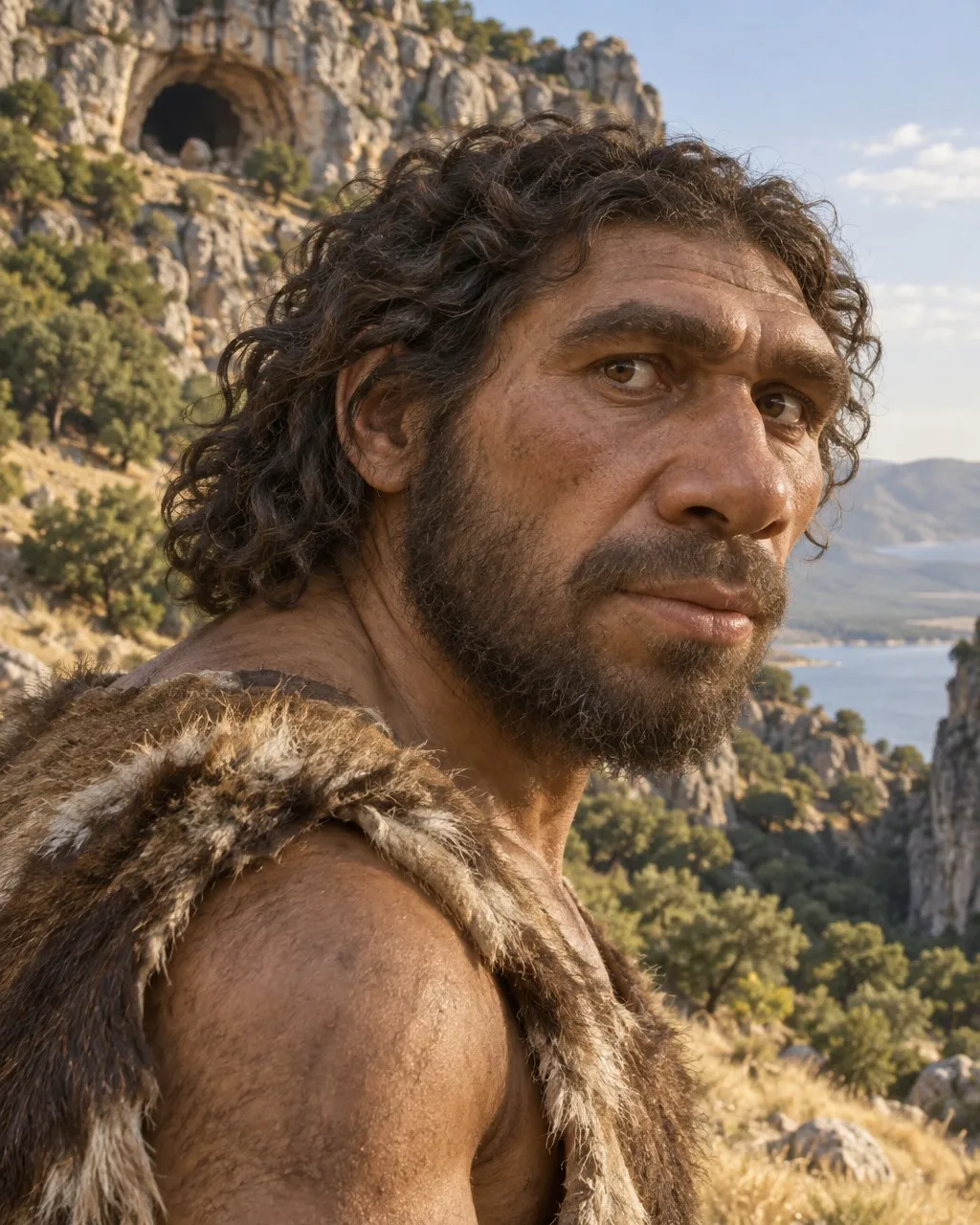
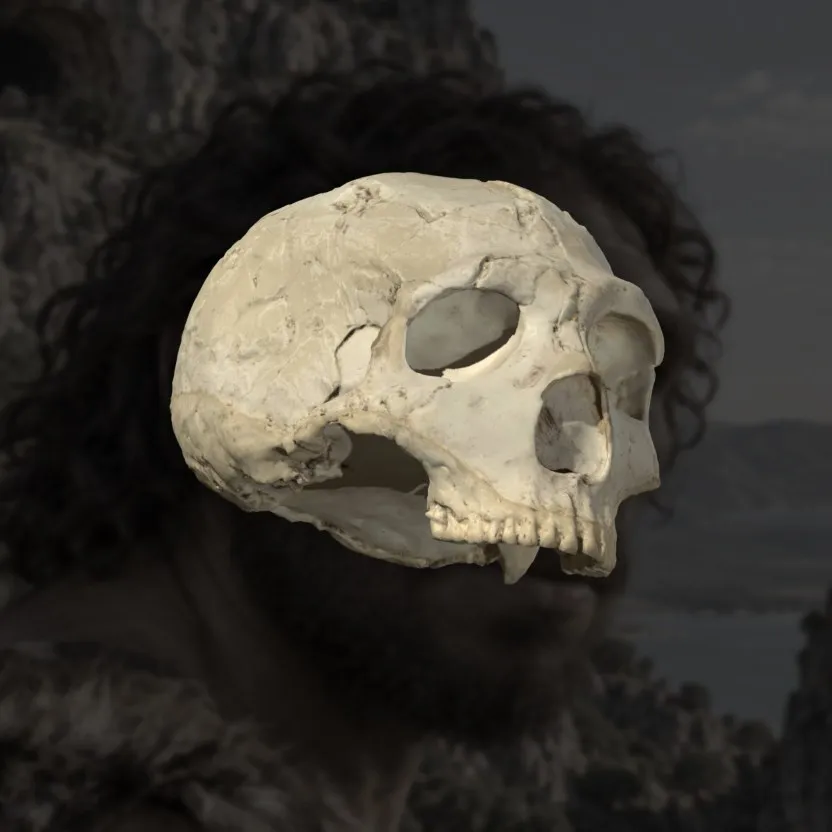
The skull under the face
The skeleton in brief
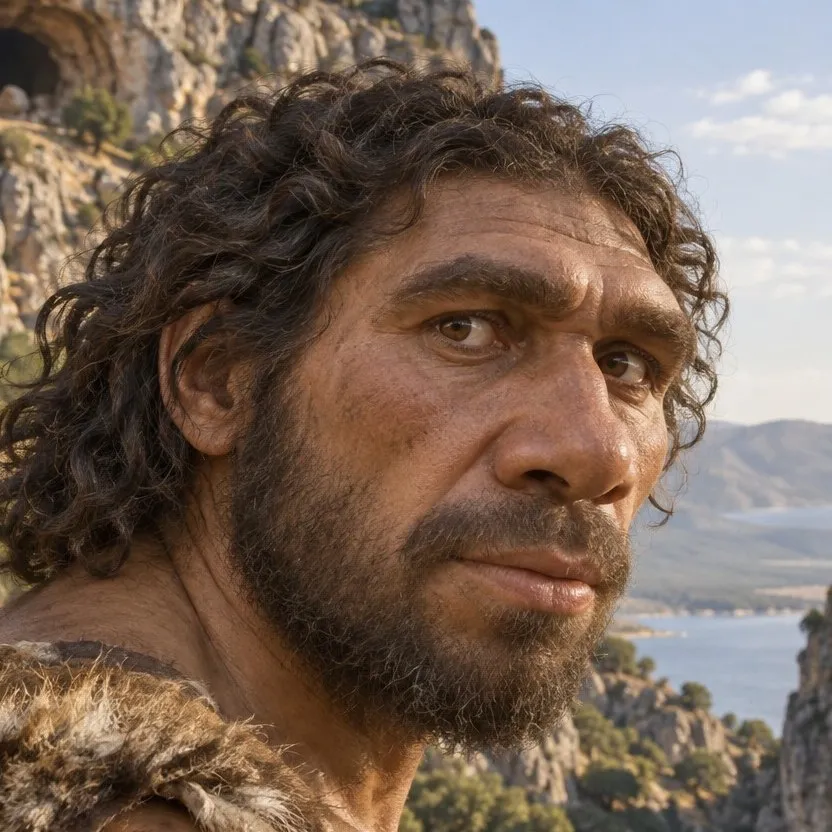
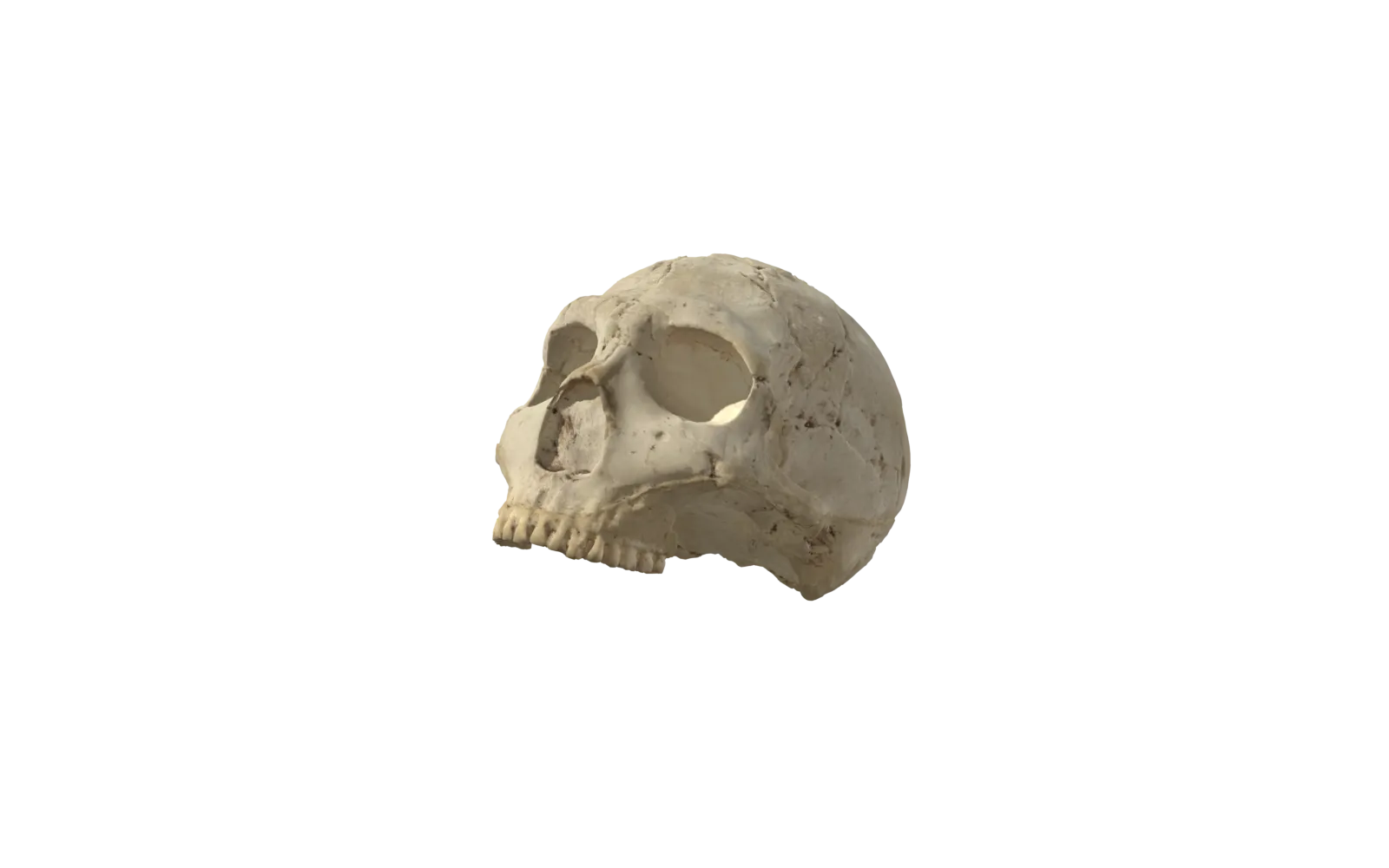
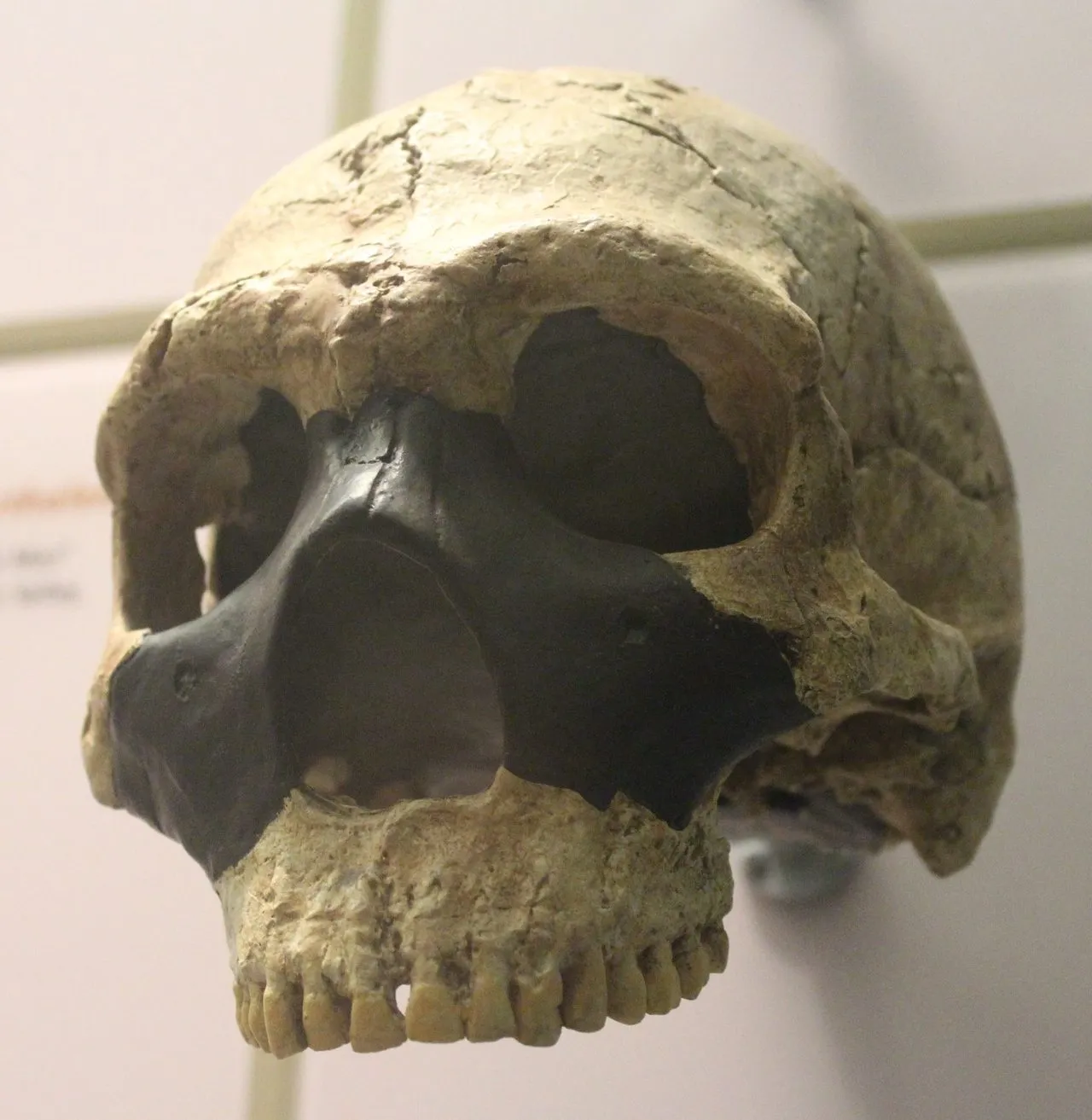
Amud 1 is the skeleton of a young Neanderthal man, about 25 years old when he died. He holds two records. His brain, at about 1,740 cubic centimetres, is the largest measured in any fossil human. And at roughly 1.72 to 1.78 metres he is the tallest Neanderthal known. The skeleton is nearly complete, but the bone is poorly preserved.
The find
A University of Tokyo expedition led by Hisashi Suzuki found the skeleton in July 1961 in Amud Cave, which sits above Wadi Amud, a gorge that runs down to the Sea of Galilee in northern Israel. It lay near the top of the cave’s deposits, where older and younger material had been mixed together. The first dates came out at 20,000 and 28,000 years, far too young for a Neanderthal, and few people believed them.
How old it is
In 2001 a team dated animal teeth from the layer the skeleton came from and got an age of about 53,000 years, give or take 8,000. Dates from burnt flints in the same layers agree. Amud 1 is usually given as about 50,000 to 60,000 years old.
An unusual Neanderthal
Amud 1 does not look quite like the Neanderthals of Europe. His brow ridges are slender, he has the beginnings of a chin, and his arms and legs are long. Suzuki saw him as something between the Neanderthals and the early modern people of Skhul and Qafzeh, who had lived in the same region tens of thousands of years earlier. Later studies of the skull and jaw placed him firmly among the Neanderthals.
Some caution is needed with the measurements. The face was found in fragments and had to be rebuilt, and the skull had been squeezed out of shape in the ground. A virtual reconstruction published in 2015 suggested that the face was smaller than first thought.
The cave and its other people
Israeli and American teams went back to Amud Cave in the 1990s and found the remains of more Neanderthals, many of them young children. One, a baby about ten months old known as Amud 7, lay in a small hollow against the cave wall with the upper jaw of a red deer resting on its hip. The excavators read this as a burial, with the jaw placed there on purpose.
Where it is
The original is kept in Israel, at Tel Aviv University.
Sources
- Suzuki, H. and Takai, F., editors (1970). The Amud Man and His Cave Site. University of Tokyo.
- Rak, Y., Kimbel, W. H. and Hovers, E. (1994). A Neandertal infant from Amud Cave, Israel. Journal of Human Evolution 26: 313 to 324.
- Hovers, E. and others (1995). Hominid remains from Amud Cave in the context of the Levantine Middle Paleolithic. Paléorient 21: 47 to 61.
- Valladas, H. and others (1999). TL dates for the Neanderthal site of the Amud Cave, Israel. Journal of Archaeological Science 26: 259 to 268.
- Rink, W. J. and others (2001). Electron spin resonance (ESR) and thermal ionization mass spectrometric (TIMS) 230Th/234U dating of teeth in Middle Paleolithic layers at Amud Cave, Israel. Geoarchaeology 16: 701 to 717.
- Amano, H. and others (2015). Virtual reconstruction of the Neanderthal Amud 1 cranium. American Journal of Physical Anthropology 158: 185 to 197.
Last checked 27 November 2026. Spotted a mistake? Tell us.