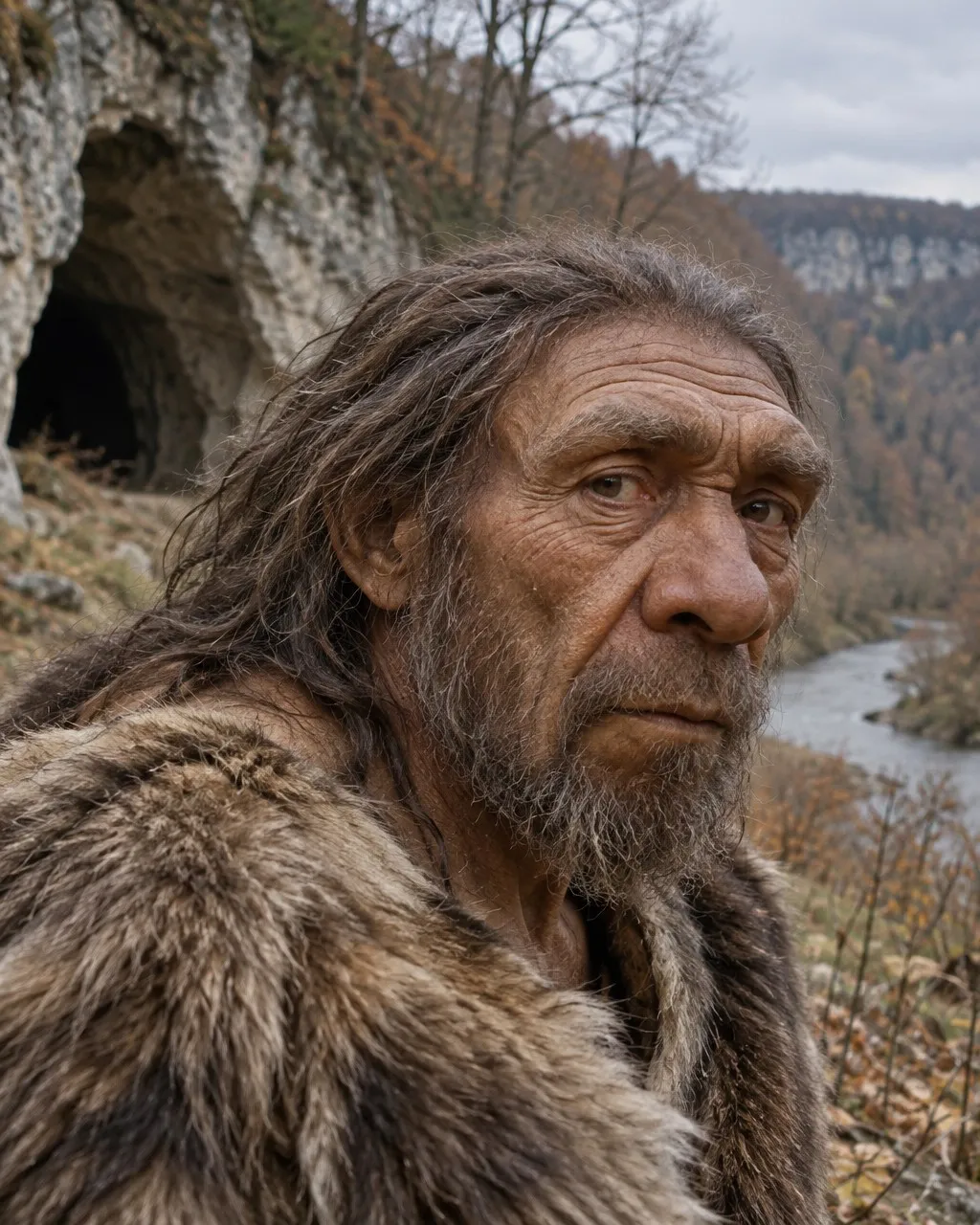
The skull under the face
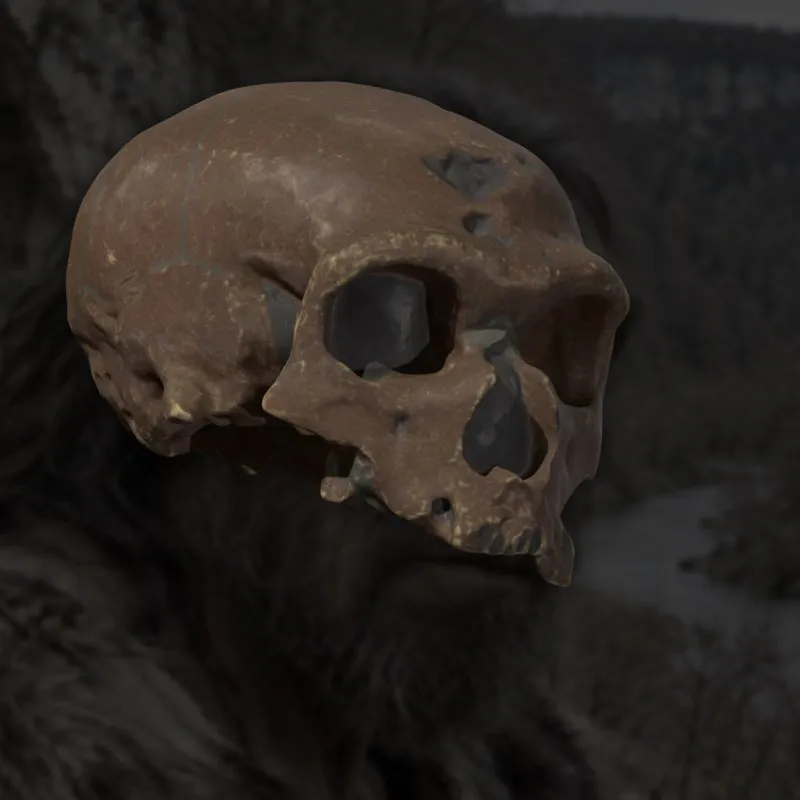
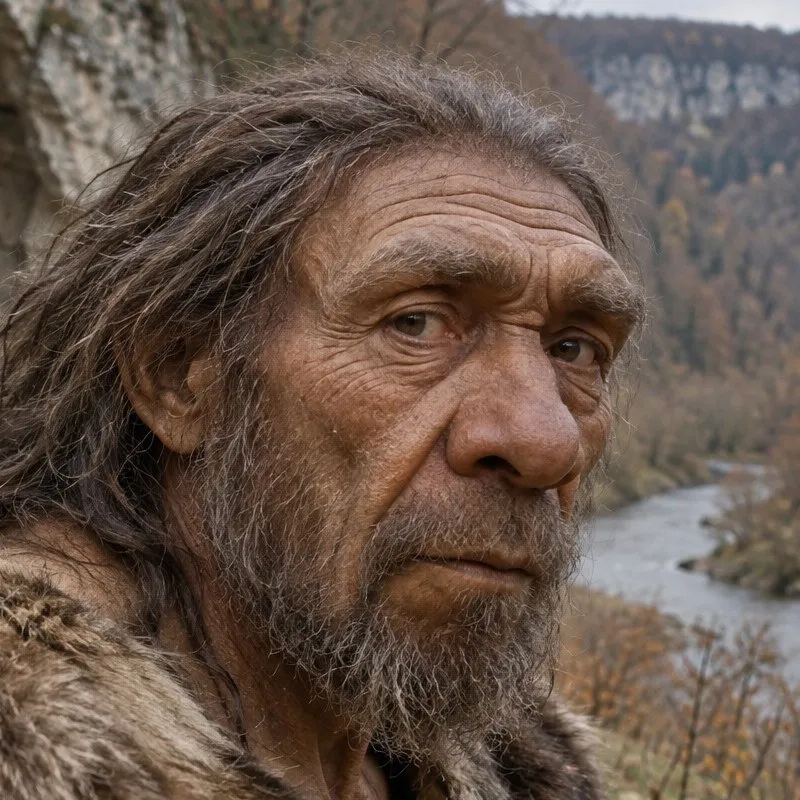
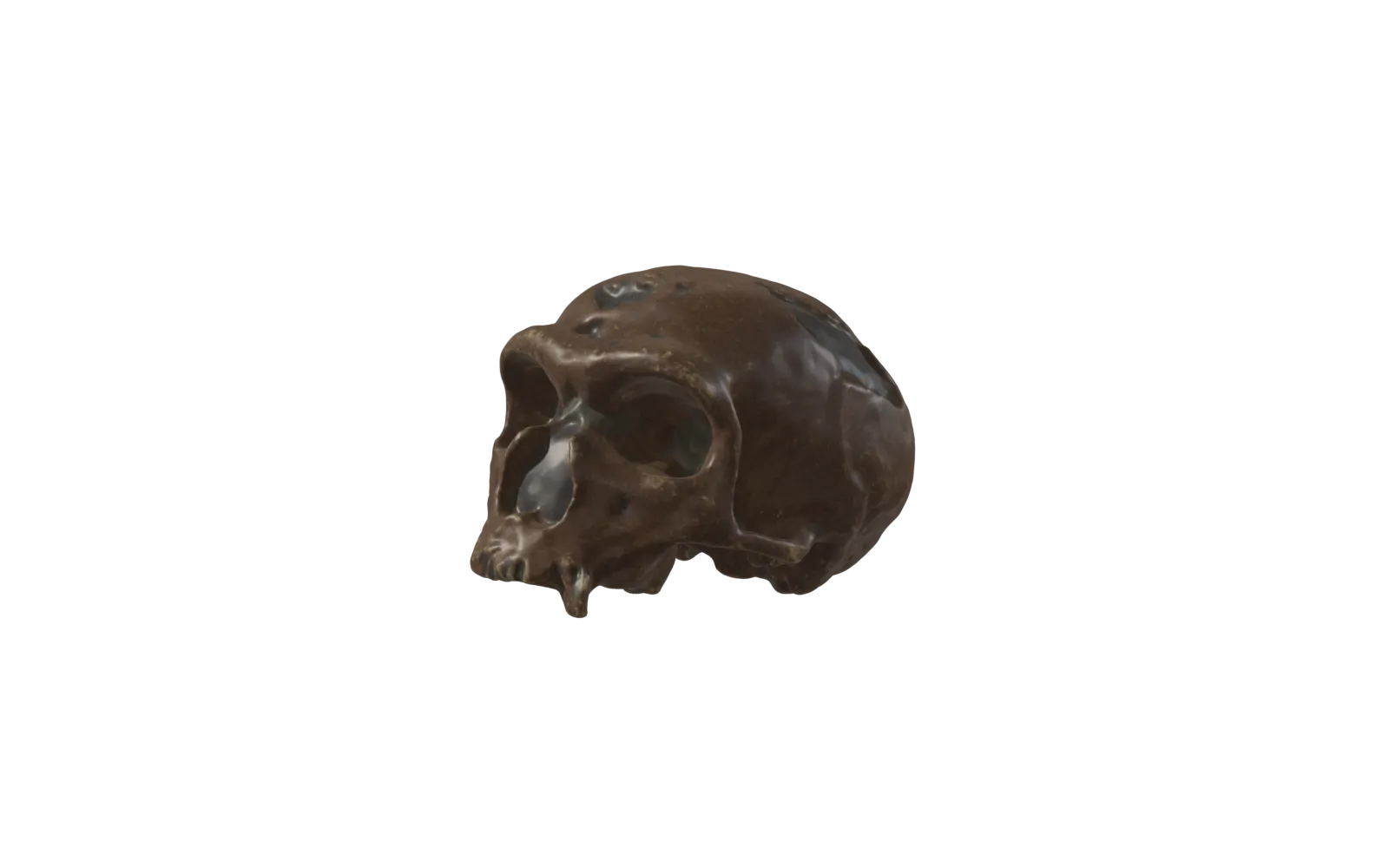
The skeleton in brief
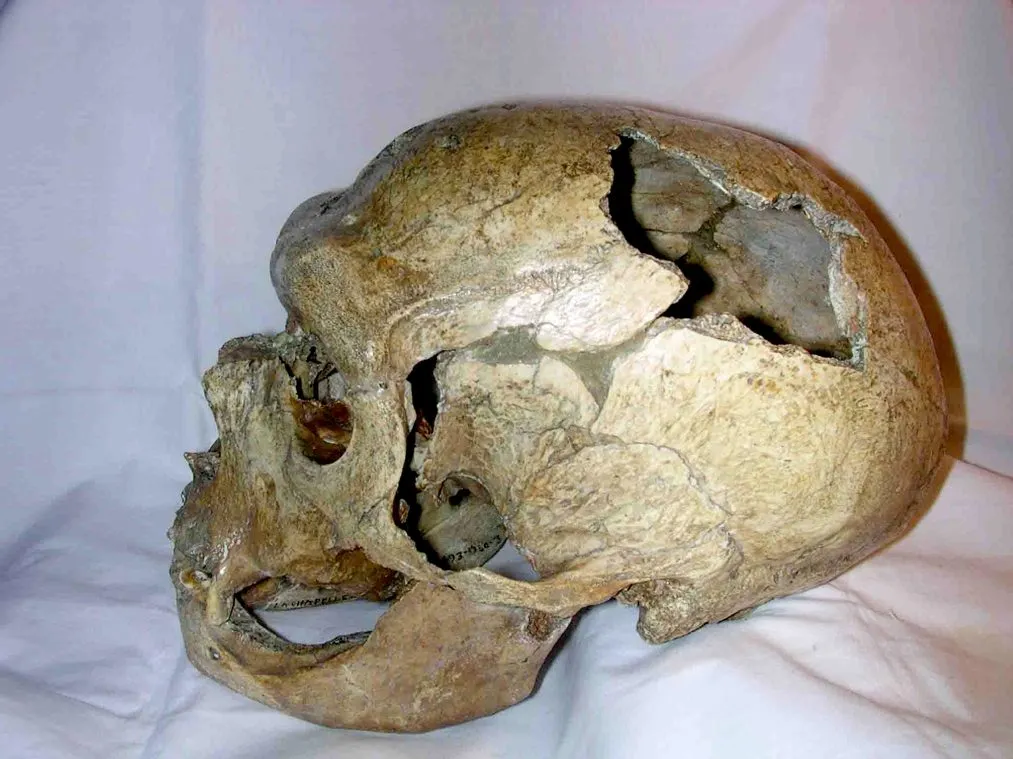
La Chapelle-aux-Saints 1, known as the “Old Man of La Chapelle”, is the skeleton of an elderly Neanderthal man, about 60,000 years old. It was the first fairly complete Neanderthal skeleton ever found: the skull and jaw, most of the backbone, several ribs, most of the long bones of the arms and legs, and some of the small bones of the hands and feet. The skull has the low, sloping forehead, heavy brow ridges and forward-jutting middle of the face that are typical of Neanderthals, and a brain of about 1,600 cubic centimetres, larger than the average for people today.
The find
Three priests with a passion for prehistory, the brothers Amédée and Jean Bouyssonie and Louis Bardon, found the skeleton on 3 August 1908. It lay in a pit in the floor of the bouffia Bonneval, a small, low cave beside the village of La Chapelle-aux-Saints in the Corrèze region of France. They sent the bones to Marcellin Boule at the natural history museum in Paris.
The skeleton that made the “caveman”
Boule published a long study of the skeleton between 1911 and 1913. He rebuilt the man with a curved spine, bent knees, a head thrust forward and even a big toe that stuck out to the side like an ape’s. That stooped, shuffling figure became the popular picture of the Neanderthals for decades.
It was wrong. In 1957 William Straus and A. J. E. Cave looked at the bones again, found severe arthritis, and concluded that a healthy Neanderthal stood and walked much as we do. In 1985 Erik Trinkaus went further. He showed that the man’s arthritis and injuries could not explain Boule’s mistakes, and that Boule’s own ideas about what a primitive human should look like had shaped his reading of the bones.
The old man
He was old for a Neanderthal. He had lost many of his teeth long before he died, and the bone of his jaws had grown over the empty sockets. He had worn joints in his neck, back, shoulders and left hip, and a broken rib.
For a long time it was said that he could not chew, and that others must have prepared his food. Later studies found that he kept enough of his front teeth to chew for himself, though probably with difficulty. Either way he lived for years with poor health, and the people around him may well have helped him.
Was he buried?
The finders reported that the body lay in a pit dug into the cave floor, and the skeleton has been used ever since as evidence that Neanderthals buried their dead. The claim has been argued over for a century. A team led by William Rendu went back to the cave for twelve years of new fieldwork and reported in 2014 that the pit was made by people and that the body was covered quickly, both of which point to a deliberate burial. They also found bones of two young individuals and a second adult. Other researchers have challenged the evidence, and the debate is not over.
Where it is
The original is held at the Musée de l’Homme in Paris.
Sources
- Bouyssonie, A., Bouyssonie, J. and Bardon, L. (1908). Découverte d’un squelette humain moustérien à la bouffia de la Chapelle-aux-Saints (Corrèze). L’Anthropologie 19: 513 to 518.
- Boule, M. (1911 to 1913). L’homme fossile de La Chapelle-aux-Saints. Annales de Paléontologie 6 to 8.
- Straus, W. L. and Cave, A. J. E. (1957). Pathology and the posture of Neanderthal man. The Quarterly Review of Biology 32: 348 to 363.
- Trinkaus, E. (1985). Pathology and the posture of the La Chapelle-aux-Saints Neandertal. American Journal of Physical Anthropology 67: 19 to 41.
- Rendu, W. and others (2014). Evidence supporting an intentional Neandertal burial at La Chapelle-aux-Saints. Proceedings of the National Academy of Sciences 111: 81 to 86.
- Dibble, H. L. and others (2015). A critical look at evidence from La Chapelle-aux-Saints supporting an intentional Neandertal burial. Journal of Archaeological Science 53: 649 to 657.
- Smithsonian National Museum of Natural History, Human Origins Program. La Chapelle-aux-Saints.
Last checked 27 November 2026. Spotted a mistake? Tell us.