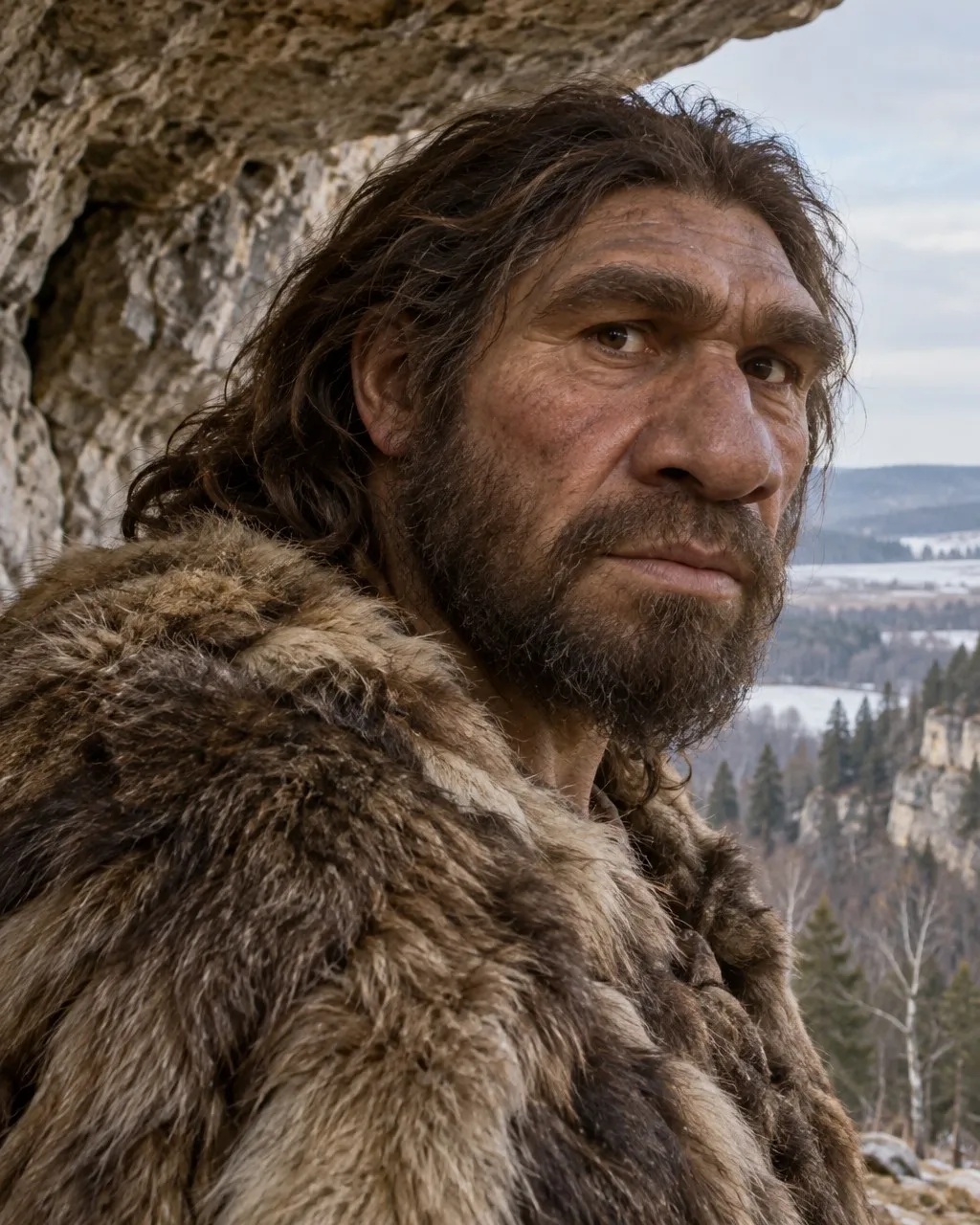
The skull under the face
The skeleton in brief
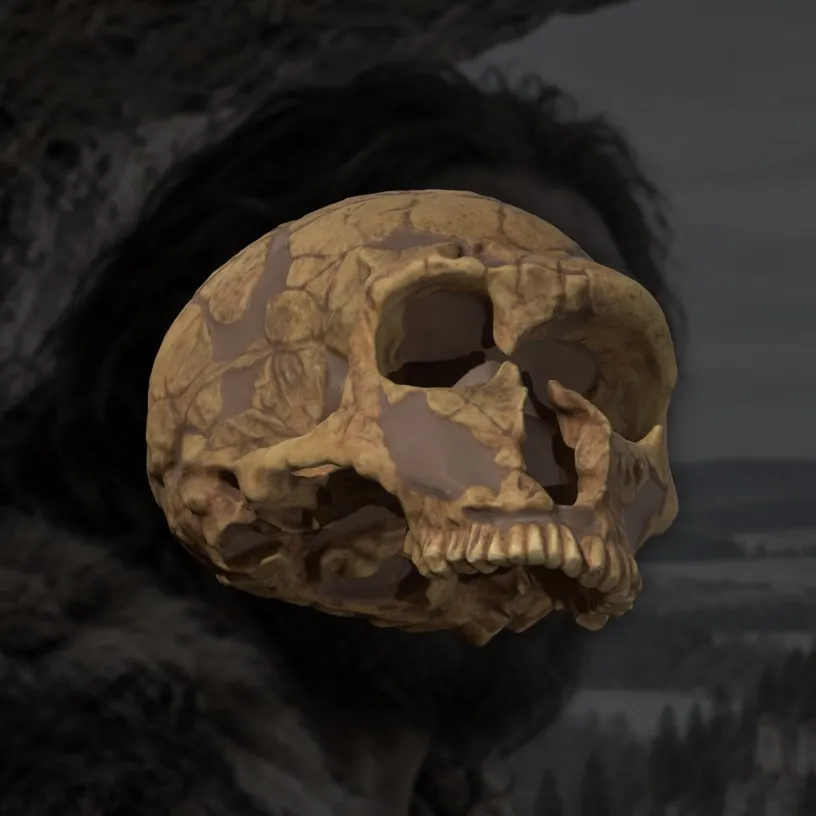
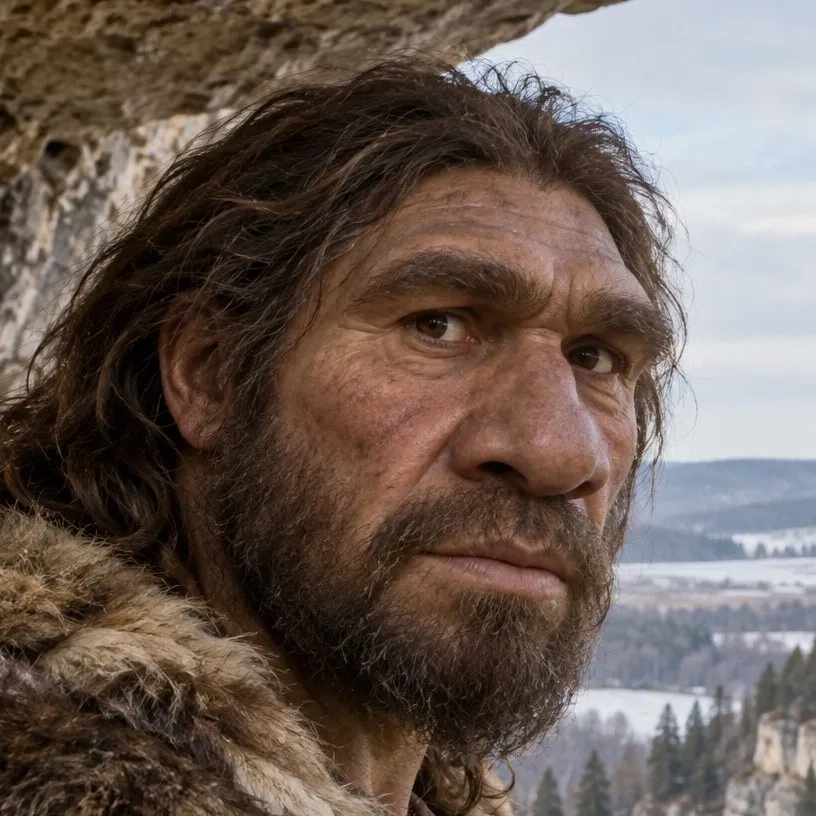
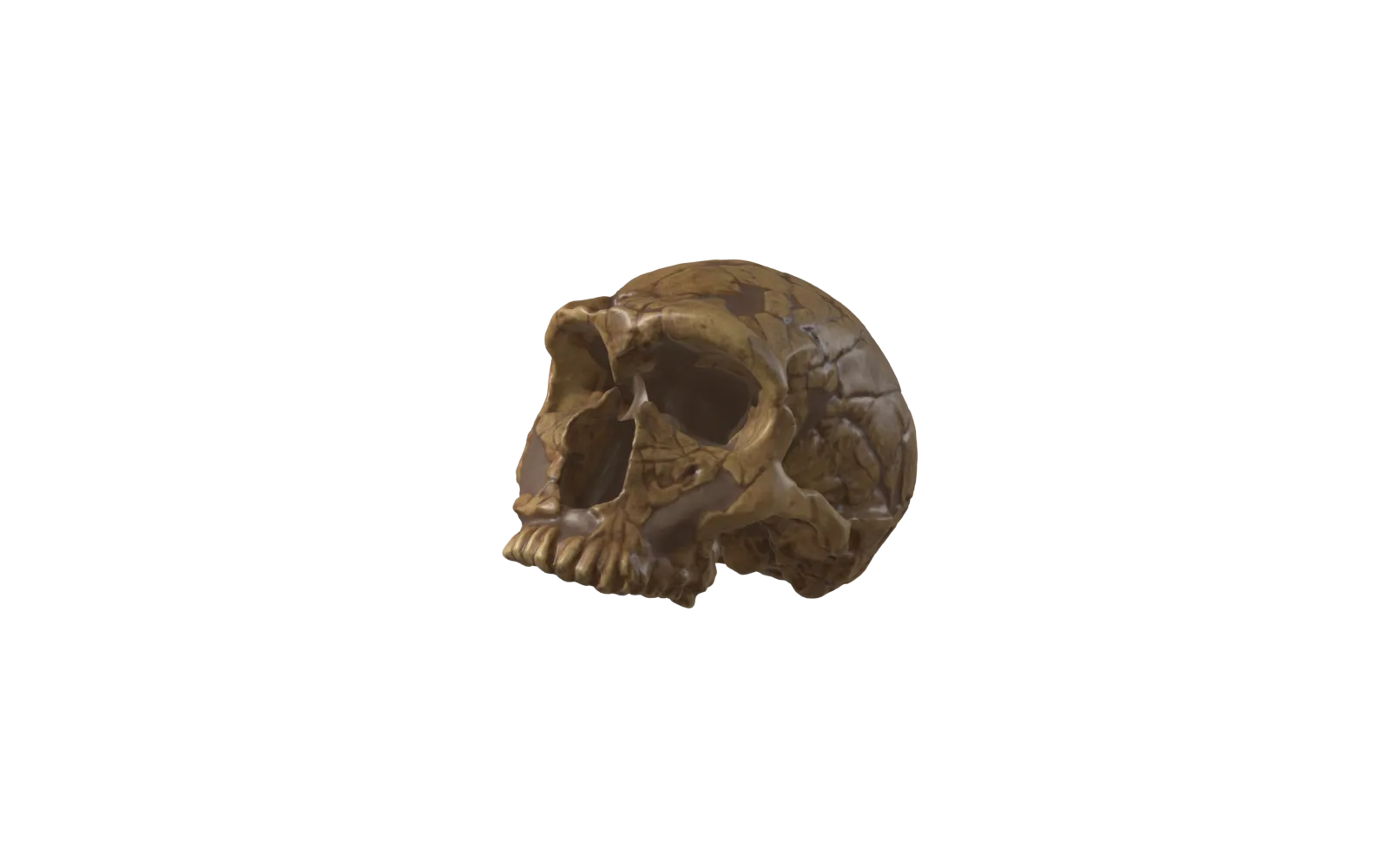
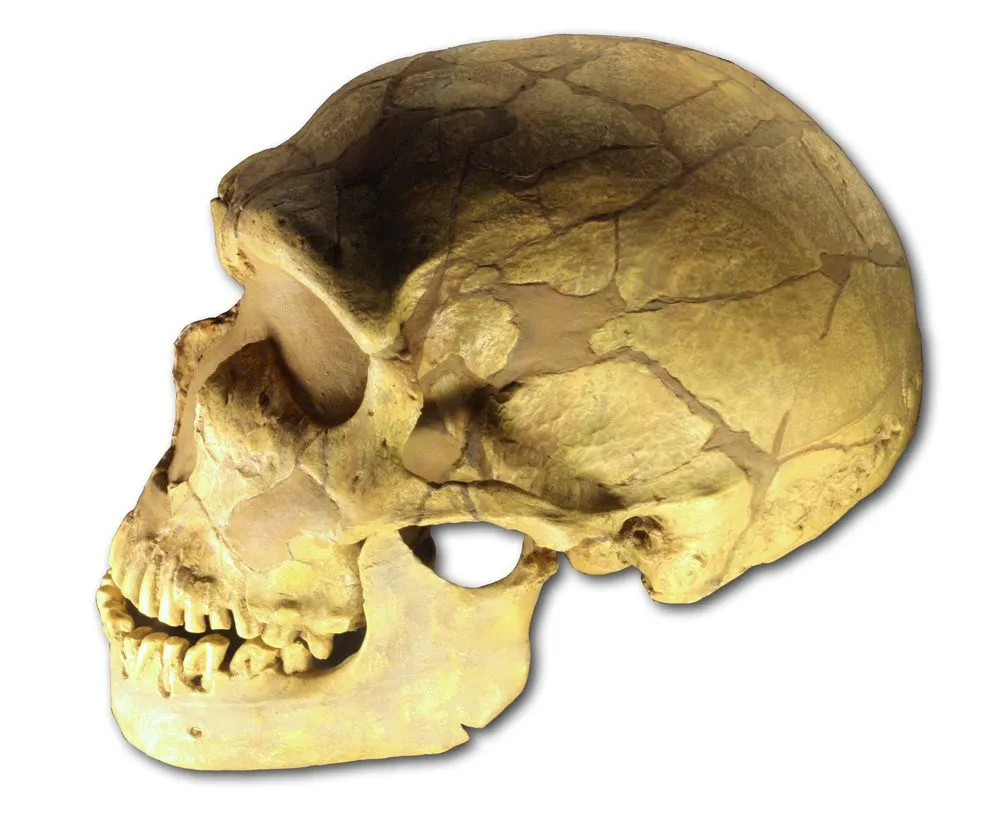
La Ferrassie 1 is the skeleton of an adult Neanderthal man. His skull is one of the largest and most complete Neanderthal skulls ever found, with a brain of about 1,640 cubic centimetres, well above the average for people today. It is the textbook “classic” Neanderthal: a low, sloping forehead, a heavy brow ridge, a big nose opening and a long, low braincase. Much of the rest of his skeleton survives too, and his leg and foot bones show that he walked upright as we do.
The find
Louis Capitan and Denis Peyrony found the skeleton in 1909 in the big rock shelter of La Ferrassie, at Savignac-de-Miremont in the Dordogne region of France. More digging there, in the years that followed and again in the 1960s and 1970s, brought the total to eight Neanderthals: a man, a woman, and children, infants and two unborn babies. The man (La Ferrassie 1) and the woman (La Ferrassie 2) gave scientists their first clear look at how male and female Neanderthals differed in size.
His teeth
All of his teeth are preserved, and they are heavily worn. The front teeth are worn at a slant that chewing does not produce. One explanation is that he often gripped something between his front teeth, such as an animal hide, while he worked on it with a tool. The idea is still debated, but if it is right he used his mouth as a third hand.
His health
He was probably between 40 and 55 when he died, which was old for a Neanderthal. A 1997 study found a layer of new bone on his thigh and shin bones, and read it as a sign of a disease in his chest or lungs.
In 2018 a team led by Asier Gómez-Olivencia scanned the skeleton with CT. They found bones that had been overlooked for a century, including all three tiny bones of his right middle ear, along with a partly broken left collarbone and more wear in his spine than anyone had realised. The breaks in the bones happened long after death, once the bone had dried out, which fits a body that was buried intact.
A burial ground
La Ferrassie is one of the main pieces of evidence that Neanderthals buried their dead. The clearest case there is a child of about two, La Ferrassie 8. A 2020 study showed that a pit had been dug into a layer of clean sediment and the child’s body laid in it, about 41,000 years ago.
How old it is
For a long time the skeleton was given as 50,000 to 70,000 years old. In 2015, dating of the layers right beside the spot where it was found showed that it is no older than about 54,000 years, and probably about 43,000 to 45,000. That makes him one of the later Neanderthals.
Where it is
The original is held at the Musée de l’Homme in Paris.
Sources
- Capitan, L. and Peyrony, D. (1909). Deux squelettes humains au milieu de foyers de l’époque moustérienne. Revue de l’École d’Anthropologie de Paris 19: 402 to 409.
- Fennell, K. J. and Trinkaus, E. (1997). Bilateral femoral and tibial periostitis in the La Ferrassie 1 Neanderthal. Journal of Archaeological Science 24: 985 to 995.
- Guérin, G. and others (2015). A multi-method luminescence dating of the Palaeolithic sequence of La Ferrassie based on new excavations adjacent to the La Ferrassie 1 and 2 skeletons. Journal of Archaeological Science 58: 147 to 166.
- Gómez-Olivencia, A. and others (2018). La Ferrassie 1: new perspectives on a “classic” Neandertal. Journal of Human Evolution 117: 13 to 32.
- Balzeau, A. and others (2020). Pluridisciplinary evidence for burial for the La Ferrassie 8 Neandertal child. Scientific Reports 10: 21230.
- Smithsonian National Museum of Natural History, Human Origins Program. La Ferrassie.
Last checked 27 November 2026. Spotted a mistake? Tell us.