The skeleton in brief
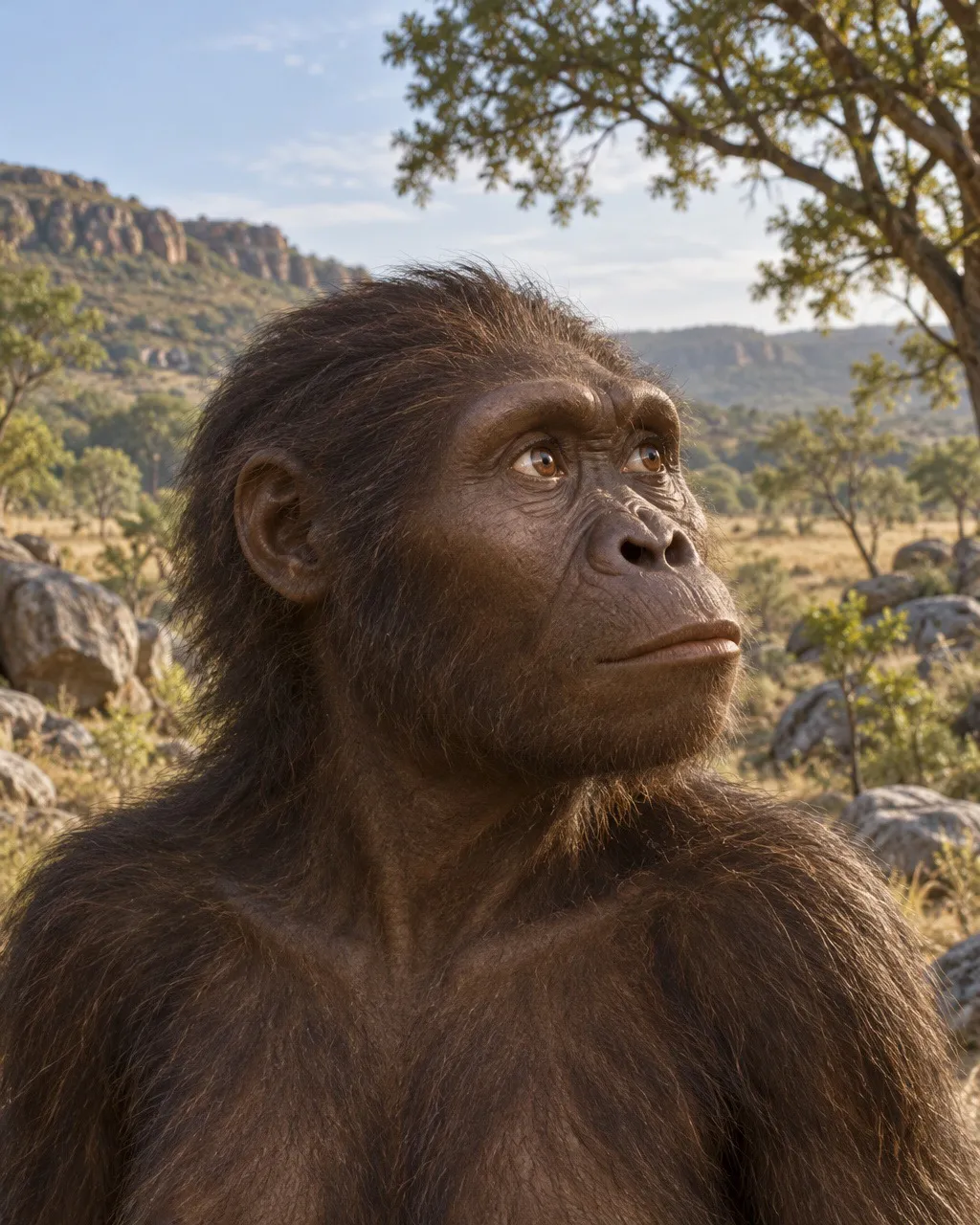
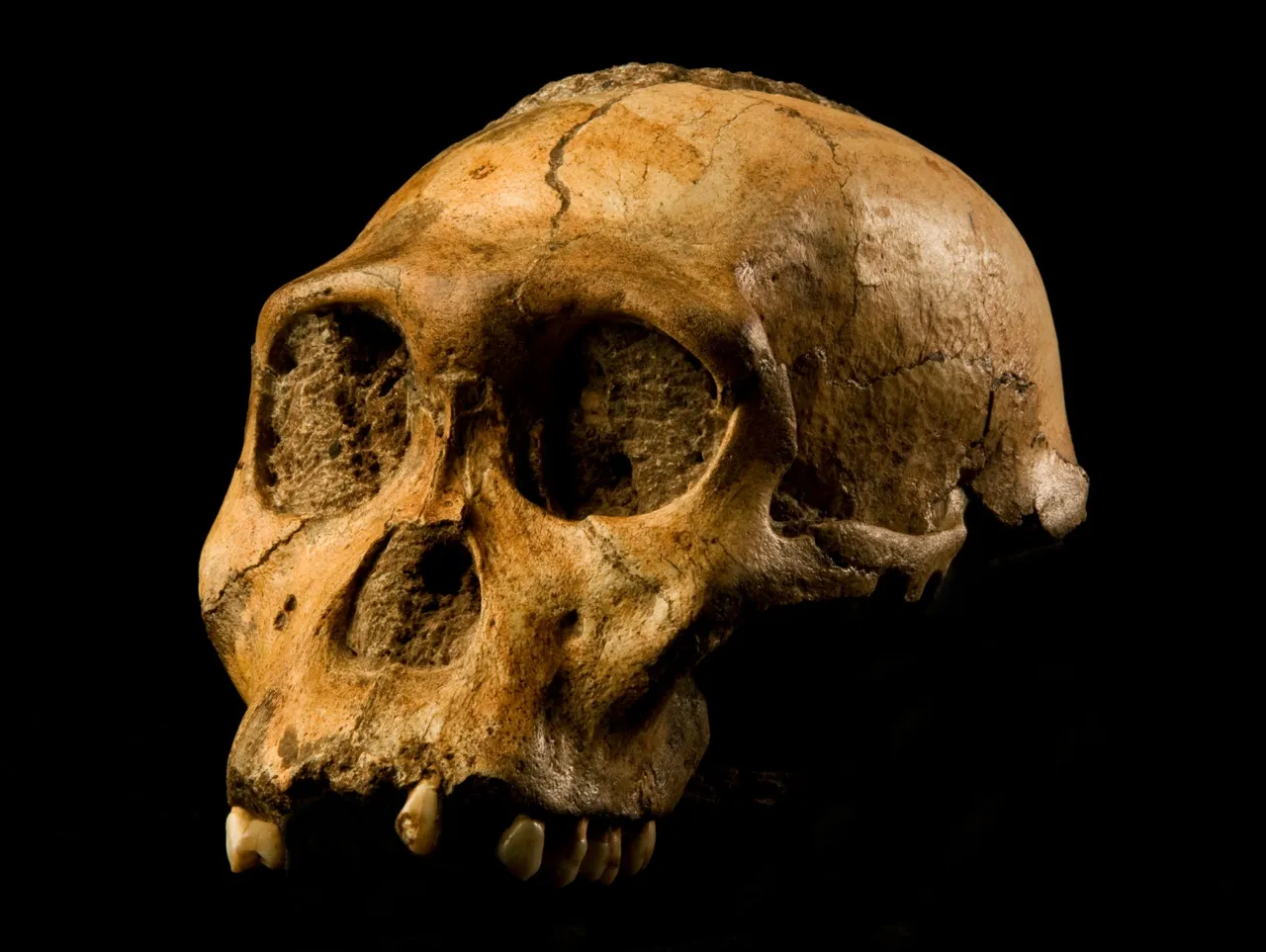
Karabo, catalogued MH1 (Malapa Hominin 1), is a young male Australopithecus sediba who died about 1.98 million years ago in a cave north of Johannesburg. He is one of the most complete early hominins of his age: a skull with much of the face, a lower jaw, and parts of the arms, shoulders, spine, pelvis and legs. His brain was small, about 420 cubic centimetres, but his face and teeth look more like early Homo than most australopiths do. In 2010 he became the type specimen of a new species.
The find
On 15 August 2008 Lee Berger of the University of the Witwatersrand went to look at a site called Malapa, one of hundreds of caves he had been mapping in the Cradle of Humankind. His nine-year-old son, Matthew, came along with the family dog. Within minutes Matthew called his father over to a block of rock with a bone sticking out of it. It was a hominin collarbone, and the same block held part of a jaw. A few weeks later Berger and Job Kibii found the bones of a second skeleton nearby, an adult female now called MH2.
More of Karabo kept turning up. In 2012 a CT scan of a block collected at the site years earlier showed more of his skeleton still inside it.
His name
Karabo means “answer” in Setswana. The name was chosen in 2010 in a national competition for South African schoolchildren, which drew about 15,000 entries. The winner, Omphemetse Keepile, then 17, said she picked it because the fossil might hold answers about where we come from.
How old he was
His teeth, and the growth plates of his bones that had not yet fused, show he was still growing. By human standards he would have been about 12 or 13. Australopiths grew up faster than we do, though, and compared with chimpanzees his skeleton suggests about 9 to 11 years. A 2017 study of his bones by Noel Cameron and colleagues found an ape-like pattern of growth. He was not yet full grown, but probably close to his adult brain size.
How old the fossils are
The Malapa skeletons lie under a sheet of flowstone, rock laid down by dripping water. In 2011 Robyn Pickering and colleagues dated it with uranium-lead and matched the layers to a brief flip in Earth’s magnetic field. The result was 1.977 million years, give or take only about 1,500 years, one of the most precise dates for any early hominin. Karabo and MH2 probably fell down a shaft into the cave, and their bodies were buried quickly by mud, which is why so much survives.
A boy with a tumour
In 2016 a team led by Patrick Randolph-Quinney found a benign bone tumour, an osteoid osteoma, on one of Karabo’s back bones. It is the oldest evidence of a tumour in any hominin. It may have been painful, but it was not what killed him.
The debate
- An ancestor of Homo? Berger’s team argued in 2010 that Australopithecus sediba shares more features with our genus than any other australopith and might be close to its ancestry. But a jaw from Ledi-Geraru in Ethiopia shows Homo already existed about 2.8 million years ago, 800,000 years before Malapa. In 2019 Andrew Du and Zeresenay Alemseged calculated that sediba is very unlikely to be the ancestor of Homo. It may still be a late survivor of a population that was.
- A child’s face: Karabo is the type specimen, and he was young. In 2017 William Kimbel and Yoel Rak argued that much of his Homo-like look, such as the smaller face and brow, comes from his age, since young apes and australopiths also have flatter faces. Comparing him with growth series of apes and humans, they concluded that sediba is a close relative, perhaps a descendant, of Australopithecus africanus, not a link to Homo. Berger’s team counters that the adult MH2 and other remains show many of the same features.
Where it is
The Malapa fossils are kept at the University of the Witwatersrand in Johannesburg. Casts are shown at the Maropeng visitor centre in the Cradle of Humankind, and the team released 3D scans of the bones free online.
Sources
- Berger, L. R. and others (2010). Australopithecus sediba: a new species of Homo-like australopith from South Africa. Science 328: 195 to 204.
- Pickering, R. and others (2011). Australopithecus sediba at 1.977 Ma and implications for the origins of the genus Homo. Science 333: 1421 to 1423.
- Carlson, K. J. and others (2011). The endocast of MH1, Australopithecus sediba. Science 333: 1402 to 1407.
- Randolph-Quinney, P. S. and others (2016). Osteogenic tumour in Australopithecus sediba: earliest hominin evidence for neoplastic disease. South African Journal of Science 112 (7/8).
- Cameron, N. and others (2017). The postcranial skeletal maturation of Australopithecus sediba. American Journal of Physical Anthropology 163: 633 to 640.
- Kimbel, W. H. and Rak, Y. (2017). Australopithecus sediba and the emergence of Homo: questionable evidence from the cranium of the juvenile holotype MH 1. Journal of Human Evolution 107: 94 to 106.
- Du, A. and Alemseged, Z. (2019). Temporal evidence shows Australopithecus sediba is unlikely to be the ancestor of Homo. Science Advances 5: eaav9038.
- Villmoare, B. and others (2015). Early Homo at 2.8 Ma from Ledi-Geraru, Afar, Ethiopia. Science 347: 1352 to 1355.
- South African Government News Agency (2010). Ancient skeleton named.
Last checked 27 November 2026. Spotted a mistake? Tell us.