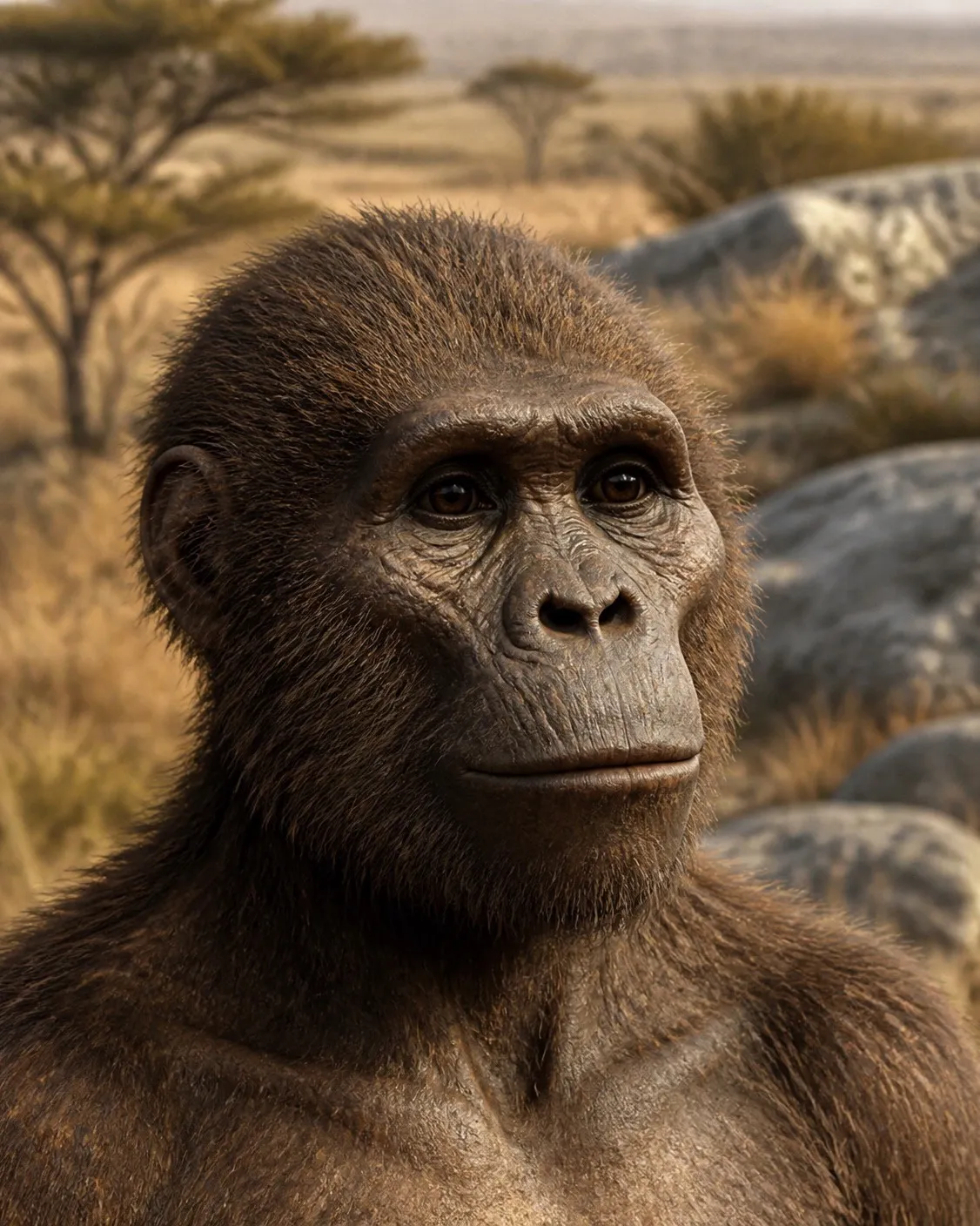
Robert Broom (1866 to 1951) was a Scottish doctor and paleontologist in South Africa. Already famous for fossil reptiles, he took up the search for early humans in his late sixties. He found the first adult Australopithecus at Sterkfontein in 1936, named Paranthropus robustus in 1938 and, with John Robinson, found the skull known as Mrs Ples in 1947.
The dynamite and the skull
On 18 April 1947 Robert Broom, then 80 years old, and his assistant John Robinson were working in the limestone at Sterkfontein, near Johannesburg. Broom used dynamite to break up the hard cave rock, and one blast broke a skull apart. When the pieces were put back together, they had the most complete skull of Australopithecus africanus ever found.
Broom named it Plesianthropus transvaalensis, and his team shortened that to “Mrs Ples”. Together with the other adult skulls and skeletons he found, it finished the argument that Raymond Dart’s Taung Child had started: Africa had once been home to small-brained, upright-walking human relatives.
From the Karoo to the caves
Broom was born in Paisley, Scotland, in 1866 and qualified as a doctor in Glasgow. He settled in South Africa in 1897 and practised medicine in small towns, while spending every spare hour collecting fossil reptiles in the Karoo. He became the leading expert on the mammal-like reptiles of South Africa and was elected a Fellow of the Royal Society in 1920.
When Dart announced the Taung Child in 1925, Broom was one of the few scientists who backed him at once. In 1934, aged 67, he joined the Transvaal Museum in Pretoria to look for more. In 1936 he found part of the first adult australopith skull at Sterkfontein. In 1938 a schoolboy, Gert Terblanche, brought him a jaw from Kromdraai, and Broom named a new, heavier-jawed species, Paranthropus robustus. From 1948 he and Robinson dug at Swartkrans, which gave many more robust fossils, among them the skull SK 48.
A complicated legacy
Broom’s finds are some of the foundations of the field, but not everything he did has aged well. Like many scientists of his time he collected human remains of the Khoisan people of southern Africa, including from graves, and he wrote about living peoples in racist terms. Historians now treat that work as an example of the race science of the period. He finished a large monograph on the australopiths shortly before he died in Pretoria in 1951.
Worked with
- Raymond Dart Australian anatomist who named Australopithecus from the Taung Child
Where to see the finds
- Ditsong National Museum of Natural History (formerly the Transvaal Museum), Pretoria: Mrs Ples (Sts 5), the Kromdraai and Swartkrans fossils
Sources
Last checked 30 October 2026. Spotted a mistake? Tell us.