Kabwe in brief
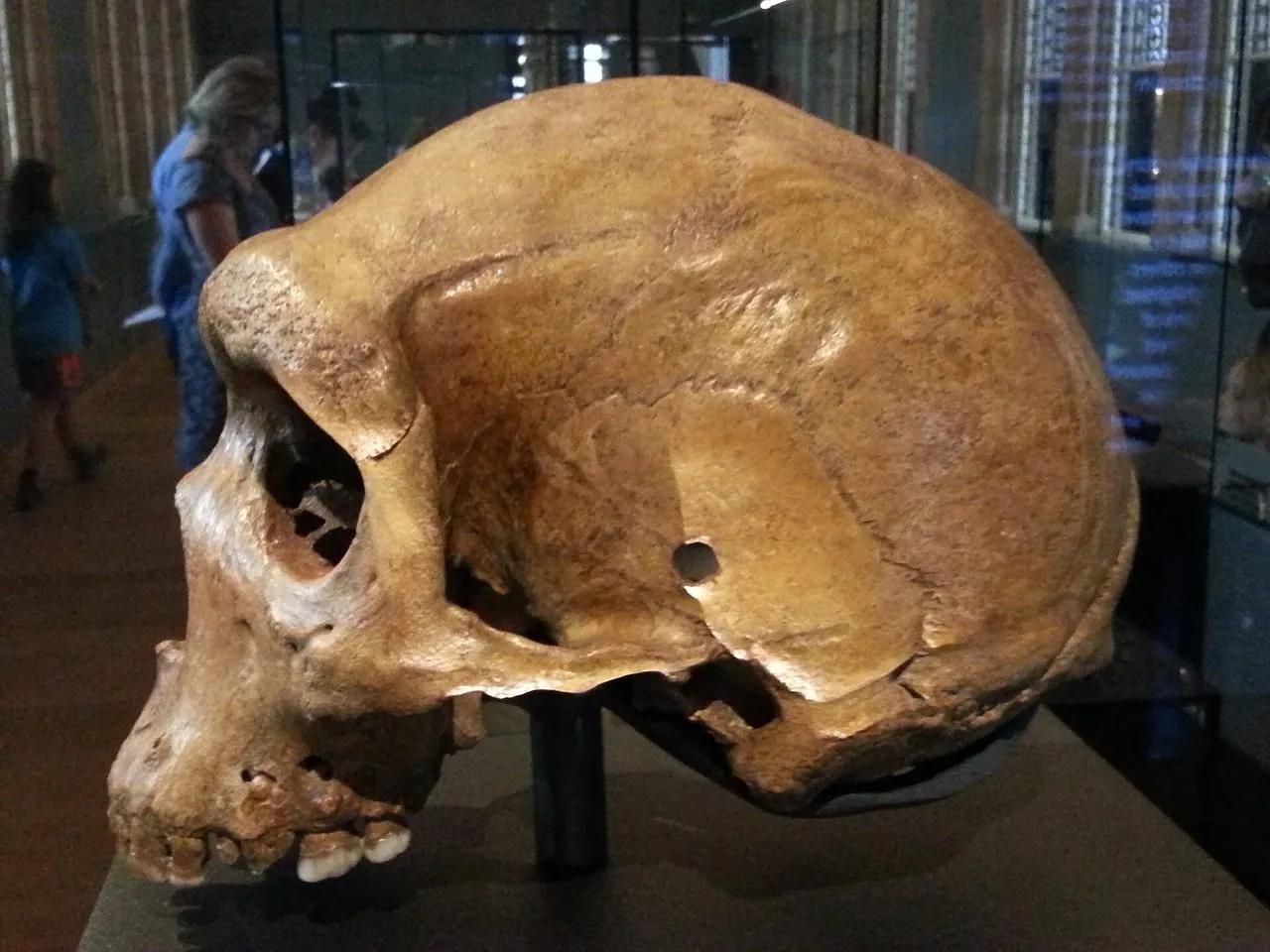
Kabwe is a town in central Zambia, north of the capital, Lusaka. Until the 1960s it was called Broken Hill, after a lead and zinc mine that was opened there in the early 1900s, when the country was the British colony of Northern Rhodesia. In 1921 miners working in a limestone cave inside the mine found a skull that is now known as Kabwe 1. It is one of the best-preserved skulls of any early human, and about 300,000 years old.
Discovery
The mine took its name from the Australian town of Broken Hill, and the ore was dug from a hill with caves in it. On 17 June 1921 a Swiss miner, Tom Zwiglaar (also spelled Zwigelaar), and the men working with him found the skull at the back of a cave sometimes called the Bone Cavern. A shin bone lay near it. The mining company sent the skull to the British Museum in London, and that year Arthur Smith Woodward named it Homo rhodesiensis, “Rhodesian Man”.
Mining destroyed the cave, so scientists could never excavate it properly. More human bones, among them parts of leg bones and a pelvis, came out of the mine, and so did stone tools and animal bones. For many of these finds it is not clear exactly where they lay, or whether they belong to the same people as the skull.
What the fossils show
- Kabwe 1: A skull with a massive brow ridge, a long low braincase and a broad face, with a brain of about 1,300 cubic centimetres. Cavities in the upper teeth and signs of infection show that the man had serious health problems. See Kabwe 1.
- Species: Most researchers place the skull in Homo heidelbergensis, together with fossils of a similar age from Europe. Some use Woodward’s name, Homo rhodesiensis, for the African fossils.
- Date: In 2020 a team led by Rainer Grün dated the skull itself and gave a best age of about 299,000 years, with an uncertainty of about 25,000 years. For decades it had been guessed to be about 500,000 years old.
A crowded Africa
The new date puts the Kabwe skull at about the time of the first Homo sapiens at Jebel Irhoud in Morocco, and of the small-brained Homo naledi at Rising Star Cave in South Africa. Africa at that time was home to several kinds of human, and the Kabwe skull is a key part of the debate on how they were related to our own species.
The mine today
The mine closed in 1994, but Kabwe is still known for a different problem. Waste from a century of lead mining has left lead in the soil and dust of the town, and studies have found high levels of lead in the blood of children who live nearby. The skull itself is in London. Zambia has asked for it to be returned for many years, and the talks between the two countries have not settled the matter.
Visiting
The mine is not a visitor site, and the cave no longer exists. The skull is on display in the Natural History Museum in London, and casts are shown in other museums.
Sources
- Woodward, A. S. (1921). A new cave man from Rhodesia, South Africa. Nature 108: 371 to 372.
- Grün, R. and others (2020). Dating the skull from Broken Hill, Zambia, and its position in human evolution. Nature 580: 372 to 375.
- Natural History Museum, London (2020). Dating the Broken Hill skull.
- Smithsonian National Museum of Natural History, Human Origins Program. Kabwe 1.
- Yabe, J. and others (2015). Lead poisoning in children from townships in the vicinity of a lead-zinc mine in Kabwe, Zambia. Chemosphere 119: 941 to 947.
Last checked 27 November 2026. Spotted a mistake? Tell us.