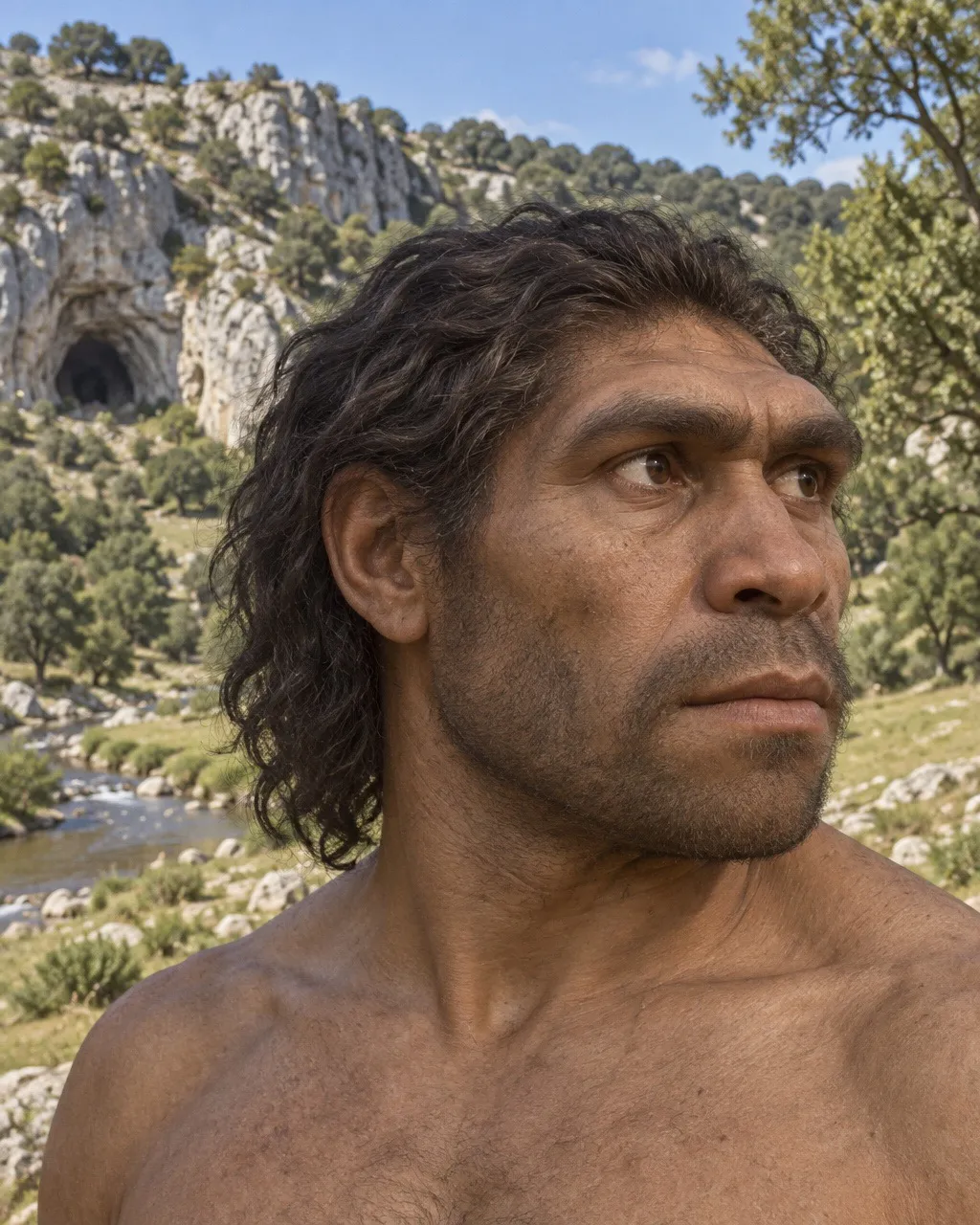
Homo heidelbergensis is the name usually given to big-brained, heavy-browed humans who lived in Africa and Europe about 700,000 to 200,000 years ago. Many researchers see it as close to the common ancestor of Neanderthals and our own species, but which fossils belong in it is hotly debated.
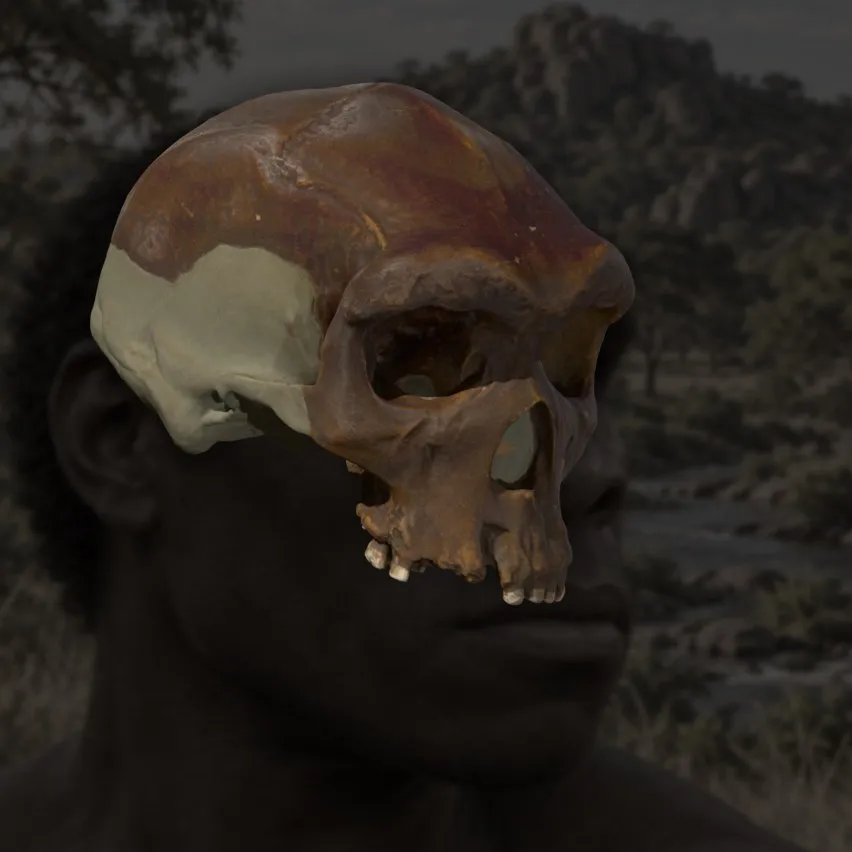

The species in brief
Between about 700,000 and 200,000 years ago, humans with brains nearly as large as ours lived across Africa and Europe. They had long, low skulls, heavy brow ridges and big faces, and they made fine stone hand axes. The name most often given to them is Homo heidelbergensis. Many researchers think a population like this was close to the last common ancestor of Neanderthals, Denisovans and our own species. The trouble is that the fossils are scattered, varied and hard to date, and scientists disagree about which belong together. Researchers call this period “the muddle in the middle”.
Discovery
The species is named after a single lower jaw. On 21 October 1907 a worker in a sand pit at Mauer, near Heidelberg in Germany, found a large, chinless human jaw about 24 metres down. The geologist Otto Schoetensack described it in 1908 and named it Homo heidelbergensis. A 2010 study dated the sands that held it to about 609,000 years, making it one of the oldest human fossils in Europe.
The most famous skull came later, from Africa. In 1921 a miner, Tom Zwiglaar, found a nearly complete skull in a cave being mined for lead and zinc at Broken Hill in what was then Northern Rhodesia, now Kabwe in Zambia. Arthur Smith Woodward named it Homo rhodesiensis the same year. The cave was later quarried away completely.
What it looked like
- Brain: About 1,100 to 1,300 cubic centimetres, close to the low end of people today. Kabwe 1 is about 1,300.
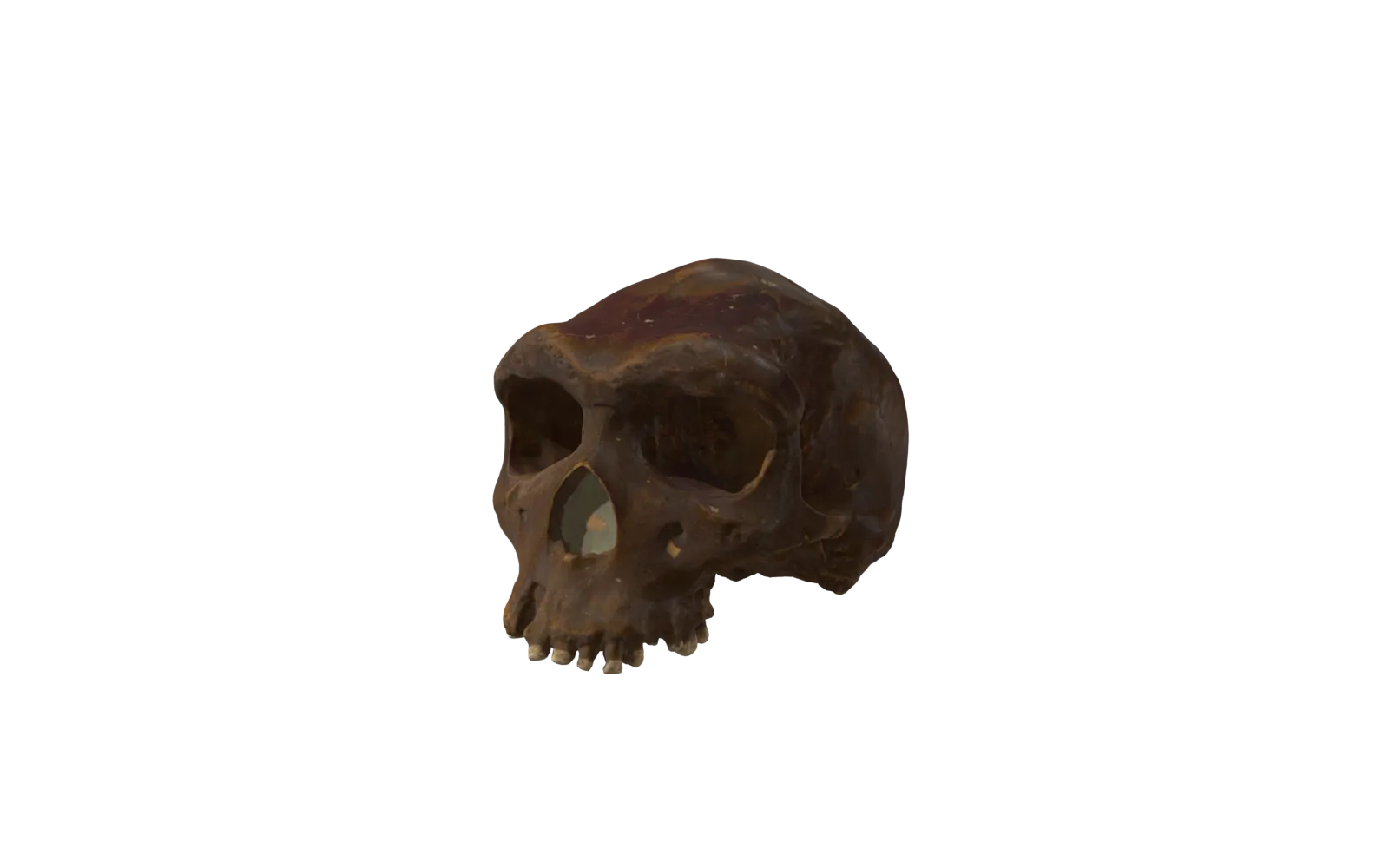
- Skull: Long and low, wider than in Homo erectus, with a low forehead.
- Brow: A thick, heavy brow ridge. Kabwe 1 has one of the largest known in any human.
- Face: Large and broad, with a wide nose. No chin.
- Body: Tall and strongly built. The Smithsonian estimates about 1.75 metres and 62 kilograms for males and about 1.57 metres and 51 kilograms for females.
The famous fossils
- Mauer 1 (Germany): The type jaw, about 609,000 years old.
- Bodo (Ethiopia): A large face and skull found in 1976 by Alemayehu Asfaw, Paul Whitehead and Craig Wood, about 600,000 years old.
- Kabwe 1, Broken Hill (Zambia): The best-preserved skull. In 2020 a team led by Rainer Grün dated it directly to about 299,000 years. Ten of its upper teeth have cavities, a very early case of serious tooth decay.
- Arago (France), Petralona (Greece), Boxgrove (England) and Saldanha (South Africa): Other fossils often placed here, though some are disputed.
The large group of skeletons from the Sima de los Huesos at Atapuerca in Spain, about 430,000 years old, were long called heidelbergensis too. Their DNA and anatomy now show that they belong on the Neanderthal line. One of them, Miguelón, has its own page.
How it lived
These people made large, carefully shaped stone hand axes and hunted big animals. At Boxgrove in England, about half a million years ago, they butchered horses, deer and even a rhinoceros. They lived through cold phases of the Ice Age in Europe.
The famous wooden hunting spears from Schöningen in Germany were long credited to Homo heidelbergensis. A 2025 study dated the layer that held them directly to about 200,000 years ago, so they are now usually linked to early Neanderthals instead.
The naming muddle
The name Homo heidelbergensis is used in different ways. Some researchers put all of these fossils, African and European, into one species. Others keep the African fossils such as Kabwe and Bodo apart as Homo rhodesiensis, and treat the European fossils as early Neanderthals. In 2021 Mirjana Roksandic and colleagues proposed a new name, Homo bodoensis, for the African population they see as ancestral to Homo sapiens, and suggested dropping both older names. That proposal is debated, and many researchers still use Homo heidelbergensis as a convenient label for this stage of human evolution.
The new date for Kabwe adds to the puzzle. At about 300,000 years old, it lived at the same time as early Homo sapiens at Jebel Irhoud in Morocco and Homo naledi in South Africa, so it cannot simply be a step on a single line leading to us.
Where it fits in the family tree
DNA from Neanderthals, Denisovans and modern humans suggests their lineages split from a common ancestor several hundred thousand years ago. Homo heidelbergensis, or some population within it, is the leading candidate for that ancestor or something close to it. The older European Homo antecessor may be an even earlier relative on the same branch.
Where to see it
The Mauer jaw is kept by Heidelberg University in Germany. Kabwe 1 is in the Natural History Museum in London, and Zambia has asked for its return. The Bodo skull is in the National Museum of Ethiopia in Addis Ababa.
Sources
- Smithsonian National Museum of Natural History, Human Origins Program. Homo heidelbergensis, Kabwe 1 and Bodo.
- Australian Museum. Homo heidelbergensis.
- Schoetensack, O. (1908). Der Unterkiefer des Homo heidelbergensis aus den Sanden von Mauer bei Heidelberg. Leipzig: Wilhelm Engelmann.
- Wagner, G. A. and others (2010). Radiometric dating of the type-site for Homo heidelbergensis at Mauer, Germany. Proceedings of the National Academy of Sciences 107: 19726 to 19730.
- Grün, R. and others (2020). Dating the skull from Broken Hill, Zambia, and its position in human evolution. Nature 580: 372 to 375.
- Roksandic, M., Radović, P., Wu, X.-J. and Bae, C. J. (2022). Resolving the “muddle in the middle”: the case for Homo bodoensis sp. nov. Evolutionary Anthropology 31: 20 to 29.
- Conard, N. J. and others (2015). Excavations at Schöningen and paradigm shifts in human evolution. Journal of Human Evolution 89: 1 to 17.
- Hutson, J. M. and others (2025). Revised age for Schöningen hunting spears indicates intensification of Neanderthal cooperative behavior around 200,000 years ago. Science Advances 11: eadv0752.
The skull in 3D
Cite this page
Bonelore. "Homo heidelbergensis." https://bonelore.com/species/homo-heidelbergensis/
Last checked 27 November 2026. Spotted a mistake? Tell us.