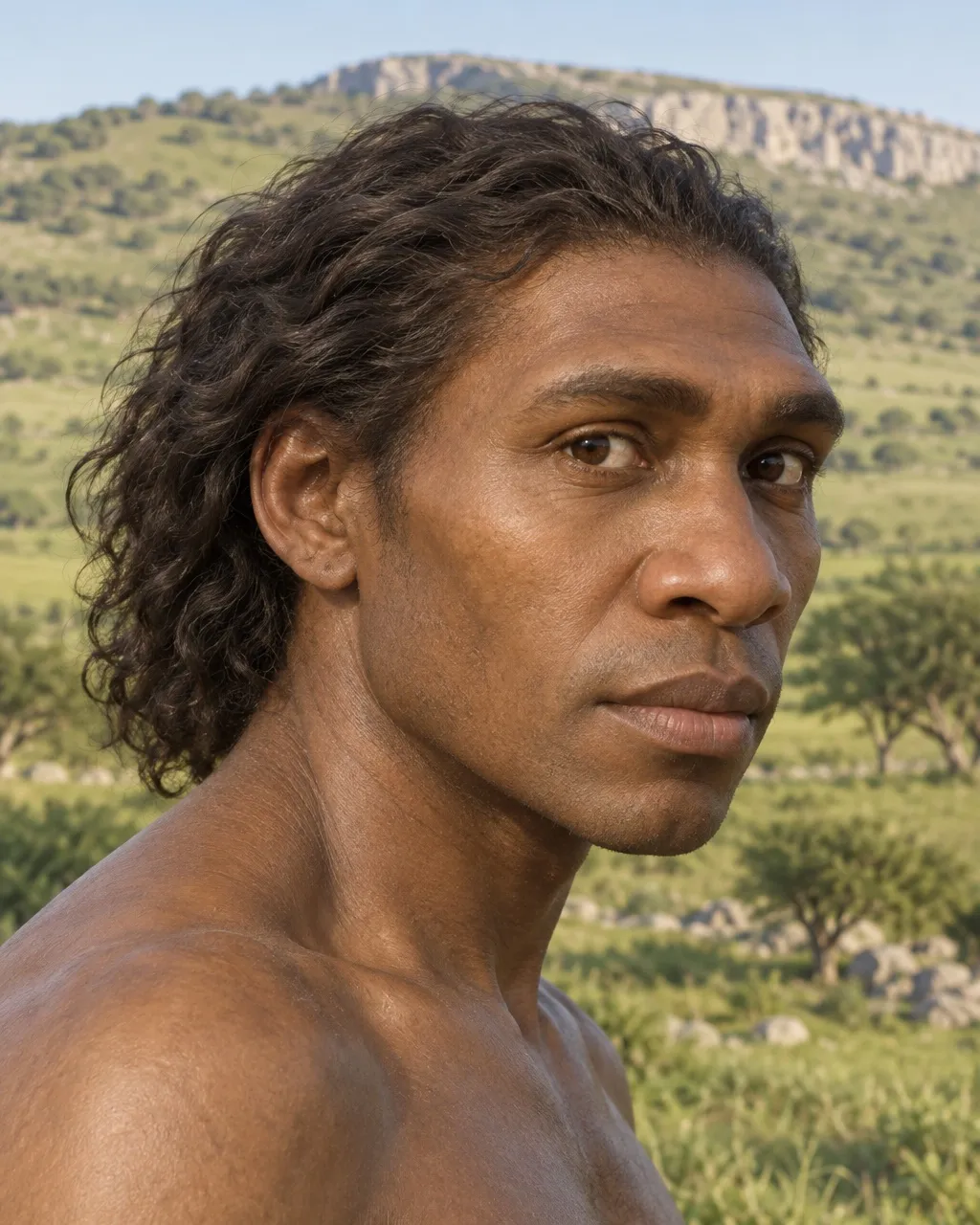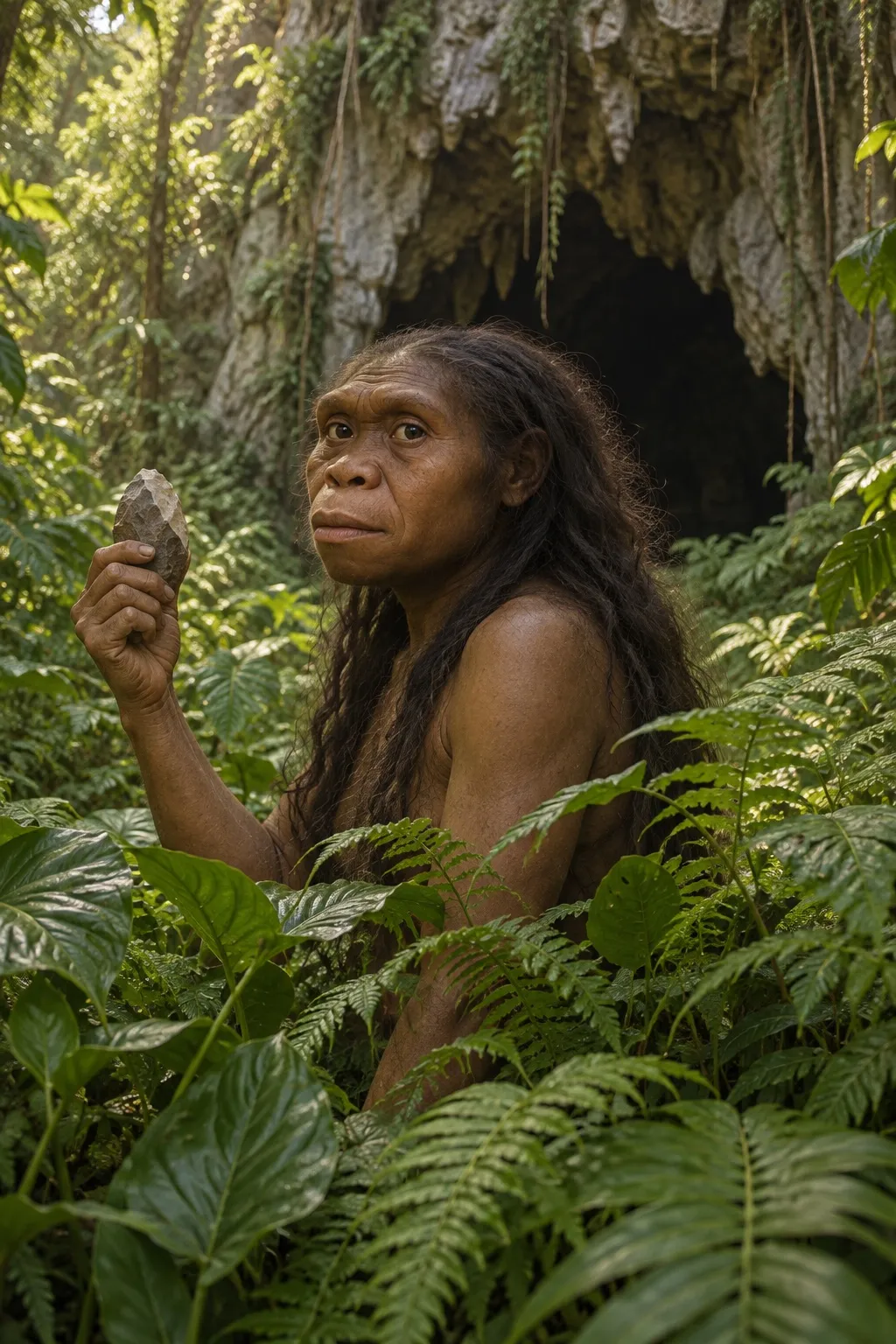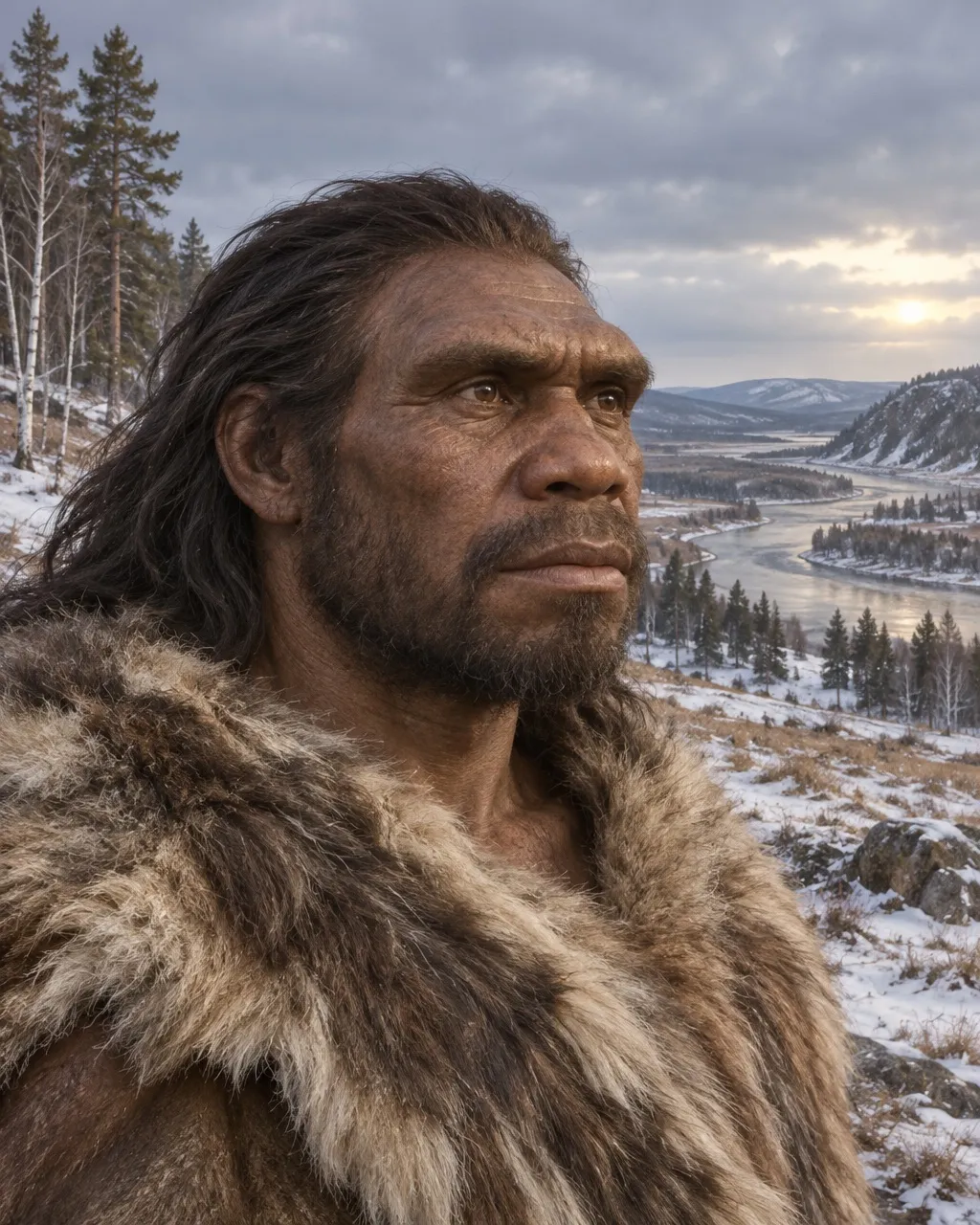
Denisovans were an extinct group of humans, close relatives of Neanderthals, first discovered in 2010 from the DNA of a finger bone in Denisova Cave in Siberia. Their genes survive in people today, especially in Papua New Guinea and Australia, and in 2025 the Harbin skull from China gave them a face.
The species in brief
The Denisovans are the only human group that scientists met first through their DNA. In 2010 a tiny bone from a cave in Siberia turned out to belong to people who were neither Neanderthals nor modern humans, but close cousins of the Neanderthals who once lived across much of Asia. For years they were known only from a few teeth and scraps of bone. Then, in 2025, studies of a nearly complete skull from Harbin in China, already named Homo longi, found that it was Denisovan too. For the first time, the Denisovans had a face.
They have no agreed scientific name yet. If the Harbin result holds, Homo longi may become it.
Discovery
Denisova Cave lies in the Altai Mountains of southern Siberia, and Russian archaeologists led by Anatoly Derevianko and Michael Shunkov have dug there for decades. In 2008 they found the tip of a little finger bone, catalogued Denisova 3, that had belonged to a young girl. Svante Pääbo’s team at the Max Planck Institute for Evolutionary Anthropology in Leipzig extracted its DNA. In 2010 they reported that its mitochondrial DNA came from an unknown kind of human, and later that year they published its genome, gave the group the name Denisovans, and showed that they were a sister group of the Neanderthals.
A family from the cave
Denisova Cave has since yielded a few Denisovan teeth and bone fragments, identified by DNA, along with Neanderthal remains. In 2018 one bone fragment, Denisova 11, turned out to come from a girl with a Neanderthal mother and a Denisovan father. A first-generation child of two different human groups is a remarkable thing to find, and it suggests that the two mixed often when they met.
Denisovans beyond Siberia
- Xiahe jaw (Tibetan Plateau, China): Found in 1980 by a Buddhist monk in Baishiya Karst Cave, 3,280 metres up. In 2019 protein analysis identified it as Denisovan. It is at least 160,000 years old. Denisovan DNA was later found in the cave’s sediments from about 100,000 and 60,000 years ago, and in 2024 ancient proteins showed that a rib from the cave, about 48,000 to 32,000 years old, was Denisovan too.
- Tam Ngu Hao 2 tooth (Laos): A molar from Cobra Cave, about 164,000 to 131,000 years old, reported in 2022. Its shape matches the Xiahe teeth.
- Penghu 1 jaw (Taiwan): A heavy lower jaw dredged from the sea floor, identified in 2025 as a male Denisovan by ancient proteins.
- Harbin cranium (northeast China): See below.
Together they show that Denisovans lived in cold mountains, on the high Tibetan Plateau and in warm, humid southern regions.
The Harbin skull, “Dragon Man”
The skull has its own page. According to the account given by its finder’s family, the Harbin skull was found in 1933 by a man working on a bridge over the Songhua River in Harbin, then under Japanese occupation. He hid it in an old well, and it stayed there for decades. In 2018 the family gave it to Hebei GEO University. In 2021 Qiang Ji, Xijun Ni and colleagues named it Homo longi, from Long Jiang, the Dragon River province of Heilongjiang. Dating of the skull itself showed it is older than 146,000 years.
In June 2025, two studies led by Qiaomei Fu found three Denisovan protein variants in the skull’s bone and recovered Denisovan mitochondrial DNA from the hardened plaque on its one surviving tooth. The Harbin individual was probably a man, and his skull is huge:
- Brain: About 1,420 cubic centimetres, within the range of people today.
- Skull: Long and low, very wide.
- Brow: A massive brow ridge.
- Face: Wide and low, with large, almost square eye sockets and flat, low cheekbones.
- Teeth: Very large molars on a thick upper jaw.
Some researchers, including members of the team that named Homo longi, have questioned the DNA result because much of the DNA in the sample came from modern contamination. The protein result is harder to dismiss.
Denisovans in us
When modern humans spread across Asia, they met Denisovans and had children with them. People in Papua New Guinea and other parts of Melanesia, and Aboriginal Australians, carry the most Denisovan DNA today, a few per cent of their genome. The 2010 genome study put it at about 4 to 6 per cent of Melanesian genomes. Smaller amounts turn up across East and South Asia.
Some of that DNA was useful. Many Tibetans carry a version of the gene EPAS1 that helps the body cope with thin air at high altitude, and in 2014 researchers showed that it came from Denisovans or their close relatives.
Where it fits in the family tree
Denisovans and Neanderthals share a common ancestor that split from the ancestors of modern humans several hundred thousand years ago. The two groups then went their separate ways, Neanderthals mainly in Europe and western Asia, Denisovans further east. Several other Middle Pleistocene skulls from China, such as the one from Dali, may belong to the same group. Like the Neanderthals, the Denisovans disappeared as a separate people after modern humans arrived, but part of them lives on in the genes of millions of people.
Where to see it
The Denisova Cave fossils are kept in Russia, at the Institute of Archaeology and Ethnography in Novosibirsk. The Harbin skull is at Hebei GEO University in Shijiazhuang, China. Museums show casts and reconstructions.
Sources
- Australian Museum. The Denisovans.
- Krause, J. and others (2010). The complete mitochondrial DNA genome of an unknown hominin from southern Siberia. Nature 464: 894 to 897.
- Reich, D. and others (2010). Genetic history of an archaic hominin group from Denisova Cave in Siberia. Nature 468: 1053 to 1060.
- Huerta-Sánchez, E. and others (2014). Altitude adaptation in Tibetans caused by introgression of Denisovan-like DNA. Nature 512: 194 to 197.
- Slon, V. and others (2018). The genome of the offspring of a Neanderthal mother and a Denisovan father. Nature 561: 113 to 116.
- Chen, F. and others (2019). A late Middle Pleistocene Denisovan mandible from the Tibetan Plateau. Nature 569: 409 to 412.
- Zhang, D. and others (2020). Denisovan DNA in Late Pleistocene sediments from Baishiya Karst Cave on the Tibetan Plateau. Science 370: 584 to 587.
- Xia, H. and others (2024). Middle and Late Pleistocene Denisovan subsistence at Baishiya Karst Cave. Nature 632: 108 to 113.
- Ji, Q. and others (2021). Late Middle Pleistocene Harbin cranium represents a new Homo species. The Innovation 2: 100132.
- Ni, X. and others (2021). Massive cranium from Harbin in northeastern China establishes a new Middle Pleistocene human lineage. The Innovation 2: 100130.
- Shao, Q. and others (2021). Geochemical provenancing and direct dating of the Harbin archaic human cranium. The Innovation 2: 100131.
- Demeter, F. and others (2022). A Middle Pleistocene Denisovan molar from the Annamite Chain of northern Laos. Nature Communications 13: 2557.
- Tsutaya, T. and others (2025). A male Denisovan mandible from Pleistocene Taiwan. Science 388: 176 to 180.
- Fu, Q. and others (2025). The proteome of the late Middle Pleistocene Harbin individual. Science 389: 704 to 707.
- Fu, Q. and others (2025). Denisovan mitochondrial DNA from dental calculus of the >146,000-year-old Harbin cranium. Cell 188: 3919 to 3926.
Cite this page
Bonelore. "Denisovans." https://bonelore.com/species/denisovans/
Last checked 27 November 2026. Spotted a mistake? Tell us.