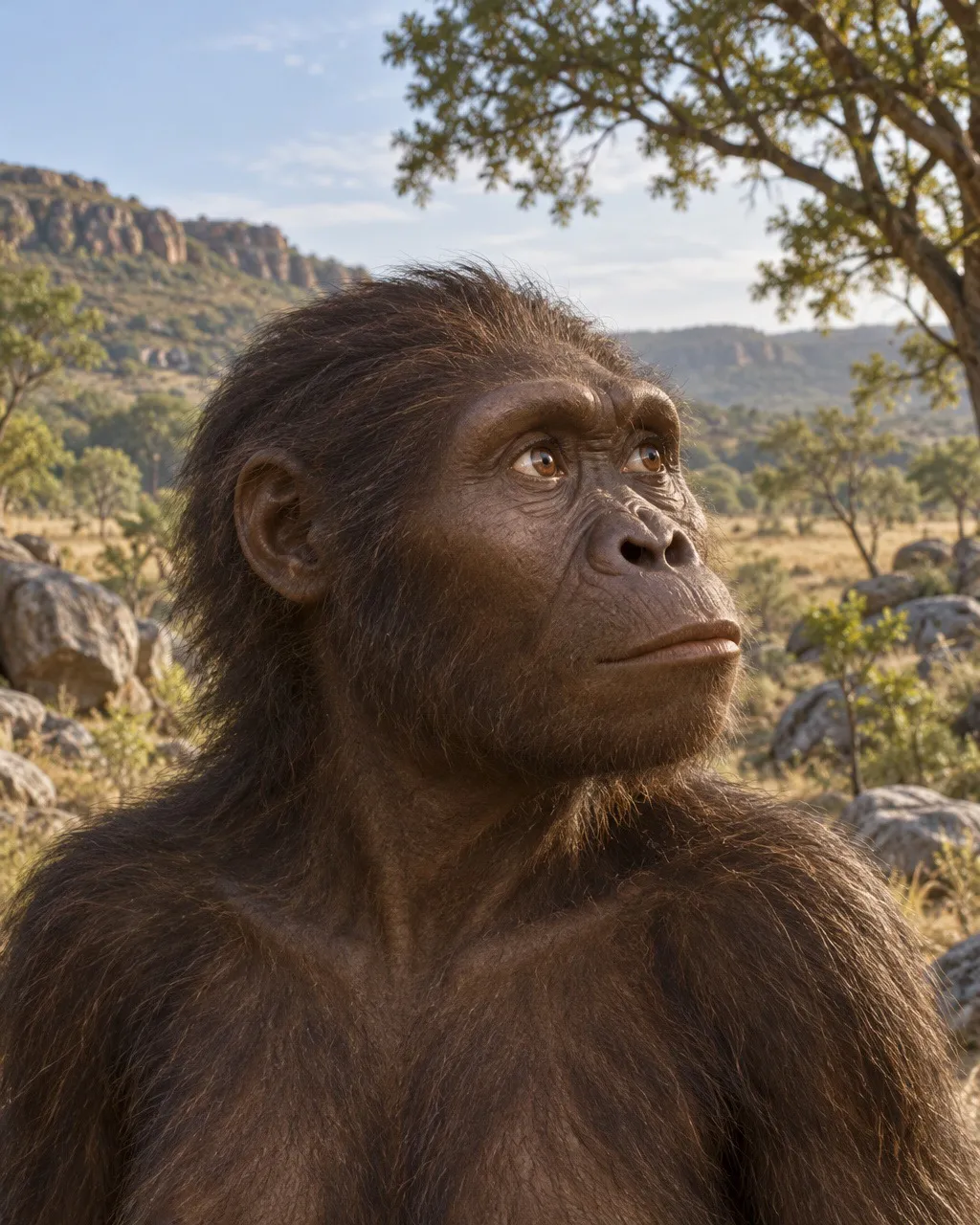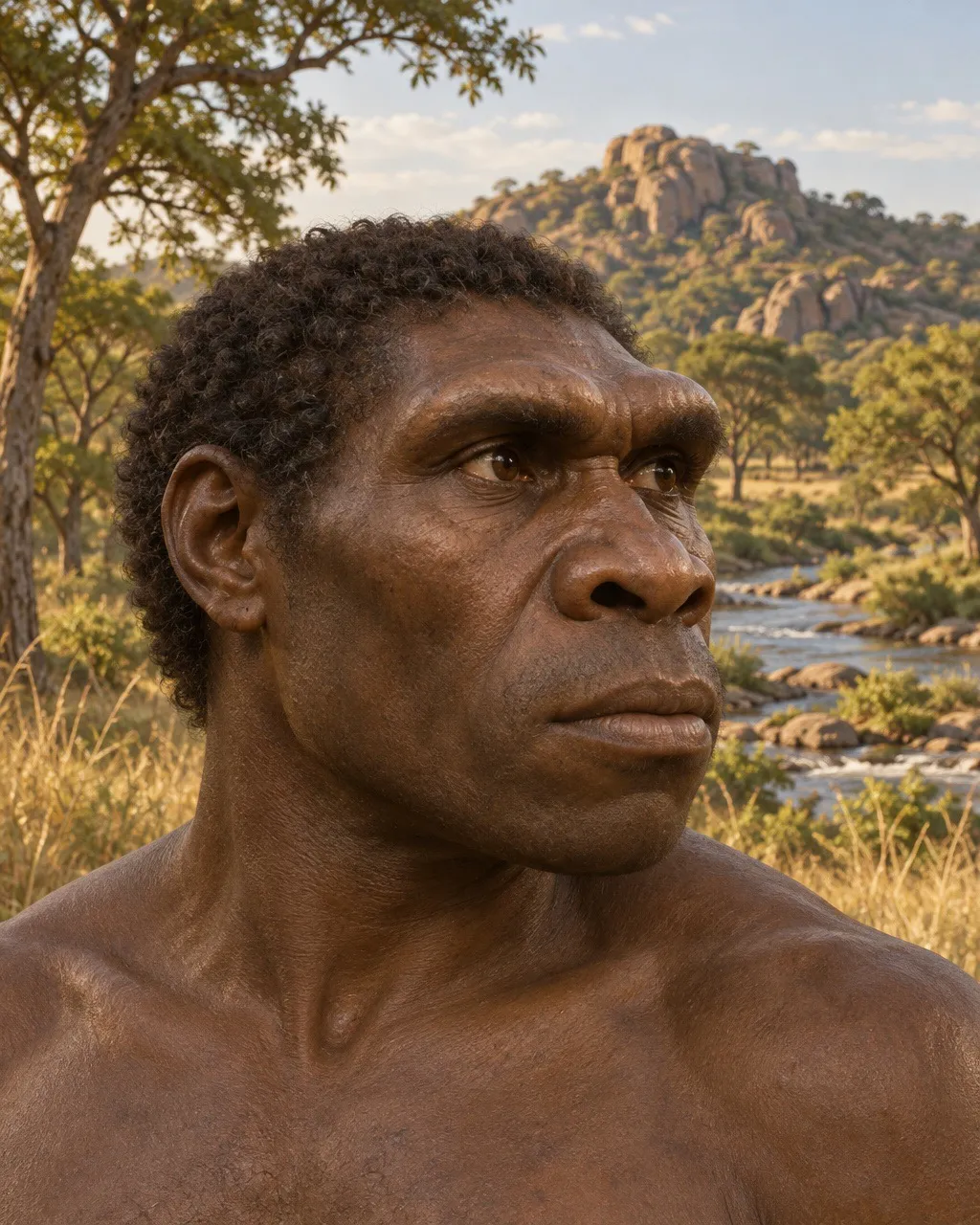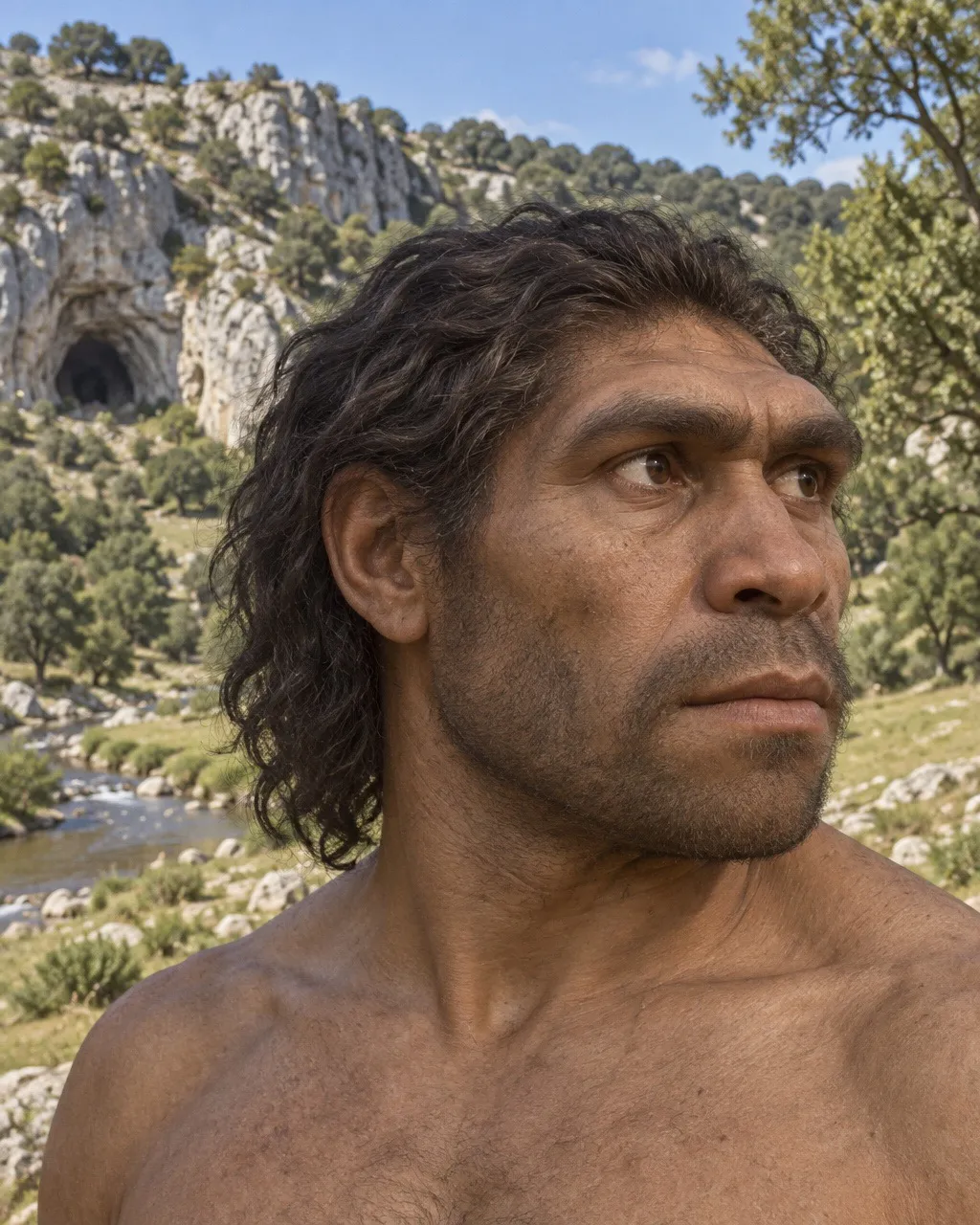
Homo antecessor is an early human species from Gran Dolina cave in the Sierra de Atapuerca, Spain, about 900,000 to 800,000 years old. Its face looks surprisingly modern, and proteins from its teeth place it close to the shared ancestor of Neanderthals, Denisovans and modern humans.
The species in brief
The Sierra de Atapuerca, a range of low limestone hills near Burgos in northern Spain, holds one of the richest records of early humans anywhere. In 1994, in a cave called Gran Dolina, excavators found human bones about 850,000 years old, the oldest in Europe at the time. The people they came from had a mix of features that surprised everyone: an old-fashioned skull with a low forehead and heavy brow, but a face that looks remarkably like ours. In 1997 they were named Homo antecessor, “the pioneer”.
Discovery
The Atapuerca caves were exposed in the late 1800s when a railway cutting was dug through the hills. Systematic excavations, led since the 1990s by Eudald Carbonell, Juan Luis Arsuaga and José María Bermúdez de Castro, have worked through several caves along the cutting.
In July 1994 the team reached a layer called TD6 in Gran Dolina, and in a part of it now known as the Aurora stratum they found human teeth and bones mixed with animal bones and stone tools. Over the next seasons more than 80 human fossils came out of a small trench, from at least six individuals, many of them children and teenagers. Bermúdez de Castro, Arsuaga, Carbonell and colleagues named the species in the journal Science in 1997, with a jaw as the type specimen. The most famous specimen is ATD6-69, part of the face of a child of about 10.
Later excavations have found many more fossils in TD6, with the total now around 170 bones.
How old it is
The layer just above TD6 records the last flip of Earth’s magnetic field, about 780,000 years ago, so TD6 must be older. Combined dating methods put it at about 900,000 to 800,000 years ago. In 2018 the first direct date on one of the human teeth, by electron spin resonance combined with the magnetic record, gave 949,000 to 772,000 years.
What it looked like
- Brain: About 1,000 cubic centimetres, based on a piece of an adult skull, between Homo erectus and later humans.
- Skull: A low forehead and a strong brow ridge with two arches, one over each eye.
- Face: Modern-looking in the middle, with a hollow below each cheekbone (the canine fossa) and a projecting nose. A 2013 study of how the bone of ATD6-69’s face grew found the same pattern of growth as in people today, unlike in Homo erectus.
- Teeth: A mix of primitive and newer features.
- Body: Similar to ours but more robust. Estimates for adult males run from about 1.6 to 1.8 metres tall.
Cannibalism
Most of the human bones from the Aurora stratum carry cut marks, chop marks and the breaks made when fresh bones are snapped to get at the marrow. They were treated in the same way as the bones of deer, horses and bison found with them, and there are no carnivore tooth marks. A 1999 study concluded that the people of Gran Dolina were butchered and eaten by other humans, and found no sign of ritual. It is one of the oldest known cases of cannibalism. Whether it came from hunger, conflict between groups or something else cannot be told from the bones.
Proteins from a tooth
DNA does not survive this long in a warm place like Spain, but some proteins in tooth enamel do. In 2020 a team led by Frido Welker and Enrico Cappellini sequenced proteins from a molar of Homo antecessor, about 800,000 years old. The results placed antecessor as a close sister of the group that includes Neanderthals, Denisovans and modern humans. The same study showed the tooth came from a male.
That fits the modern-looking face. It suggests our kind of face is very old in the genus Homo, and that the big, forward-pushed Neanderthal face is the newer shape.
The older face next door
A few hundred metres away, in the Sima del Elefante cave, the same project found a jaw in 2007, dated to about 1.2 to 1.1 million years ago, and in 2022 part of a face, nicknamed “Pink”, described in 2025 at about 1.4 to 1.1 million years old. Pink’s face is primitive and lacks the modern features of antecessor, so the team assigned it to a population close to Homo erectus. It suggests that more than one kind of human reached western Europe during this long period.
Where it fits in the family tree
Homo antecessor was among the earliest people in Europe. Its discoverers once proposed it as the last common ancestor of Neanderthals and modern humans. The protein evidence suggests instead that it was a close cousin of that ancestor. Some researchers group these fossils with Homo heidelbergensis or with early Homo erectus, and the debate goes on.
The other Atapuerca story, the Sima de los Huesos with its early Neanderthals such as Miguelón, is told on the Sierra de Atapuerca page.
Where to see it
The Atapuerca fossils are kept in Spain, and many are displayed at the Museum of Human Evolution in Burgos. The caves themselves can be visited on guided tours.
Sources
- Australian Museum. Homo antecessor.
- Bermúdez de Castro, J. M., Arsuaga, J. L., Carbonell, E., Rosas, A., Martínez, I. and Mosquera, M. (1997). A hominid from the Lower Pleistocene of Atapuerca, Spain: possible ancestor to Neandertals and modern humans. Science 276: 1392 to 1395.
- Fernández-Jalvo, Y., Díez, J. C., Cáceres, I. and Rosell, J. (1999). Human cannibalism in the Early Pleistocene of Europe (Gran Dolina, Sierra de Atapuerca, Burgos, Spain). Journal of Human Evolution 37: 591 to 622.
- Carbonell, E. and others (2008). The first hominin of Europe. Nature 452: 465 to 469.
- Lacruz, R. S. and others (2013). Facial morphogenesis of the earliest Europeans. PLOS ONE 8: e65199.
- Campaña, I. and others (2016). New interpretation of the Gran Dolina-TD6 bearing Homo antecessor deposits through sedimentological analysis. Scientific Reports 6: 34799.
- Duval, M. and others (2018). The first direct ESR dating of a hominin tooth from Atapuerca Gran Dolina TD-6 (Spain) supports the antiquity of Homo antecessor. Quaternary Geochronology 47: 120 to 137.
- Welker, F. and others (2020). The dental proteome of Homo antecessor. Nature 580: 235 to 238.
- Huguet, R. and others (2025). The earliest human face of Western Europe. Nature 640: 707 to 713.
Cite this page
Bonelore. "Homo antecessor." https://bonelore.com/species/homo-antecessor/
Last checked 27 November 2026. Spotted a mistake? Tell us.