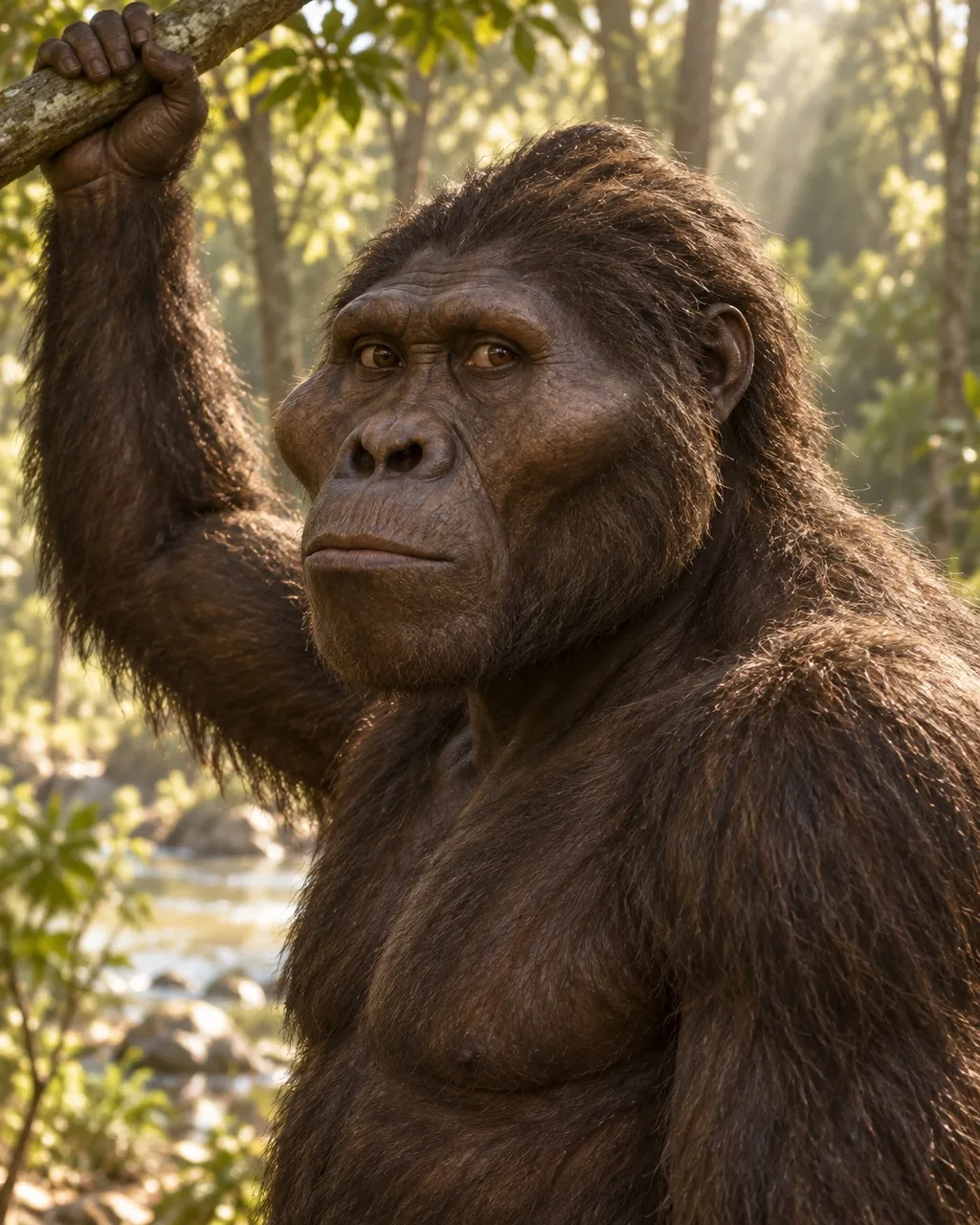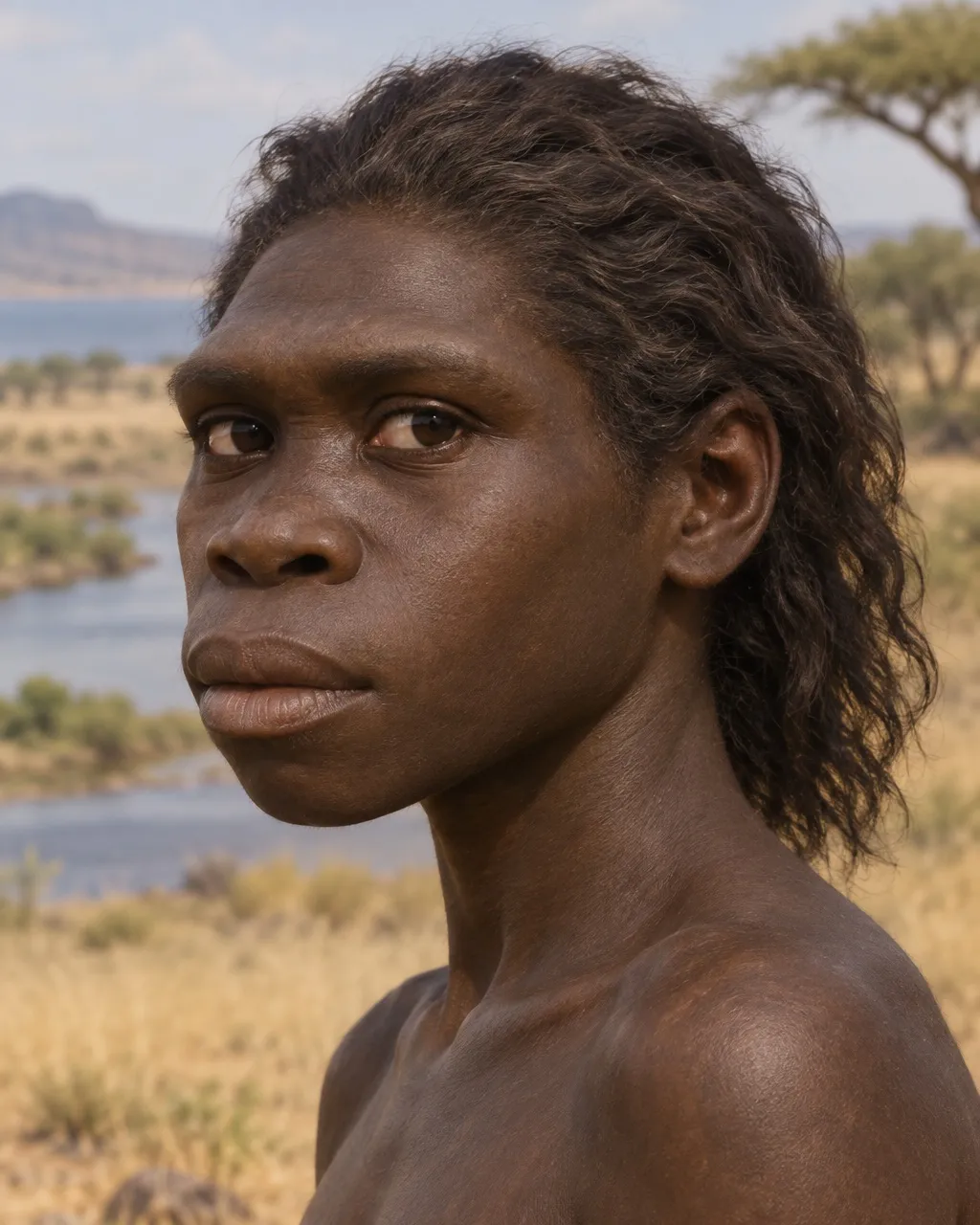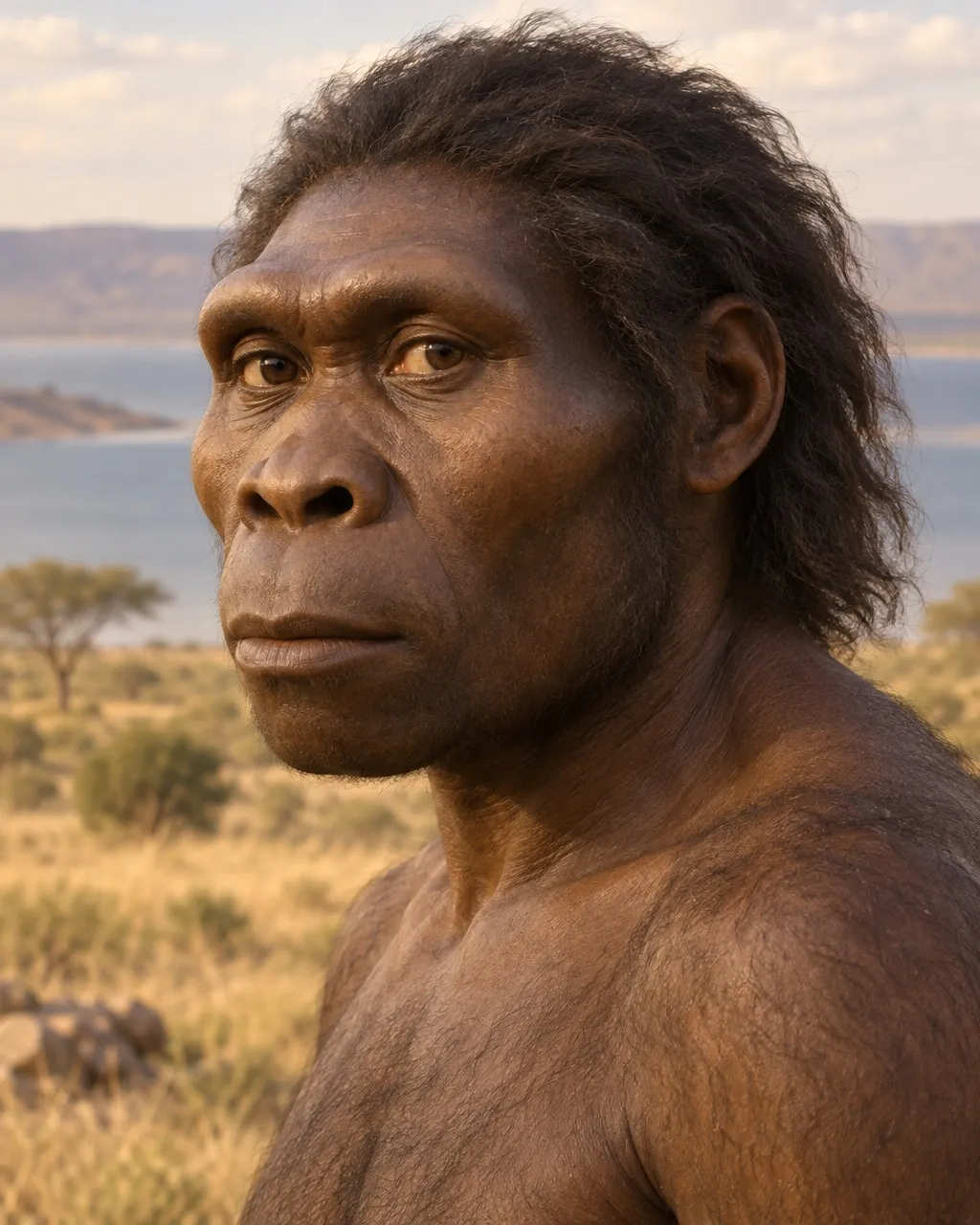
Homo rudolfensis is an early member of our genus known from Kenya and Malawi, about 2.1 to 1.8 million years ago. Its type skull, KNM-ER 1470, has a large brain for early Homo and a long, broad, flat face, and scientists still argue whether it is a separate species from Homo habilis.
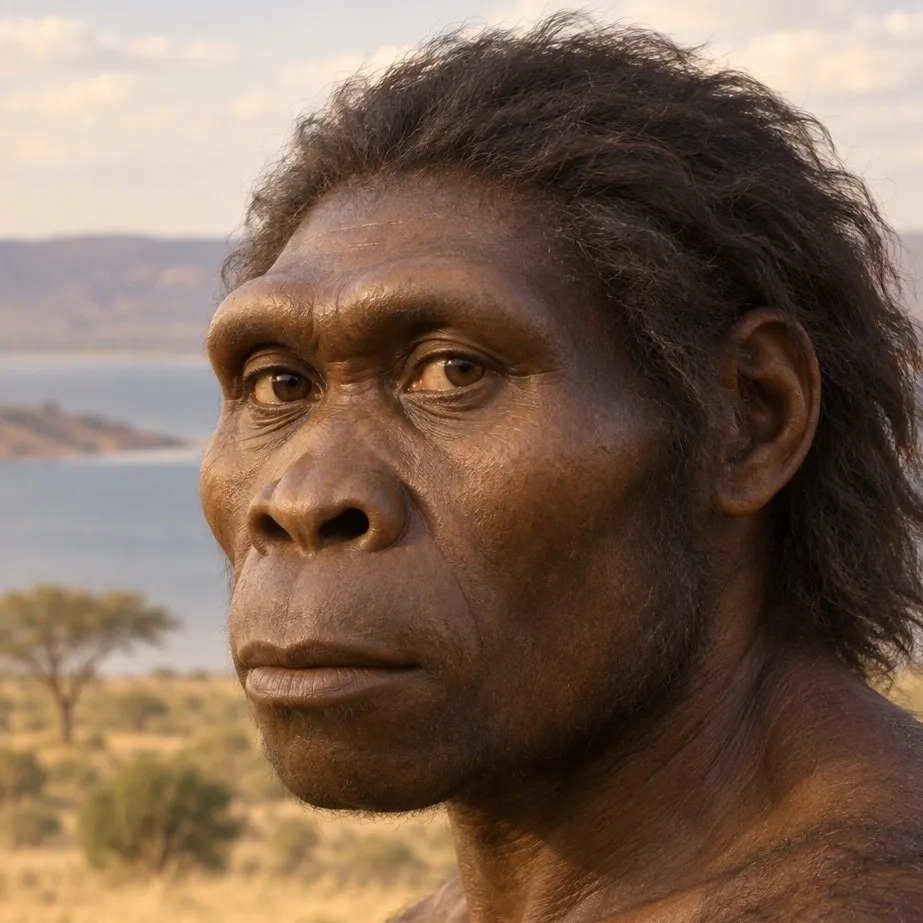
The species in brief
About 2 million years ago, on the shores of the lake now called Turkana in northern Kenya, more than one kind of early human lived side by side. One of them was Homo rudolfensis, a member of our own genus with a larger brain than Homo habilis and a long, broad, strikingly flat face. It is known from only a handful of fossils, and scientists have argued about it for half a century, but new finds have made a strong case that it was real.
Discovery
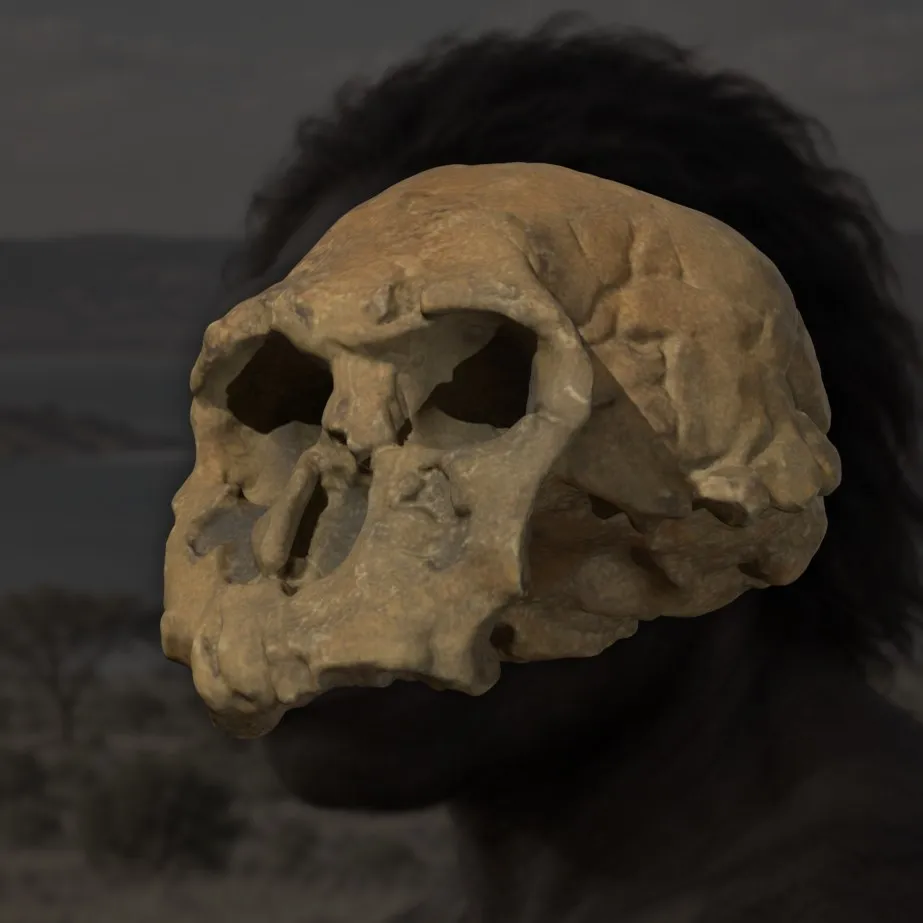
In 1972 Bernard Ngeneo, a fieldworker on Richard Leakey’s team, spotted pieces of a skull on the ground at Koobi Fora, east of the lake. The team gathered more than 150 fragments, and Meave Leakey and colleagues pieced them together. The skull, catalogued KNM-ER 1470, had a bigger brain than anyone expected in a fossil that old. Richard Leakey published it in Nature in 1973 as Homo, species undetermined.
Many researchers then grouped 1470 with Homo habilis. In 1986 the Russian anthropologist V. P. Alexeev gave it its own name, Pithecanthropus rudolfensis, after Lake Rudolf, the old name of Lake Turkana. Later researchers moved it into Homo. Bernard Wood’s work in the early 1990s made the case that 1470 and the smaller skulls given to habilis were too different to be one species.
What the skull looks like
- Brain: About 700 to 800 cubic centimetres for 1470, with about 750 the figure most often quoted. That is larger than most habilis skulls but only about half of ours.
- Face: Long, broad and flat, with little forward jut below the nose and the cheekbones set well forward.
- Teeth: The crowns of 1470’s teeth are missing, but the roots and sockets show large cheek teeth.
- Brow: A light brow ridge, not a heavy one.
A 2008 reconstruction by Timothy Bromage’s team argued that the face jutted forward more than usually shown, and that the brain was closer to 700 cubic centimetres. (A 2007 news report of the work, before it was published, gave a much lower figure of about 526, but the published paper settled on about 700.)
A matching face, 40 years later
For decades 1470 had no match, which made it easy to dismiss as an odd individual. In 2012 Meave Leakey, Fred Spoor, Louise Leakey and colleagues described three new fossils from Koobi Fora, aged between about 1.78 and 1.95 million years (a 2013 study put the face KNM-ER 62000 slightly older, about 1.95 to 1.98 million):
- KNM-ER 62000: The face of a late juvenile, very like 1470 but smaller, and with its teeth.
- KNM-ER 60000: A nearly complete lower jaw.
- KNM-ER 62003: Part of another lower jaw.
The new face showed that the flat shape of 1470 is real and turns up in more than one individual. The jaws, with short, flat-fronted rows of teeth, fit that face. The team concluded that two species of early Homo, besides Homo erectus, lived in eastern Africa at that time.
How old it is
1470 lies well below a layer of volcanic ash called the KBS Tuff. Studies in 2012 and 2013 put the skull at about 2.03 to 2.06 million years old. With the 2012 finds, the species spans roughly 2.1 to 1.8 million years ago.
A lower jaw from Uraha in Malawi, reported in 1993 and estimated at about 2.4 million years, is also often given to Homo rudolfensis. If that holds, the species ranged far down the East African Rift and appeared early, but the Uraha date rests on comparing animal fossils, not on direct dating.
The argument
Two questions keep the debate going. First, is 1470 different enough from skulls like KNM-ER 1813 to be a separate species, or could the two be a large male and a small female of one species? The 2012 finds made the two-species view stronger. Second, which group does the original Homo habilis fossil, OH 7 from Olduvai Gorge, belong with? If OH 7 turns out to match 1470, the names would have to be swapped around. That is why careful researchers, and the 1470 page on this site, still use both names.
Some researchers have also pointed out that 1470’s flat face looks a little like the much older Kenyanthropus platyops from the other side of the lake, and have wondered whether the two are related.
Where it fits in the family tree
Homo rudolfensis shared its landscape with Homo habilis, Homo erectus and the robust Paranthropus boisei. Whether it was an ancestor of later humans or a side branch is not known. What it does show is that the early history of our genus was crowded, with several kinds of Homo living in eastern Africa at the same time.
Where to see it
KNM-ER 1470 and the 2012 fossils belong to the National Museums of Kenya in Nairobi. Casts of 1470 are on show in museums around the world.
Sources
- Smithsonian National Museum of Natural History, Human Origins Program. Homo rudolfensis.
- Australian Museum. Homo rudolfensis.
- Leakey, R. E. F. (1973). Evidence for an advanced Plio-Pleistocene hominid from East Rudolf, Kenya. Nature 242: 447 to 450.
- Alexeev, V. P. (1986). The Origin of the Human Race. Moscow: Progress Publishers.
- Wood, B. (1992). Origin and evolution of the genus Homo. Nature 355: 783 to 790.
- Schrenk, F. and others (1993). Oldest Homo and Pliocene biogeography of the Malawi Rift. Nature 365: 833 to 836.
- Wood, B. (1999). ‘Homo rudolfensis’ Alexeev, 1986: fact or phantom? Journal of Human Evolution 36: 115 to 118.
- Bromage, T. G. and others (2008). Craniofacial architectural constraints and their importance for reconstructing the early Homo skull KNM-ER 1470. Journal of Clinical Pediatric Dentistry 33: 43 to 54.
- Than, K. (2007). Human ancestor gets digital facelift. LiveScience, via NBC News, 30 March 2007.
- Leakey, M. G. and others (2012). New fossils from Koobi Fora in northern Kenya confirm taxonomic diversity in early Homo. Nature 488: 201 to 204.
- Joordens, J. C. A. and others (2013). Improved age control on early Homo fossils from the upper Burgi Member at Koobi Fora, Kenya. Journal of Human Evolution 65: 731 to 745.
Cite this page
Bonelore. "Homo rudolfensis." https://bonelore.com/species/homo-rudolfensis/
Last checked 27 November 2026. Spotted a mistake? Tell us.