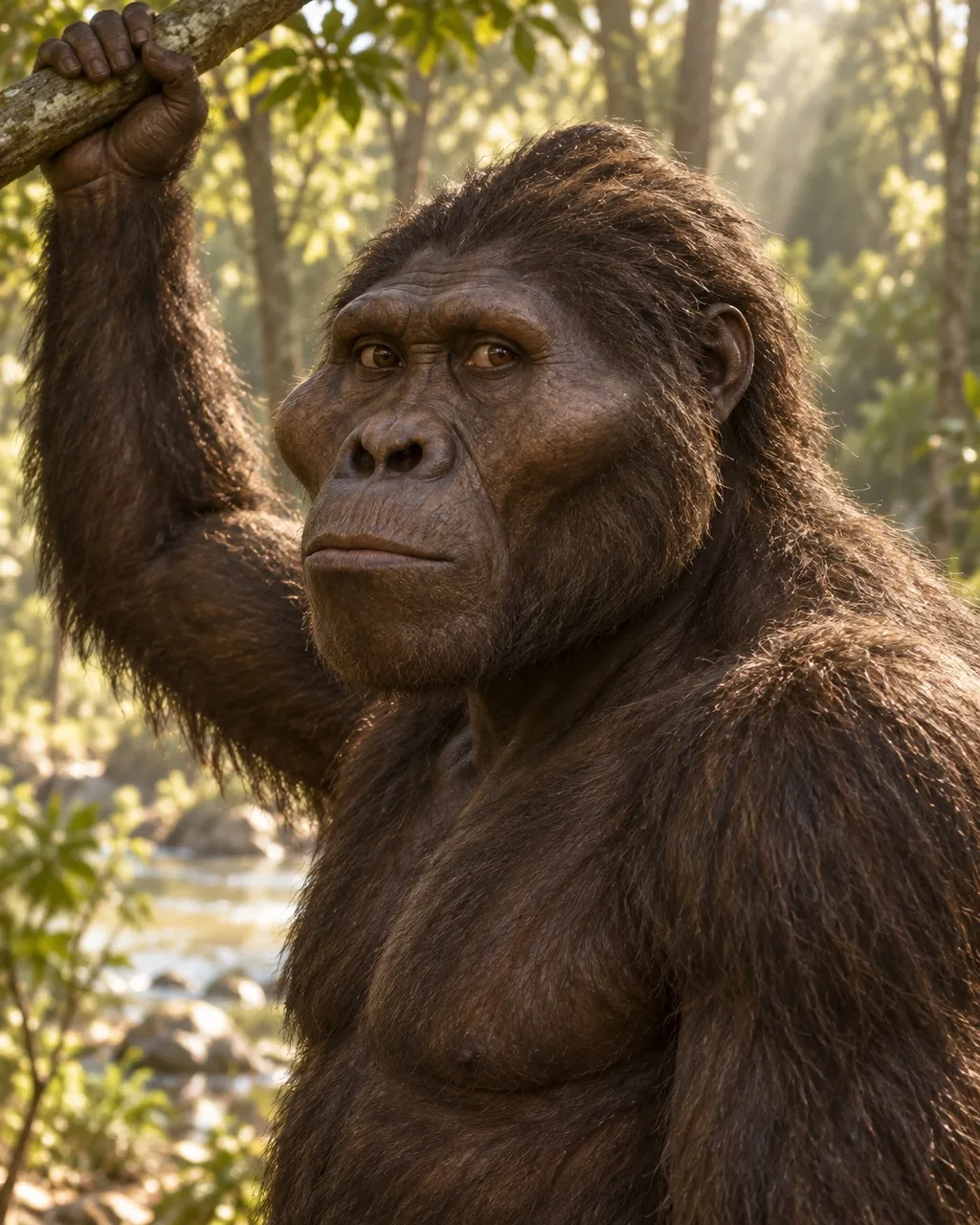
Louis Leakey (1903 to 1972) was a Kenyan-born archaeologist and paleoanthropologist who argued, when few agreed, that humans first evolved in Africa. With Mary Leakey he worked at Olduvai Gorge for decades, named Zinjanthropus in 1959 and Homo habilis in 1964, and sent Jane Goodall, Dian Fossey and Birute Galdikas to study great apes.
A boy from Kabete
Louis Seymour Bazett Leakey was born in 1903 at Kabete, near Nairobi, where his parents were British missionaries. He grew up speaking Kikuyu and was initiated into a Kikuyu age group. He went to Cambridge, graduated in archaeology and anthropology in 1926, and was soon leading his own expeditions in East Africa.
At the time, most scientists thought humans had evolved in Asia, where Java Man and Peking Man had been found. Leakey was sure the answer lay in Africa, and he bet his career on Olduvai Gorge in Tanzania, which he first worked in 1931. For almost thirty years he and Mary found plenty of stone tools there, but no early human to go with them.
Zinj and the handy man
That changed in 1959, when Mary found the skull now called OH 5, or Zinj. Louis named it Zinjanthropus boisei and, because it lay among tools, called it the toolmaker. Within a few years the team found the remains of a smaller-toothed, larger-brained hominin nearby, starting with a jaw and skull pieces that their son Jonathan found in 1960.
In 1964 Louis, the anatomist Phillip Tobias and the primate expert John Napier named it Homo habilis, the “handy man”, and said this, not Zinj, was the toolmaker. Many experts objected at first. The species is still argued over, but it is now a fixed part of the story.
Beyond fossils
Leakey was a showman and a fundraiser as much as a scientist, and not every claim held up. His early dates for some Kenyan finds were knocked down in the 1930s, and late in life he backed a site at Calico, California, where most experts concluded the “tools” were natural stones.
His lasting gift beyond fossils was people. He believed that watching living apes would help explain early humans, and he found and backed three young women to do it: Jane Goodall with chimpanzees from 1960, Dian Fossey with mountain gorillas and Birute Galdikas with orangutans. He also curated the Coryndon Museum in Nairobi, now the National Museums of Kenya, and in 1947 brought scientists from across the world to Nairobi for the first Pan-African Congress on Prehistory.
He died in London in 1972. His wife Mary, his son Richard and Richard’s wife Meave carried the work on.
Worked with
- Mary Leakey British archaeologist who found Zinj and the Laetoli footprints
- Richard Leakey Kenyan fossil hunter, museum director and wildlife campaigner
- Kamoya Kimeu Kenyan fossil hunter who found Turkana Boy and led the Hominid Gang
- Ron Clarke Paleoanthropologist who found Little Foot at Sterkfontein
Where to see the finds
- National Museum of Tanzania, Dar es Salaam: the Olduvai fossils, including Zinj (OH 5) and OH 7
- National Museums of Kenya, Nairobi: he was curator of its forerunner, the Coryndon Museum
Sources
- Leakey, L. S. B. (1959). A new fossil skull from Olduvai. Nature 184: 491 to 493.
- Leakey, L. S. B., Tobias, P. V. and Napier, J. R. (1964). A new species of the genus Homo from Olduvai Gorge. Nature 202: 7 to 9.
- Morell, V. (1995). Ancestral Passions: The Leakey Family and the Quest for Humankind's Beginnings. Simon and Schuster.
- Wikipedia: Louis Leakey (checked for dates, 2026-10-30)
Last checked 27 November 2026. Spotted a mistake? Tell us.