Kamoya Kimeu (about 1938 to 2022) was a Kenyan fossil hunter, one of the most successful who ever lived. He led the team of Kenyan field workers known as the Hominid Gang, who found most of the early human fossils around Lake Turkana, and in 1984 he spotted the first piece of Turkana Boy, the most complete early human skeleton then known.
The bone on the riverbank
In August 1984 the team was camped by the Nariokotome River, west of Lake Turkana. Kamoya Kimeu walked a dry channel near camp and noticed a small piece of skull lying among the pebbles. Most people would have walked past it.
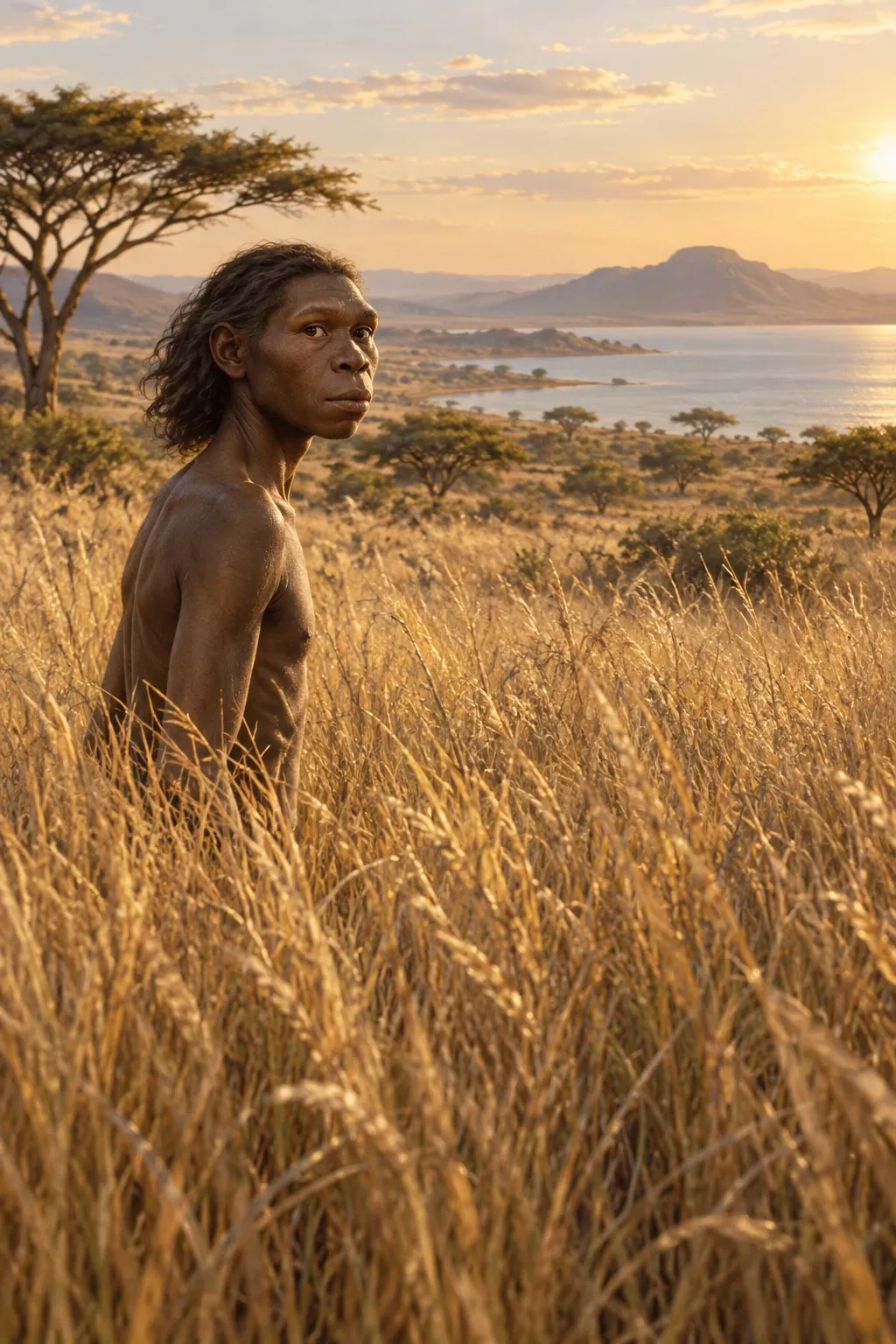
The team sieved and dug the spot over the following seasons and found most of a skeleton: skull, jaw, spine, ribs, arms, pelvis and legs. It was a young Homo erectus about 1.5 to 1.6 million years old, now known as Turkana Boy. It showed for the first time that this early human had tall, long-legged body proportions much like ours.
From goat herder to “Mr. Kamoya”
Kimeu was born around 1938 in Makueni, in the Kamba country of southern Kenya. He went to a mission school for six years, then herded his family’s goats. In the 1950s he took a job as a labourer for Louis and Mary Leakey. He had a sharp eye and a quick mind, and he rose fast.
In 1964, on an expedition to Lake Natron in Tanzania with Richard Leakey and Glynn Isaac, he found the Peninj jaw, a complete lower jaw of Paranthropus boisei. In 1967 he went with Richard to the Omo River in Ethiopia, and from 1968 he ran the field crews at Koobi Fora, often leading the work when Richard was away.
The Hominid Gang
The team he led was a small group of Kenyan field workers, among them Bernard Ngeneo, who found KNM-ER 1470. They walked the eroded slopes looking for any scrap of bone. Between them they found most of the hominin fossils from Lake Turkana. Kimeu himself found KNM-ER 1813 in 1973, one of the best skulls of Homo habilis.
In 1977 he became the National Museums of Kenya’s curator for the country’s prehistoric sites. In 1985 he received the National Geographic Society’s La Gorce Medal at the White House, and in 2021 an honorary doctorate from Case Western Reserve University. Two fossil primates are named after him: Kamoyapithecus and Cercopithecoides kimeui.
Kimeu died in Nairobi in July 2022, a few months after Richard Leakey. Colleagues remember him as a legend of the field, and Bonelore credits him by name wherever his finds appear.
Worked with
- Richard Leakey Kenyan fossil hunter, museum director and wildlife campaigner
- Meave Leakey British-born Kenyan paleontologist who named two hominin species
- Louis Leakey Kenyan-born scientist who put East Africa at the centre of human origins
- Mary Leakey British archaeologist who found Zinj and the Laetoli footprints
Where to see the finds
- National Museums of Kenya, Nairobi: Turkana Boy (KNM-WT 15000) and KNM-ER 1813
Sources
- Risen, C. (11 August 2022). Kamoya Kimeu, fossil-hunting legend in East Africa, is dead. The New York Times.
- Walker, A. and Leakey, R. (eds.) (1993). The Nariokotome Homo erectus Skeleton. Harvard University Press.
- Walker, A. and Shipman, P. (1996). The Wisdom of the Bones: In Search of Human Origins. Knopf.
- Smithsonian Human Origins Program: KNM-WT 15000
- Wikipedia: Kamoya Kimeu (checked for dates, 2026-10-30)
Last checked 30 October 2026. Spotted a mistake? Tell us.